 Save
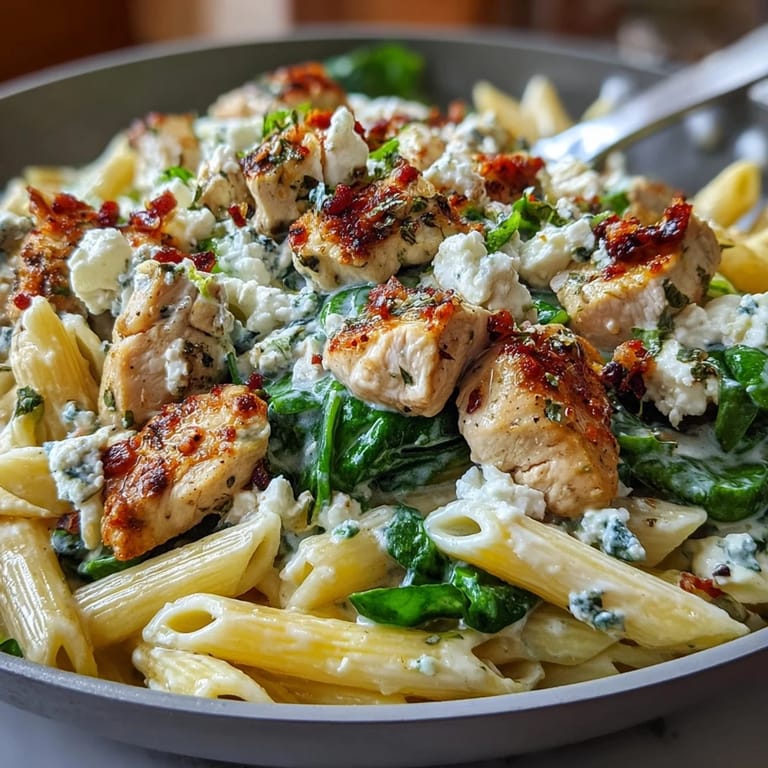
Save There's something about cooking in one skillet that makes dinner feel both effortless and intentional, and this Greek chicken pasta dish has become my go-to when I want something that tastes like I've been in the kitchen all day without actually spending much time there. My neighbor brought over a container of creamy Greek yogurt one afternoon, and instead of letting it sit unused, I started layering flavors in my largest skillet—lemon, feta, spinach—and discovered that the magic happens when you let tangy and bright work together. The whole thing comes together faster than you'd expect, and somehow tastes like a Mediterranean vacation in a single pan.
I made this on a Thursday night when my sister was visiting and mentioned craving something Mediterranean but easy, and watching her face light up when she tasted the lemon-feta combination made me realize this wasn't just dinner—it was the kind of meal that brings people to the table happy. She asked for the recipe immediately, and I realized I'd been keeping this mostly to myself, which felt like a waste of something this good.
Ingredients
- Boneless, skinless chicken breast (1 lb, cut into bite-sized pieces): Cut them smaller rather than larger so they cook evenly and don't leave you with chewy edges and raw centers.
- Short pasta (12 oz, penne, fusilli, or rigatoni): The shapes catch the creamy sauce better than long noodles, and you'll taste feta and lemon in every bite.
- Feta cheese (4 oz, crumbled): Buy it from the actual cheese section if you can—pre-crumbled sometimes has weird additives that prevent clumping but also prevent flavor.
- Plain Greek yogurt (1 cup): This is your secret to a creamy sauce that doesn't need heavy cream, and it brings a brightness that regular sour cream won't give you.
- Fresh baby spinach (3 cups): It wilts down to almost nothing, so don't be shy with the amount.
- Red onion (1 small, thinly sliced): The sharpness mellows as it cooks, and it adds color and a little bite that makes everything feel fresher.
- Garlic (2 cloves, minced): Don't skip the garlic or use pre-minced—the flavor difference is real.
- Lemon zest and juice (from 1 lemon): The zest matters as much as the juice here, so grab a zester and don't be stingy.
- Low-sodium chicken broth (1 cup): This brings everything together and keeps the sauce from getting too thick.
- Olive oil (2 tbsp): Good olive oil makes a noticeable difference in how the dish tastes at the end.
- Dried oregano (1 tsp) and dill (1/2 tsp, optional): These are the backbone of the Mediterranean flavor, and even a half teaspoon of dill whispers something that tastes like the Aegean.
- Crushed red pepper flakes (1/2 tsp, optional): A tiny amount adds warmth without heat, but skip it if you're cooking for someone who avoids spice.
- Salt and pepper (to taste): Taste as you go because the feta and broth already bring salt, and you don't want to overdo it.
Tired of Takeout? 🥡
Get 10 meals you can make faster than delivery arrives. Seriously.
One email. No spam. Unsubscribe anytime.
Instructions
- Start the pasta and get your mise en place ready:
- Bring a large pot of salted water to a rolling boil and add your pasta, cooking until just al dente—remember that it'll keep cooking slightly in the pan later. While that's going, cut your chicken into bite-sized pieces, slice your onion thin, mince your garlic, and zest your lemon onto a little plate so you're ready to move fast once things start happening.
- Sear the chicken until golden:
- Heat your olive oil in a large skillet over medium-high heat until it shimmers, then add the chicken pieces seasoned with salt, pepper, oregano, and dill. Let them sit for a minute before stirring so they get a little color on each side—this takes about 5-6 minutes total—then transfer to a plate and set aside.
- Build the flavor base with aromatics:
- In the same skillet with all those browned bits stuck to the bottom, add your sliced red onion and minced garlic. The heat might be a little high now, so if things start smelling sharp rather than sweet, dial it back slightly and cook for 2-3 minutes until softened and fragrant.
- Wilt the spinach in:
- Add your fresh spinach to the skillet and just let it collapse—this takes about 1 minute and it's almost meditative to watch it go from volume to nothing. Give it a stir as it wilts.
- Bring everything together:
- Lower your heat to medium-low and add the cooked pasta back in along with the chicken, lemon zest, lemon juice, and chicken broth. Toss everything gently so the pasta gets coated and the flavors start talking to each other, which takes just a couple of minutes.
- Make the sauce creamy without breaking it:
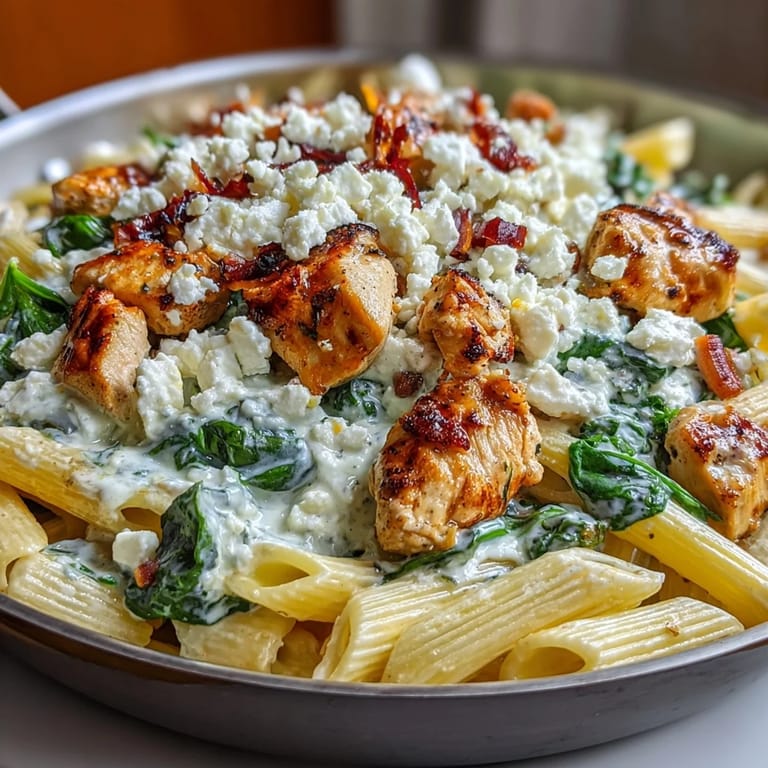
- Remove the skillet from heat—this is important because you don't want the yogurt to split—and gently fold in your Greek yogurt and crumbled feta until you have a creamy sauce coating everything. If it's too thick, add your reserved pasta water a splash at a time until you get the consistency you want.
- Season and serve:
- Taste it and adjust the salt, pepper, and red pepper flakes if you're using them, then serve immediately while it's still warm and the flavors haven't started settling into their own corners.
 Pin it
 There was a moment last month when my daughter asked if the yogurt I used was some special ingredient, and when I told her it was just regular Greek yogurt from the grocery store, she got this look like I'd revealed magic. That's when I understood why I keep making this dish—it transforms simple, everyday ingredients into something that feels special without pretending to be anything it's not.
The Lemon Factor
Lemon is doing the heavy lifting in this dish, and I learned this the hard way when I once made it without zesting first and just squeezed the juice in at the end. The difference was shocking—the zest adds this fragrant, almost floral note that the juice alone can't reach. Now I'm zealous about getting every bit of that yellow part, and I've started zesting right into the pan so the oil carries the lemon fragrance around.
Pasta Timing Matters
The only real skill in this dish is not overcooking the pasta, which is something I discovered after making it exactly once too chewy. Cooking pasta al dente means it still has a little resistance when you bite it, and since it spends more time in the creamy sauce after you combine everything, it'll keep softening. I started tasting mine a minute or two before the box says it's done, and that's made all the difference between tender and mushy.
Ways to Make It Your Own
The skeleton of this recipe is strong enough that it welcomes whatever you want to throw at it, and I've found myself improvising based on what's in my kitchen or what I'm craving that week. Sometimes the additions are intentional, and sometimes they're just happy accidents that I've decided were brilliant.
- Add a handful of chopped Kalamata olives or sundried tomatoes if you want more Mediterranean depth and saltiness.
- Swap the spinach for arugula if you want something peppery, or use a mix of both for different flavor notes.
- Throw in cherry tomatoes, artichoke hearts, or roasted red peppers—basically any vegetable that reminds you of Greece will work here.
 Pin it
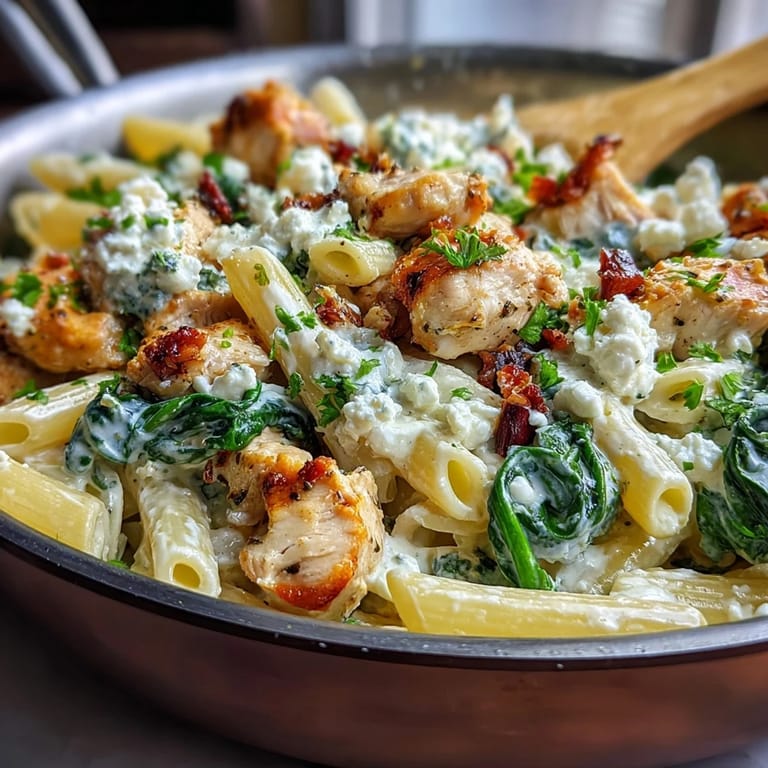
 This dish has become my answer to the question of what to make when I want to feel like I'm cooking something intentional but don't have the time or energy for fussy techniques. It's honest food that tastes like care without demanding perfection.
Frequently Asked Questions
- → Can I use chicken thighs instead of breasts?
Yes, boneless skinless chicken thighs work beautifully and may add extra richness. Just adjust cooking time by 2-3 minutes to ensure they're fully cooked through.
- → What type of pasta works best?
Short pasta shapes like penne, fusilli, or rigatoni are ideal because their ridges and tubes hold the creamy sauce well. Choose whatever you have on hand.
- → Can I make this ahead of time?
You can prep all ingredients in advance, but it's best cooked fresh. The sauce may thicken when refrigerated—add a splash of broth or warm water when reheating to restore creaminess.
- → Is this dish spicy?
Not inherently. The red pepper flakes are optional and only add mild warmth if you choose to include them. Without them, the dish focuses on tangy, savory flavors.
- → Can I use regular yogurt instead of Greek yogurt?
Greek yogurt is recommended because its thicker consistency creates a creamier sauce. Regular yogurt may make the dish too thin, but you can try adding less broth to compensate.
- → How do I prevent the yogurt from curdling?
Always remove the skillet from heat before folding in the yogurt and feta. This gentle approach prevents the dairy from separating and keeps your sauce silky smooth.