 Save
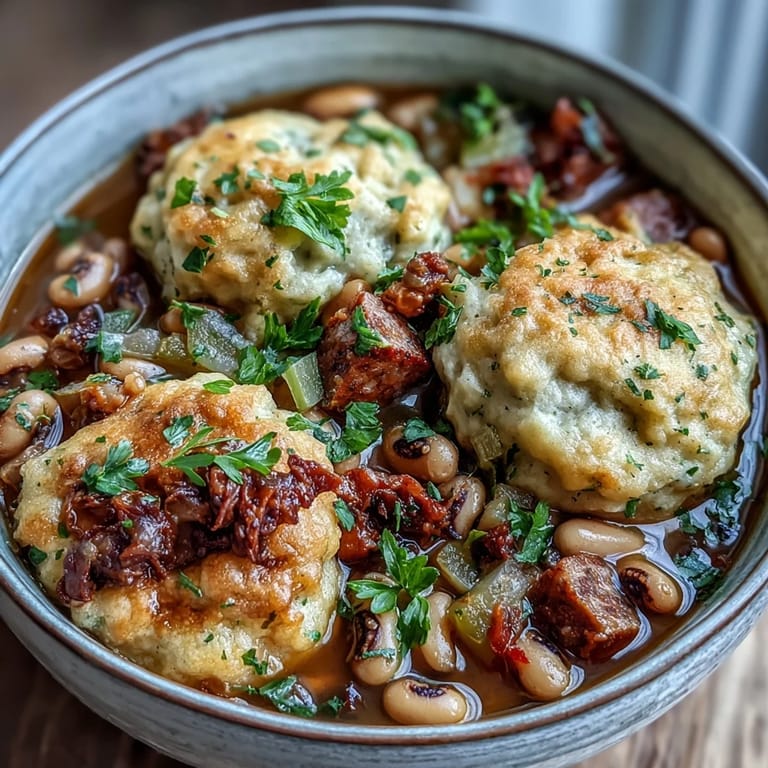
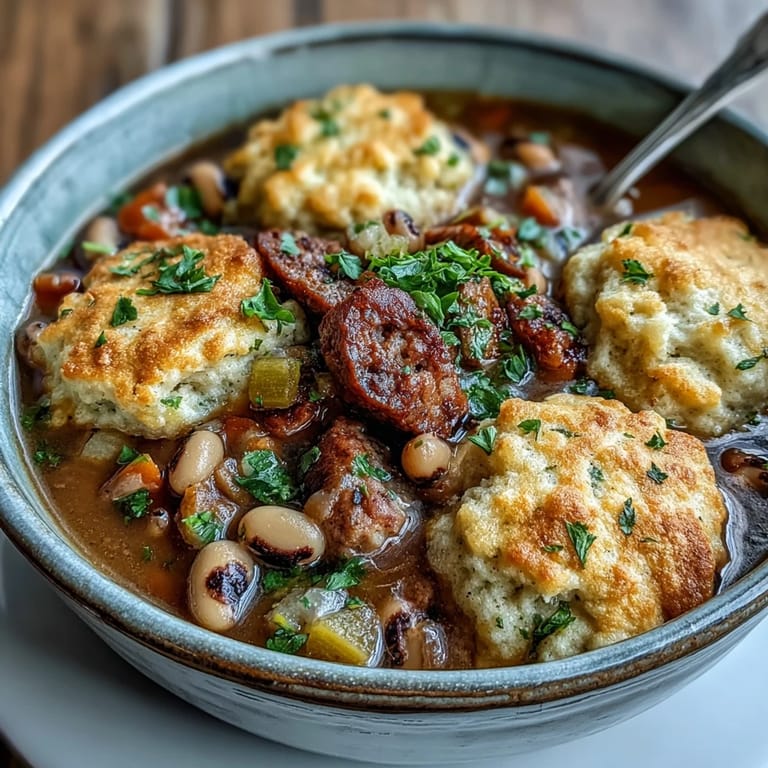
Save My grandmother kept a cast-iron pot that had seen more stews than I could count, and this black-eyed peas and sausage dumpling dish is exactly the kind of meal that made that pot legendary in our kitchen. One cold afternoon, I watched her drop spoonfuls of cornmeal batter into a bubbling pot, and the way those dumplings puffed up like little clouds changed how I thought about comfort food. There's something almost magical about a one-pot meal that combines smoky sausage, tender legumes, and fluffy dumplings all in one place. It's the kind of food that makes people linger at the table longer than they planned.
I made this for a friend who'd just moved into a new place, and the look on their face when they tasted it told me everything. They said it tasted like home, even though home meant something completely different to them than it did to me. That's when I realized this dish has this wild power to feel personal to whoever eats it, which is pretty special for something that started as a family recipe.
Ingredients
- Smoked sausage (12 oz): This is the backbone of your broth's flavor, so don't skimp on quality—look for something with a good smoke ring and natural casing if you can.
- Black-eyed peas (2 cans): Drain and rinse them well to remove excess starch, which keeps the broth clearer and the texture more refined.
- Olive oil (2 tablespoons): Just enough to get that sausage sizzling without making the stew greasy.
- Onion, garlic, celery, carrot, bell pepper: This vegetable base builds layers of flavor—don't rush this sauté step because those caramelized bits matter.
- Chicken broth (4 cups): Use low-sodium so you can control the final salt level and taste the actual ingredients.
- Thyme and smoked paprika: These two spices create the warm, slightly smoky undertone that makes people ask what the secret is.
- All-purpose flour (1 cup) and cornmeal (1/2 cup): The cornmeal is what gives the dumplings their characteristic tender crumb and subtle sweet note.
- Buttermilk (3/4 cup): This is non-negotiable for tender dumplings—it reacts with the baking soda to create that light, airy texture.
Tired of Takeout? 🥡
Get 10 meals you can make faster than delivery arrives. Seriously.
One email. No spam. Unsubscribe anytime.
Instructions
- Brown the sausage first:
- Heat your oil and get that sausage slices browned on both sides so they release their smoke flavor into the fat. You'll smell the transformation immediately, and that's your signal everything's starting right.
- Build your flavor base with vegetables:
- Once the sausage is done, add your onion, garlic, celery, carrot, and bell pepper to that seasoned oil. Let them soften for 5 to 7 minutes, stirring occasionally so nothing sticks—this is where the stew gets its body.
- Simmer the stew:
- Pour in your broth, add the black-eyed peas and all your seasonings, then bring everything to a boil before dropping the heat. Let it bubble gently for 25 minutes while you prep the dumplings—the longer simmer means the flavors marry beautifully.
- Mix the dumpling batter:
- Whisk your dry ingredients together, then gently stir in the melted butter and buttermilk until just barely combined. The key is not overworking it; lumps are your friend here because they create those tender, irregular crumbs.
- Remove the bay leaf and taste:
- Fish out that bay leaf and take a spoonful of broth to check your seasoning—add salt slowly because you want to taste those peas and sausage clearly.
- Drop in the dumplings:
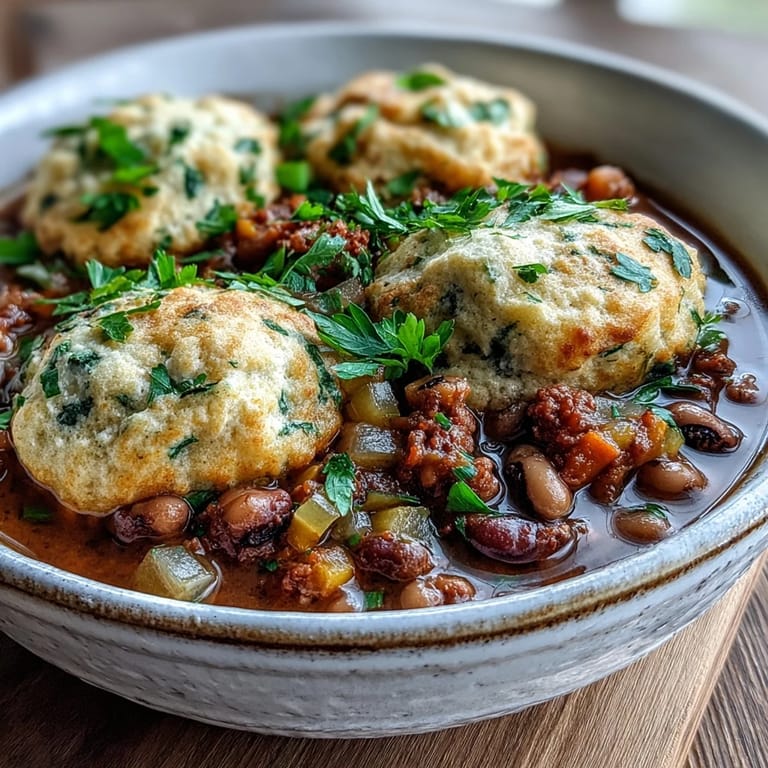
- Using a tablespoon or small cookie scoop, drop walnut-sized portions of batter directly onto the simmering surface. Cover tightly and reduce your heat to low so the steam stays trapped inside.
- Cook without peeking:
- Those dumplings need 20 to 25 minutes of undisturbed steaming to puff up properly. Every time you lift that lid, you lose steam and add minutes to the cooking time, so practice patience here.
 Pin it
 There was a moment during a family dinner when my brother went back for thirds and just shook his head in disbelief, saying he didn't know something this comforting could come from his own kitchen. That's when I understood that this dish transcends being just another stew—it becomes the reason people gather and stay.
Why the Cornmeal Dumpling Matters
Regular flour dumplings are fine, but cornmeal creates something different entirely—a slightly grainy, tender crumb that soaks up the broth while maintaining its own personality. I learned this by accident when I was low on flour and added cornmeal out of desperation, and suddenly everyone at the table noticed the improvement. The cornmeal also adds a whisper of sweetness that balances the savory sausage and smoky paprika beautifully, creating a more sophisticated flavor profile than you'd expect from such humble ingredients.
Timing and Temperature Control
The entire success of this dish hinges on respecting the simmer—too vigorous a boil and your broth becomes cloudy while your dumplings shred apart, too gentle and everything takes forever. I've learned to keep the stew at that steady, gentle bubble where you see a few bursts breaking the surface every couple of seconds, not an aggressive rolling boil. Once the dumplings go in, lowering the heat even more creates the ideal steaming environment, which is why that covered pot becomes almost sacred for those final 25 minutes.
Customizing for Your Crowd
This recipe is genuinely flexible, which makes it perfect for cooking for people with different preferences or dietary needs. I've made vegetarian versions by skipping the sausage and using vegetable broth with extra smoked paprika, and honestly, nobody at the table felt like something was missing. The spice level adjusts easily too—if you're cooking for people who like heat, add cayenne during cooking, but if you're unsure, serve a bottle of hot sauce on the side and let people control their own adventure.
- Andouille sausage brings extra heat and complexity if your crowd loves bold flavors.
- Add an extra teaspoon of smoked paprika if you're going vegetarian to deepen that savory quality.
- Fresh parsley as a garnish adds brightness and makes the pot look less rustic if you're trying to impress.
 Pin it
 This dish has become my answer to the question of what makes food truly nourishing, because it feeds both body and something deeper. Make it for people you care about, and watch how it becomes part of their story too.
Frequently Asked Questions
- → Can I use dried black-eyed peas instead of canned?
Yes, soak 1 cup dried black-eyed peas overnight, then simmer them for about 45-60 minutes until tender before adding to the stew. You may need slightly more broth and additional cooking time.
- → What type of sausage works best?
Andouille, kielbasa, or any smoked sausage adds excellent flavor. Look for fully cooked smoked sausage that will hold its shape during simmering. Spicy varieties add nice heat.
- → Why shouldn't I lift the lid while dumplings cook?
Steaming is crucial for fluffy dumplings. Lifting the lid releases the trapped steam and heat, which can cause dumplings to become dense or gummy instead of light and fluffy.
- → Can I make this vegetarian?
Absolutely. Omit the sausage and use vegetable broth instead of chicken broth. Add extra smoked paprika or a dash of liquid smoke to maintain that savory depth.
- → How do I store and reheat leftovers?
Store in an airtight container in the refrigerator for 3-4 days. Reheat gently on the stove, adding a splash of broth if needed. Dumplings may soften slightly but will still taste delicious.
- → Can I freeze this dish?
The stew freezes beautifully for up to 3 months. However, dumplings are best fresh—consider freezing just the stew portion and making fresh dumplings when reheating.