 Save
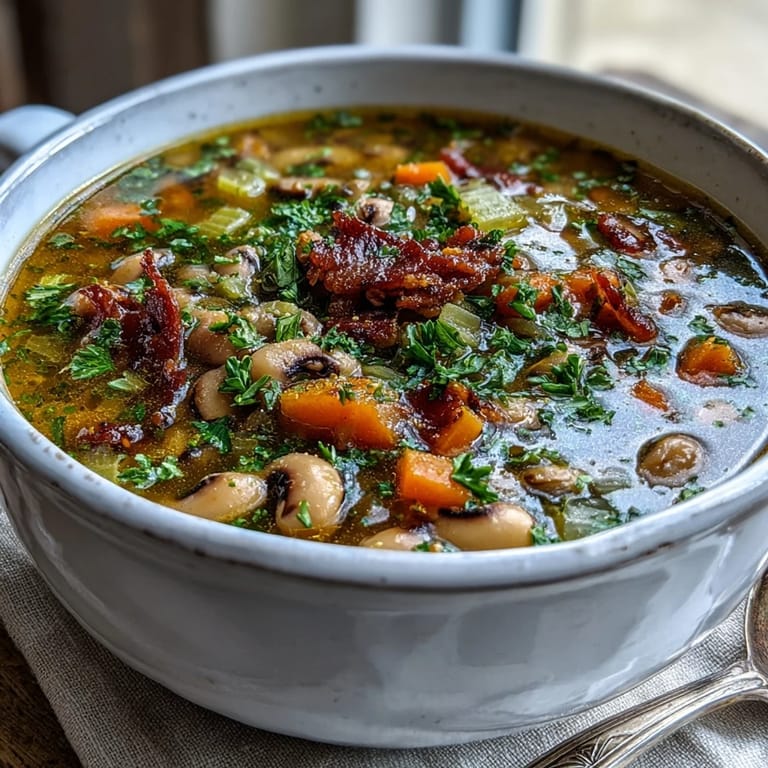
Save There's something about a pot of black-eyed peas simmering on a cold afternoon that feels like coming home. My grandmother used to make this soup every January, claiming it brought good luck for the year ahead, and while I've never been one for superstitions, I've borrowed her tradition because the soup itself is lucky enough. The bacon fat that caramelizes the vegetables, the way smoked paprika whispers through each spoonful, the tender peas that practically melt on your tongue—it's the kind of meal that doesn't ask for much but gives everything.
I made this soup for my neighbor Marcus last winter when he was recovering from surgery, and watching him eat bowl after bowl while sitting on my porch in the weak January sun—something just clicked. He asked for the recipe before he'd even finished, and I realized this wasn't just comfort food, it was the kind of dish that bridges the space between people. Now whenever I make it, I think of him, and how the simplest ingredients can become something that matters.
Ingredients
- Smoked bacon, 8 oz diced: The backbone of this soup—you need enough to render proper fat for sautéing, and the crispy bits stirred back in at the end give you textural contrast and smokiness that dried seasonings alone can't replicate.
- Black-eyed peas, 2 cups dried (soaked) or 3 cans: Dried peas give you deeper flavor and better texture if you have the time, but canned works beautifully when you're short on patience or planning—they cook faster and are just as creamy.
- Yellow onion, 1 medium finely chopped: Finely chopped means it melts into the soup rather than staying chunky, which is what you want here for a cohesive broth.
- Carrots, 2 medium diced: They sweeten the broth slightly and add a subtle earthiness that balances the smoke and salt.
- Celery stalks, 2 diced: This is part of the holy trinity base, and it adds a mild herbaceous note that ties everything together.
- Garlic, 3 cloves minced: Minced fine so it distributes evenly and doesn't overpower—you want it as a supporting player, not the lead.
- Low-sodium chicken broth, 6 cups: Low-sodium lets you control the saltiness without ending up with a soup that tastes like the ocean; it also lets the peas and bacon shine.
- Bay leaf, 1: Remove it before serving, but it adds an almost imperceptible sophistication that you'd miss if it wasn't there.
- Dried thyme, 1/2 tsp: A small amount goes a long way—it smells earthy and reminds me of Sunday dinners and someone's grandmother's kitchen.
- Smoked paprika, 1/2 tsp: This is the secret weapon that makes people ask what you did to make it taste so good; it adds smokiness without needing extra bacon.
- Freshly ground black pepper, 1/4 tsp: Ground fresh tastes sharper and brighter than pre-ground, and in a gentle soup like this, it matters.
- Salt, to taste: Add it at the end when you can actually taste what you've made—the bacon and broth already contribute sodium.
- Fresh parsley, 2 tbsp chopped (optional): A garnish that looks intentional and adds a fresh note that cuts through the richness.
Tired of Takeout? 🥡
Get 10 meals you can make faster than delivery arrives. Seriously.
One email. No spam. Unsubscribe anytime.
Instructions
- Crisp the bacon and build your fat base:
- Cut your bacon into smallish pieces and let them hit the pot over medium heat—you're listening for the sizzle to settle into a steady crackle, which tells you they're getting crispy around the edges, about 6 to 8 minutes. When they're done, pull them out with a slotted spoon and set them on a paper towel, but don't wipe out the pot; that rendered fat is liquid gold.
- Sauté your aromatics until they soften:
- Toss in your chopped onion, carrots, and celery while the fat is still warm and the pot is still hot—you'll hear them sizzle immediately. Let them go for about 5 to 6 minutes, stirring occasionally, until the onion starts turning translucent and the whole pot smells like something worth waiting for; then add your garlic and cook just one more minute so it wakes up without burning.
- Build the soup with peas and broth:
- Stir in your drained black-eyed peas, pour in the chicken broth, and add the bay leaf, thyme, smoked paprika, and black pepper all at once. Bring it to a boil—you'll see the surface start to bubble and steam rise, which is your cue to reduce the heat.
- Simmer gently until the peas are tender:
- Lower the heat, cover the pot, and let it bubble softly for 30 to 35 minutes if you used soaked dried peas, or just 20 minutes if you used canned—the peas should be soft enough to break easily with a spoon, and the broth should taste like everything in the pot has become one thing. You'll know it's ready when the flavors have mingled and the soup tastes balanced rather than like separate ingredients.
- Taste, adjust, and finish:
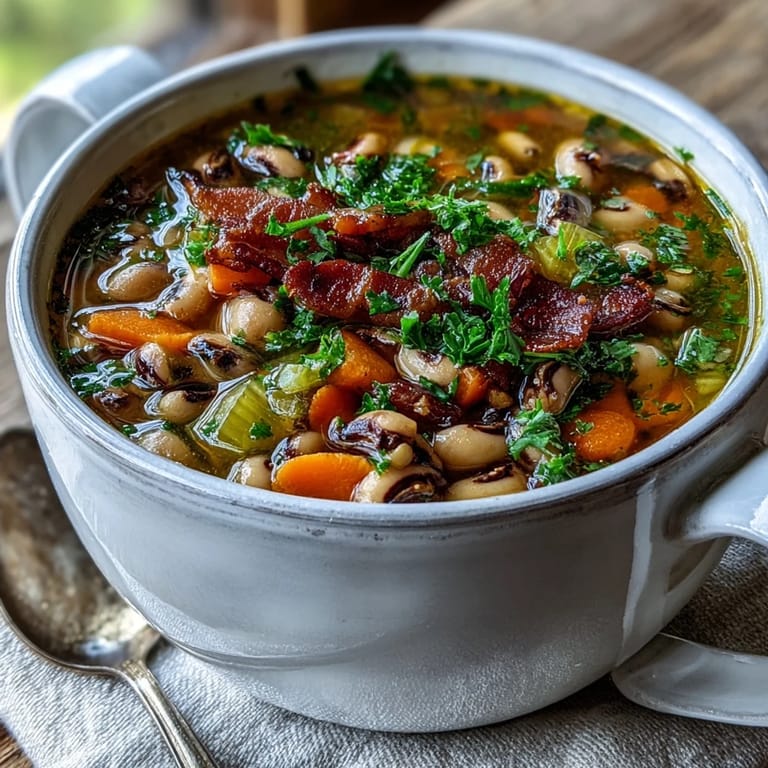
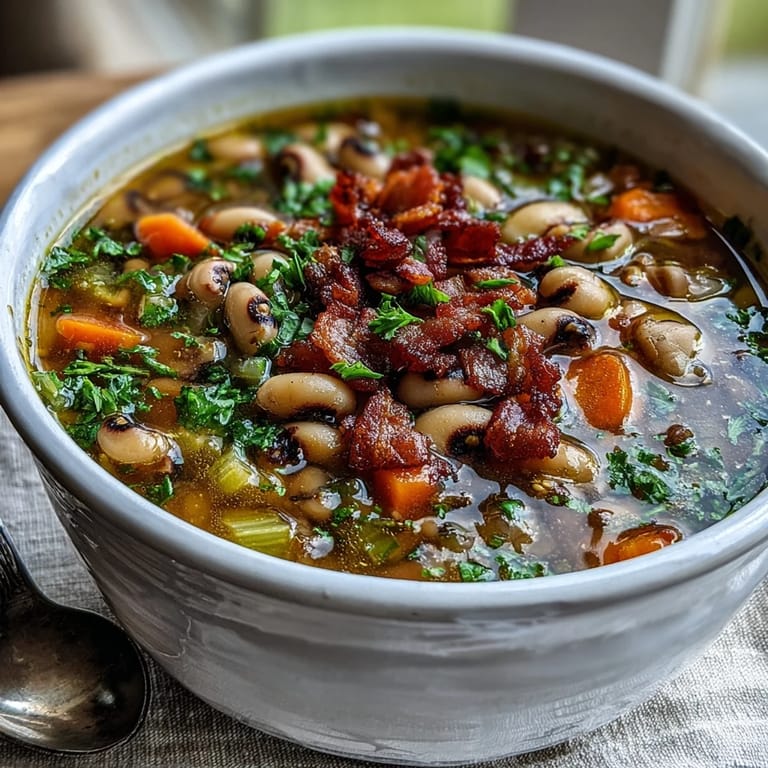
- Fish out that bay leaf, then taste a spoonful carefully—this is where you add salt if it needs it, and it usually does. Ladle into bowls and top each one with some of that reserved crispy bacon and a small shower of fresh parsley.
 Pin it
 There was a moment during that first batch I made when I lifted the lid to check on things, and the steam rose up carrying bacon smoke and thyme—it was like the smell of entire Januaries past, all the New Year soups my family had ever made. That's when I understood this recipe wasn't mine to change or improve; it was mine to respect and repeat.
The Bacon Question
I've experimented with different cuts—thick-cut, thin, even turkey bacon—and while they all technically work, the smoky kind you buy at the regular grocery store is what you want here. The smoke is essential because it sets the tone for the entire pot, and it's one of those rare cases where the middle option is the right one. Skip the fancy artisanal bacon for this soup; you need something robust and straightforward that can stand up to the long simmer without losing its character.
Dried Peas Versus Canned
I keep both in my pantry because sometimes I'm planning ahead and sometimes I'm standing in my kitchen at 5 p.m. with dinner guests arriving at 7. Dried peas that have been soaked overnight have a firmer, more custard-like texture and absorb the broth flavor more completely, but canned peas are faster and honestly, most people can't taste the difference. The truth is, a good pot of soup isn't about choosing perfect ingredients; it's about working with what you have and respecting the process.
Variations That Actually Work
This soup is forgiving enough to adapt based on what's in your kitchen or what you're craving. Add collard greens or kale in the last 10 minutes for color and nutrition, or stir in a splash of apple cider vinegar at the very end for brightness—it wakes up all the other flavors without changing the fundamental character of the dish. For a vegetarian version, skip the bacon and use vegetable broth, but add a teaspoon of liquid smoke and maybe a bit of smoked paprika to compensate for what you're losing.
- Greens added late won't fall apart and will stay vibrant rather than turning into mush.
- A squeeze of fresh lemon juice at the end brightens everything if the soup tastes a bit flat.
- Crusty bread or cornbread on the side isn't optional—it's how you're meant to eat this.
 Pin it
 This soup has become my default comfort offering, the thing I make when someone needs feeding or when January arrives and the world feels a little colder. It's the kind of recipe that gives back what you put in, which isn't a lot, but somehow it's always enough.
Frequently Asked Questions
- → Can I use canned black-eyed peas instead of dried?
Yes, simply use 3 cans (15 oz each) of rinsed and drained black-eyed peas. Reduce the simmering time to about 20 minutes since they're already tender.
- → How do I make this vegetarian?
Omit the bacon and use vegetable broth instead of chicken broth. Add a dash of liquid smoke to maintain the smoky flavor profile.
- → Can I freeze this soup?
Yes, this soup freezes well. Cool completely, then store in airtight containers for up to 3 months. Thaw overnight in the refrigerator before reheating.
- → What can I serve with this soup?
Cornbread is the classic Southern pairing, but crusty bread, dinner rolls, or even crackers work well. A simple green salad makes a nice accompaniment.
- → Can I add greens to this soup?
Absolutely! Chopped collard greens or kale can be added during the last 10 minutes of simmering. They'll wilt nicely and add extra nutrition.
- → Do I need to soak the peas overnight?
Soaking dried black-eyed peas overnight helps them cook more evenly and reduces simmering time. If you're short on time, canned peas are a convenient alternative.