 Save
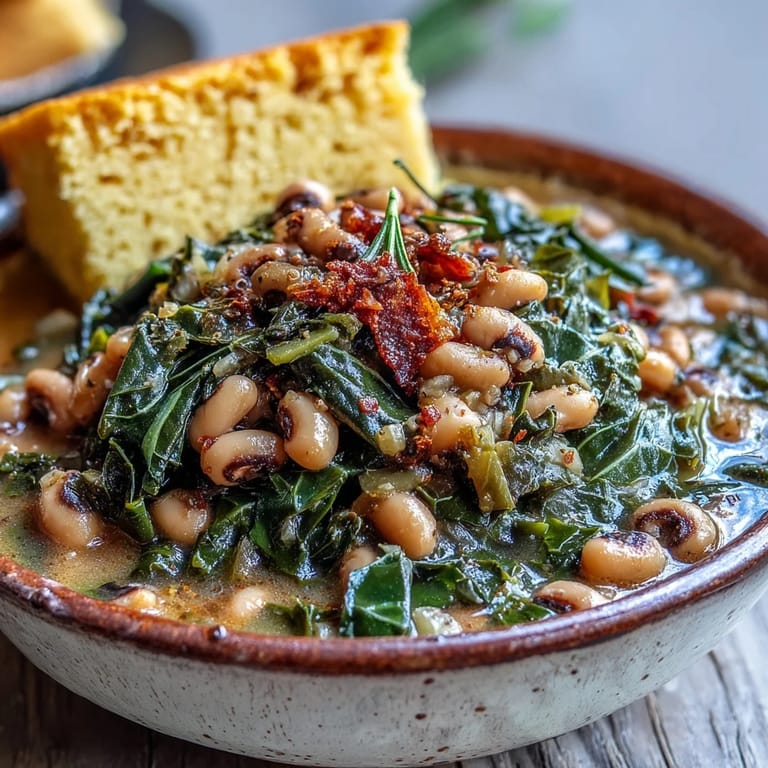
Save My grandmother used to say that black-eyed peas were liquid luck, and she'd simmer a pot of them every New Year's Eve while telling stories about ancestors who knew that food could hold memory. Years later, I found myself standing in her kitchen—now mine—watching the steam rise off a pot of my own, and suddenly understood that she wasn't just cooking; she was keeping something alive. This dish has a way of doing that, filling a kitchen with the kind of warmth that makes people linger at the table long after the meal ends.
I learned to make this dish properly when my friend Marcus came over on a cold January afternoon, tired from work, and asked if I had anything that felt like home. We chopped vegetables together while music played, and I realized midway through that this wasn't about impressing him—it was about feeding him something that mattered. The collard greens turned silky and dark, the peas softened into creamy tenderness, and by the time we sat down with bowls of it, the whole apartment smelled like comfort had moved in.
Ingredients
- Black-eyed peas (2 cups dried or 3 cans): Dried peas have more personality and absorb the broth better, but canned saves you the overnight soak—choose based on your mood and schedule.
- Collard greens (1 large bunch, about 1 lb): The stems are tough and woody, so remove them without guilt; what remains is pure tender leaf that wilts into something almost silky.
- Onion, garlic, celery, carrot (your aromatic base): This combination is non-negotiable—it's the foundation that makes everything else sing, so don't skip the mincing step.
- Bay leaf: One leaf, no more; it whispers rather than shouts, and removal at the end prevents anyone biting into a surprise.
- Smoked paprika and thyme (1 teaspoon each): These are the soul of the dish, so use fresh dried herbs if possible and don't reach for that year-old jar hiding in the back.
- Red pepper flakes (1/2 teaspoon, optional): Add these if you like a gentle heat that builds slowly rather than hits all at once.
- Vegetable or chicken broth (6 cups): Quality matters here since it becomes the liquid that carries all the flavor, so taste it before adding if you're uncertain.
- Apple cider vinegar (1 tablespoon): This small amount brightens everything at the end, cutting through the richness without making anything sour.
- Smoked ham hock or turkey (4 oz, optional): If you use this, it releases smoke and saltiness into the broth, so taste before seasoning with extra salt.
- Cornbread and hot sauce (for serving): These are the final flourishes that let each person customize their bowl, so set them out and let people find their own balance.
Tired of Takeout? 🥡
Get 10 meals you can make faster than delivery arrives. Seriously.
One email. No spam. Unsubscribe anytime.
Instructions
- Soak your peas if starting from dried:
- Cover them with cold water and let them sit overnight—this softens them and reduces cooking time significantly. In the morning, drain them and set aside.
- Build your flavor base:
- Heat oil in a large Dutch oven over medium heat and add onion, celery, and carrot; listen for the gentle sizzle and watch until everything softens into translucent pieces, about 5 minutes. When the vegetables smell sweet and have lost their rawness, you're ready to move forward.
- Wake up the garlic:
- Add minced garlic and cook for exactly 1 minute—this is enough time for it to perfume the oil without becoming bitter. You should smell something bright and almost sharp lifting from the pot.
- Toast your meat if using:
- Add ham hock or smoked turkey and let it sit in the heat for 2 minutes so the smoke infuses the oil. This step seems small but changes everything.
- Coat the peas in spice:
- Add black-eyed peas, bay leaf, smoked paprika, thyme, and red pepper flakes, stirring everything together so each pea gets touched by the spices. You're looking for a moment where it all comes together in the pot.
- Simmer patiently:
- Pour in broth and bring to a rolling boil, then reduce heat and cover; let it bubble gently for 45 minutes if using dried peas or 20 minutes for canned. The kitchen will start to smell like something your body has been waiting for.
- Add your greens at the right moment:
- Stir in chopped collard greens and simmer uncovered for 30 minutes until the peas are tender enough to break between your tongue and the roof of your mouth. The greens will darken and become almost velvety.
- Finish with brightness and balance:
- Stir in apple cider vinegar, remove the bay leaf and any meat (shredding it if there's enough to return), and taste before seasoning with salt and pepper. This is when you adjust everything to match what you're craving.
 Pin it
 Years ago at a family gathering, I watched my uncle take a spoonful of this dish and close his eyes for a moment, and I understood then that food carries more than nutrition—it carries stories and belonging. Every time I make this now, someone asks for the recipe or tells me it tastes like their grandmother used to make it, and I realize this dish is bigger than any one kitchen.
The Tradition Behind the Pot
Black-eyed peas on New Year's Day isn't just a recipe; it's a promise whispered in kitchens across the South that the year ahead will bring prosperity and good fortune. Whether you believe in that or not, there's something powerful about sitting down to eat something made with intention, something that people have been cooking for generations. The ritual of it—the soaking, the simmering, the waiting—slows you down enough to notice that you're alive and feeding yourself well.
Making It Your Own
This recipe has a strong backbone, but it also invites tinkering; I've made it with kale when collards weren't available, added a splash of bourbon once on a whim, and even experimented with cumin when I was feeling adventurous. The beauty is that it holds up to variation while maintaining its essential warmth and soul. Don't be afraid to adjust the spices, the broth, or the additions based on what's in your kitchen and what your body is asking for.
Serving and Storing
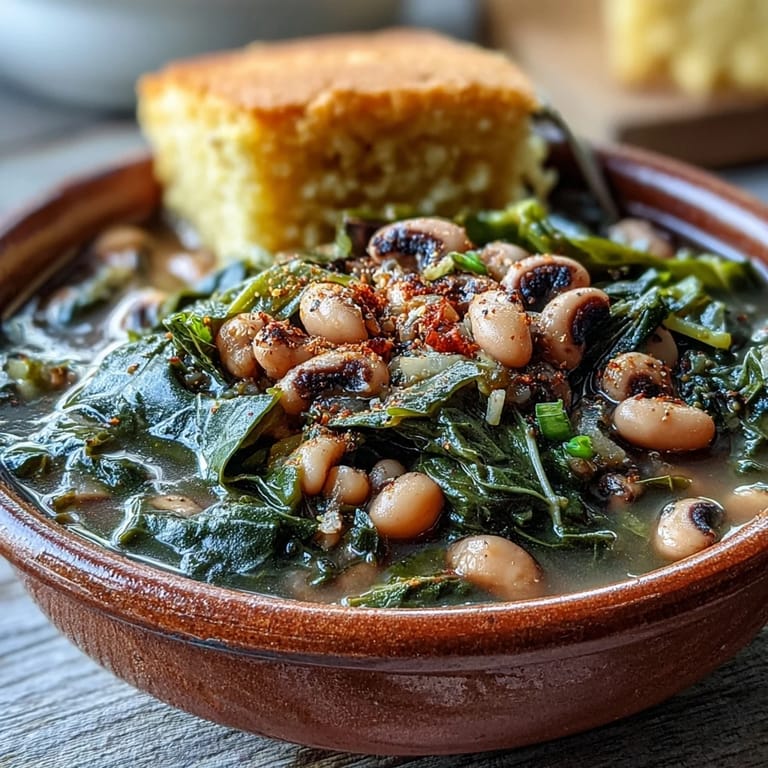
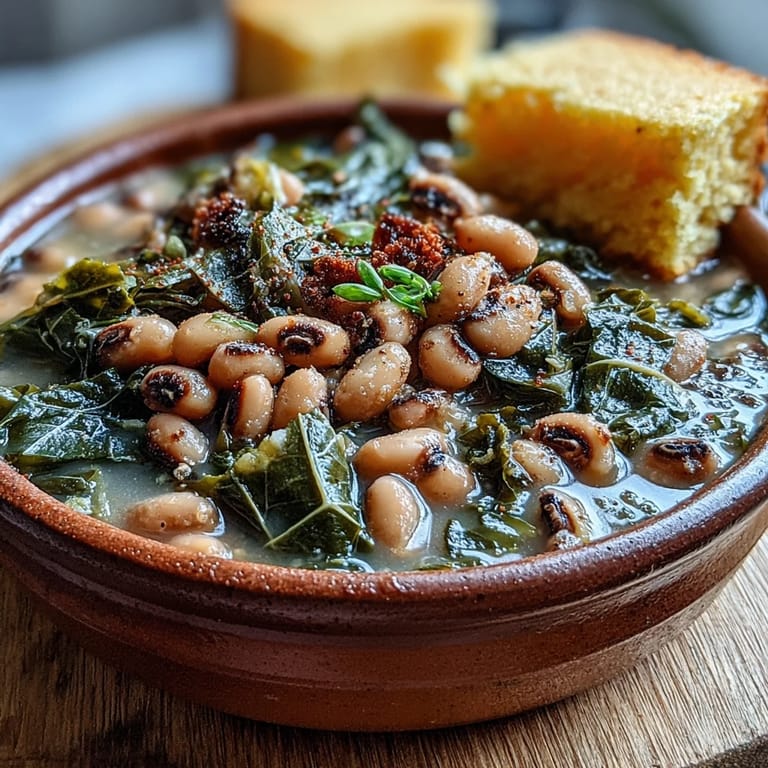
Serve this hot in bowls with cornbread wedges on the side and a bottle of hot sauce so people can add heat according to their preference. Leftovers keep for up to four days in the refrigerator and actually taste deeper and more developed the next day, making this perfect for meal prep or casual lunches.
- Reheat gently on the stovetop with a splash of water or broth to restore the silky consistency.
- Leftovers freeze beautifully for up to three months, thawing overnight in the refrigerator.
- This pairs wonderfully with crisp white wine, iced tea, or simply water, letting the food be the star.
 Pin it
 This dish has a way of making people feel seen and cared for, which is really what cooking is all about. Make it for people you love, or make it for yourself and sit with a bowl of warmth when the world feels uncertain.
Frequently Asked Questions
- → Why do people eat black-eyed peas and collard greens on New Year's?
Black-eyed peas symbolize coins and collard greens represent folded money, making this combination a traditional Southern New Year's dish believed to bring prosperity and good luck for the coming year.
- → Do I need to soak dried black-eyed peas before cooking?
Yes, dried black-eyed peas should be soaked overnight in cold water to reduce cooking time and ensure even tenderness. Alternatively, you can use canned peas for a quicker preparation.
- → Can I make this dish vegetarian?
Absolutely. Simply omit the ham hock or smoked turkey and use vegetable broth instead of chicken broth. The smoked paprika still provides a depth of flavor that makes this satisfying without meat.
- → How long do leftovers keep in the refrigerator?
Leftovers store well in an airtight container for up to 5 days. Many people find the flavors improve overnight as the peas and greens continue to absorb the seasoned broth.
- → What can I substitute for collard greens?
Kale, mustard greens, or turnip greens work well as substitutes. Keep in mind that mustard and turnip greens have a more pronounced peppery bite, while kale is slightly milder than collards.
- → Why add apple cider vinegar at the end?
The vinegar brightens the dish and cuts through the richness of the greens and peas. It also helps balance the earthy flavors and makes the nutrients in the collards more bioavailable.