 Save
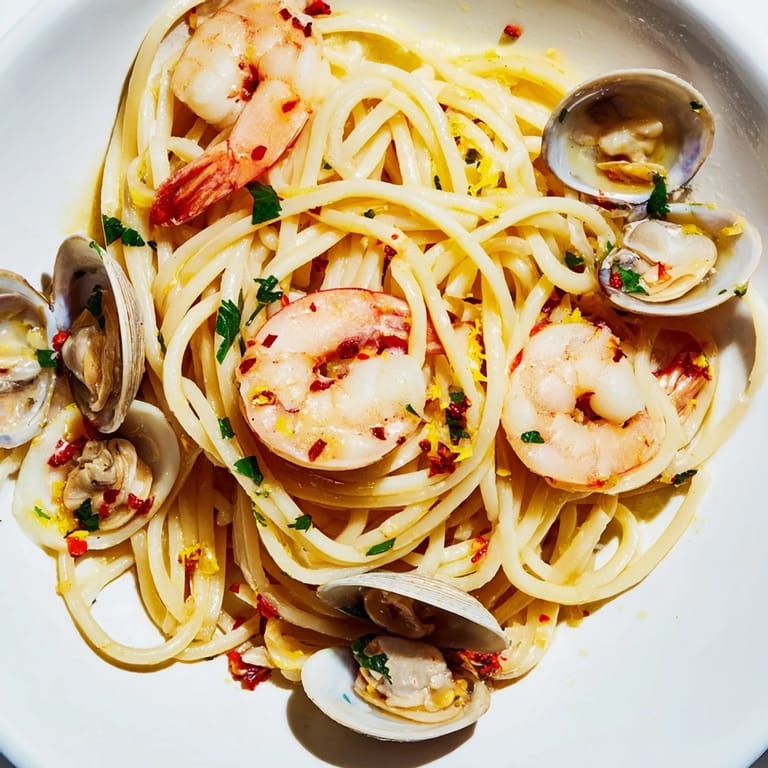
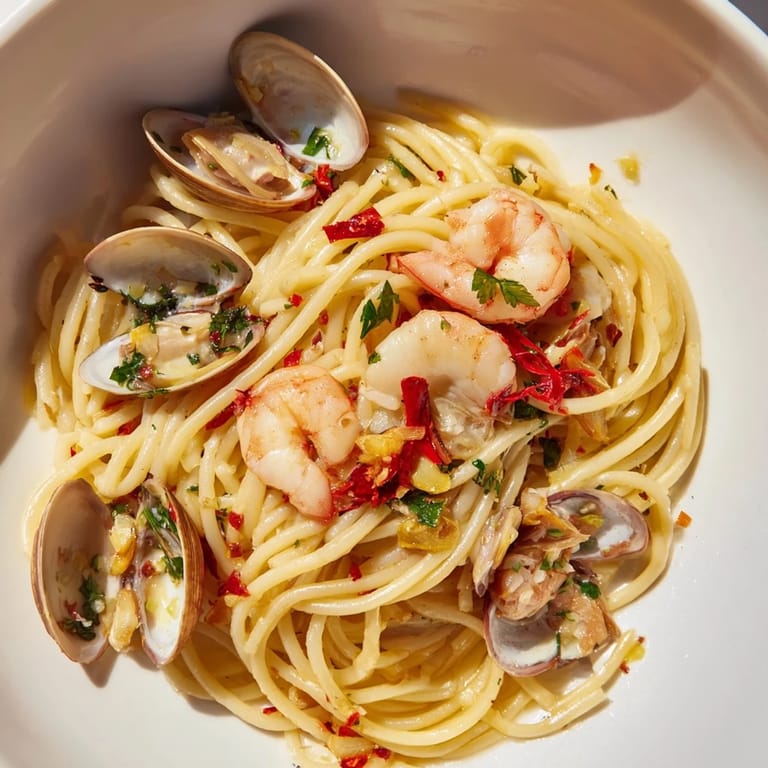
Save There's something about the smell of garlic hitting hot olive oil that makes you feel like you're cooking in a Roman kitchen, even if you're in a small apartment with a view of someone else's brick wall. I discovered this dish one weeknight when I had shrimp and clams that needed cooking, a box of spaghetti, and maybe too much confidence in my ability to pull off something restaurant-quality at home. What emerged was lighter than I expected, more elegant than I'd dared hope—just good olive oil, garlic, and the sea doing what they've always done together.
I made this for my sister during one of those unexpected dinners where she showed up around six o'clock with a bottle of wine and a story about her day. By the time she finished talking, the pasta was ready, the kitchen smelled incredible, and she forgot what she'd been stressed about—that's when I knew this recipe was a keeper.
Ingredients
- Large shrimp, 250 g: Look for ones that feel firm and smell like the ocean, not ammonia; they'll cook in just two minutes, so don't walk away from the pan.
- Fresh clams, 500 g: Scrub them under cold water and discard any that stay open when tapped—those won't cook properly and will ruin your sauce.
- Spaghetti, 400 g: The thin, delicate shape lets the oil cling to each strand; don't skimp on quality here.
- Extra virgin olive oil, 6 tbsp: This is your sauce, so use something you'd actually taste on bread—not the bottom-shelf stuff.
- Garlic cloves, 5, thinly sliced: Slice them yourself and watch them like a hawk; thirty seconds too long and bitter garlic ruins everything you've built.
- Red chili flakes, 1/2–1 tsp: Start with less than you think you need—the heat lingers and grows.
- Dry white wine, 1/2 cup: Something you'd drink, never something labeled 'cooking wine'—the clams deserve better.
- Lemon, 1: Zest it before juicing to avoid wasting any of that bright, fragrant oils.
- Fresh flat-leaf parsley, 1/4 cup chopped: Add most of it at the end so it stays green and alive, not cooked into submission.
- Salt and black pepper: Taste as you go; the pasta water and seafood both bring salt, so be gentle.
Tired of Takeout? 🥡
Get 10 meals you can make faster than delivery arrives. Seriously.
One email. No spam. Unsubscribe anytime.
Instructions
- Get your water boiling and pasta going:
- Fill a large pot with water, salt it generously so it tastes like the sea, and bring it to a rolling boil. Drop in the spaghetti and cook it according to the package, but start tasting it a minute or two before the package says—you want it tender but still with a little resistance when you bite it.
- Infuse the oil with garlic and heat:
- While the pasta cooks, pour olive oil into a large skillet and set it over medium heat. Once shimmering, add your sliced garlic and chili flakes and listen for the gentle sizzle; you're looking for that golden moment, about one minute, where the garlic turns pale and fragrant but not dark and bitter.
- Sear the shrimp briefly:
- Add the shrimp to the warm oil and let them cook undisturbed for about a minute on one side, then flip and cook just until they turn pink throughout—about two minutes total. They'll keep cooking when you add everything else, so don't overdo it.
- Steam open the clams:
- Pour in the white wine and add the scrubbed clams, then cover the skillet and let the steam do its work. Shake the pan every minute or so to help them open evenly; after three to five minutes, they'll pop open like little gifts, and you can discard any stubborn ones that refuse.
- Bring it all together:
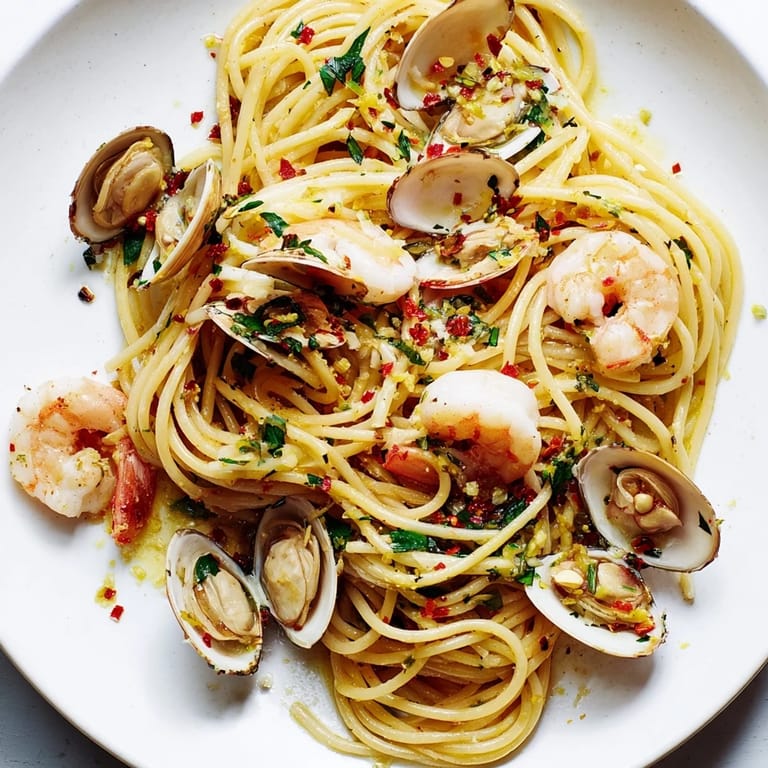
- Return the shrimp to the skillet, then add the drained pasta, lemon zest, lemon juice, and most of the fresh parsley. Toss everything gently with tongs, adding splashes of that reserved pasta water until the whole dish becomes silky and cohesive, clinging to the pasta like a light sauce.
- Taste and serve:
- Season with salt and pepper, tasting as you go—remember the pasta water adds salt too. Divide among bowls and serve immediately while everything's still hot, with extra parsley scattered on top and lemon wedges on the side.
 Pin it
 I'll never forget the first time someone closed their eyes while eating this and just sat there, fork suspended, tasting it properly. That's when food stops being about feeding yourself and becomes about connection.
The Art of the Aglio e Olio
Aglio e olio is one of Italy's oldest, simplest dishes—it was born from pantries that had almost nothing, and somehow that constraint created something perfect. The genius is that nothing hides; if your garlic is bitter, everyone knows it; if your olive oil is flat, the whole thing falls apart. This version adds seafood, but the principle stays the same: respect each ingredient and let it speak.
Seafood Substitutions and Swaps
This dish is endlessly flexible if you're missing something or want to experiment. Mussels cook a bit faster than clams and have a slightly sweeter brine; calamari rings sear beautifully if you add them with the shrimp; scallops turn golden and buttery in just two minutes if you pat them dry first. The structure stays the same, and the magic stays with you.
Wine, Timing, and the Details That Matter
The white wine isn't just flavor—it's a steaming agent and an acid that helps brighten the seafood. Pick something you'd drink, something crisp and dry like a Pinot Grigio or Vermentino, and you're halfway to making this taste like you took a cooking class in Italy. The lemon juice plays a similar role, cutting through the richness of the oil and keeping everything alive on your palate. A squeeze of fresh lemon at the table lets people finish the dish exactly how they want it.
- Keep your burner at medium or medium-high; high heat will brown your garlic too fast and seize your shrimp into rubber.
- The whole dish, from start to finish, takes about thirty-five minutes—don't rush it, but don't let it sit around either.
- Have everything prepped before you start cooking; the actual cooking moves too fast for fumbling with knives.
 Pin it
 This is the kind of dish that reminds you why people gather around tables in the first place. Make it, feed the people you love, and watch them remember why simple, honest food done right never goes out of style.
Frequently Asked Questions
- → What type of pasta works best for this dish?
Spaghetti is preferred for its long strands that hold the garlic-infused olive oil and seafood juices beautifully.
- → Can I substitute the clams with other seafood?
Yes, mussels or calamari are excellent alternatives that blend well with the garlic and chili flavors.
- → How do I prevent the garlic from burning during cooking?
Cook garlic over medium heat just until golden and fragrant, about one minute, stirring constantly to avoid bitterness.
- → What role does the reserved pasta water play in this dish?
It helps create a silky sauce by loosening the mixture and helping the flavors cling to the pasta.
- → Can this dish be prepared gluten-free?
Yes, substituting regular spaghetti with gluten-free pasta keeps the dish accessible while preserving the flavors.
- → What wine pairs well with this seafood pasta?
A crisp Italian white wine, such as Pinot Grigio, complements the seafood and citrus notes perfectly.