 Save
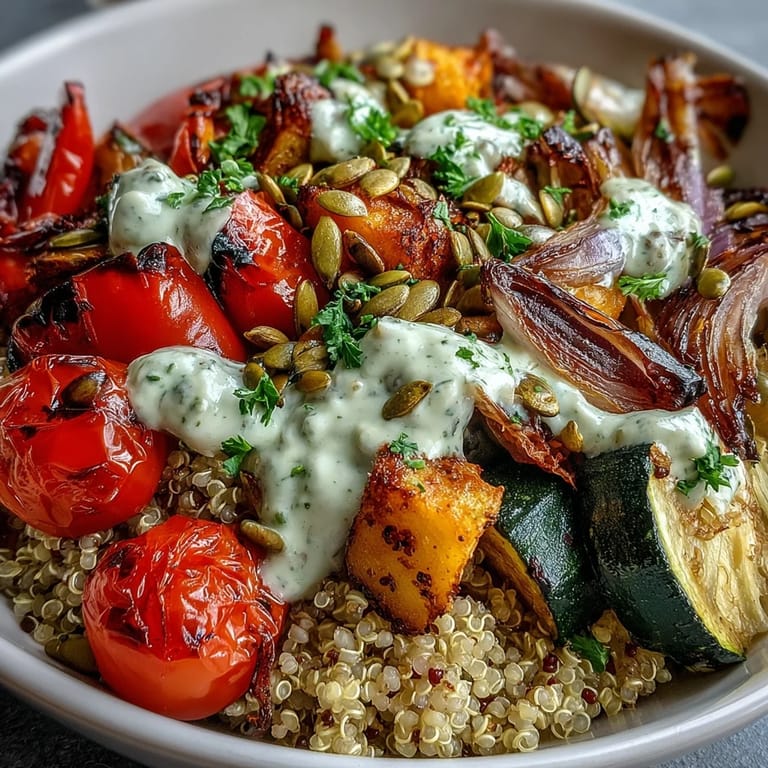
Save There's something almost meditative about watching vegetables transform on a sheet pan—the bell peppers begin to blister at the edges, the zucchini softens into something almost buttery, and suddenly your kitchen smells like a Mediterranean market. I stumbled onto this bowl on a Tuesday when my fridge was overflowing with vegetables I'd bought with good intentions but no plan. What started as panic became one of those meals that feels both deeply nourishing and surprisingly simple, like I'd discovered something I'd been missing without knowing it.
I made this for friends who'd been skeptical about plant-based eating, and watching them ask for seconds while the steam still rose from their bowls was one of those quiet victories in the kitchen. One guest actually said it tasted like something they'd eat at a restaurant they'd have to save up for, which made my tiny apartment feel fancy for an evening.
Ingredients
- Red bell pepper: One medium pepper, diced—the sweetness balances everything and adds a natural brightness that lemon alone can't quite achieve.
- Zucchini: Sliced into half-moons, about one medium—it soaks up the olive oil and becomes almost creamy when roasted properly.
- Red onion: Cut into wedges, one small—the paprika and heat transform them into something almost caramelized and far less harsh than raw.
- Cherry tomatoes: Halved, about one cup—they burst and concentrate into little pockets of sweetness, so don't skip them even if they seem optional.
- Carrot: Sliced on a bias, one medium—adds texture and natural sweetness without any added sugar.
- Olive oil: Two tablespoons—this is your main vehicle for flavor, so use something you actually enjoy tasting.
- Dried oregano and smoked paprika: One teaspoon each—these two spices do almost all the seasoning work, creating that Mediterranean backbone.
- Salt and black pepper: Half teaspoon salt and a quarter teaspoon pepper—season as you taste, because overly salted roasted vegetables are hard to rescue.
- Quinoa: One cup rinsed—rinsing removes the bitter coating nobody talks about but everyone notices, and it's a thirty-second step that changes everything.
- Water: Two cups for the quinoa—the ratio matters more than you'd think, so use a measuring cup even if you usually eyeball things.
- Tahini: A quarter cup—this is the creamy base, and the quality does matter because it's not hidden under other flavors.
- Lemon juice: About two tablespoons from one lemon, fresh—bottled just doesn't cut it here because the sauce is so simple that every ingredient shows.
- Maple syrup or honey: One tablespoon—this rounds the tahini's earthiness and adds a subtle warmth that keeps it from tasting too savory.
- Garlic: One clove, minced—raw garlic in the sauce gives it personality, but use just one clove unless you want it to overshadow everything else.
- Water for the sauce: Three to four tablespoons—add gradually while whisking because you can always add more but you can't take it back.
- Fresh parsley and toasted pumpkin seeds: Optional garnishes that add texture and a fresh finish if you have them on hand.
Tired of Takeout? 🥡
Get 10 meals you can make faster than delivery arrives. Seriously.
One email. No spam. Unsubscribe anytime.
Instructions
- Heat your oven and prepare the stage:
- Preheat to 425°F (220°C) and line a large baking sheet with parchment paper so cleanup becomes almost laughably easy. This temperature is hot enough to caramelize the vegetables without drying them out, which is the sweet spot you're aiming for.
- Toss the vegetables in olive oil and spices:
- Spread your diced bell pepper, zucchini slices, onion wedges, halved cherry tomatoes, and carrot slices on the sheet, then drizzle with olive oil and sprinkle with oregano, smoked paprika, salt, and pepper. Toss everything together with your hands until each vegetable piece is coated—this is where the flavor begins, so don't rush it.
- Roast until golden and tender:
- Spread the vegetables in a single layer and roast for 25 to 30 minutes, stirring halfway through so they brown evenly rather than sticking to one side of the pan. You'll know they're done when the edges start to char slightly and the zucchini is soft enough to pierce with a fork.
- Prepare the quinoa while vegetables roast:
- Rinse one cup of quinoa under cold water until the water runs clear, then combine it with two cups of water and a quarter teaspoon of salt in a medium saucepan. Bring it to a boil, then immediately reduce the heat to low, cover, and let it simmer undisturbed for 15 minutes.
- Rest and fluff the quinoa:
- After 15 minutes, remove the pan from heat and let it sit covered for five more minutes—this resting period lets the grains finish absorbing any remaining water and become light and fluffy. Fluff it with a fork, breaking up any clumps gently.
- Whisk together the creamy tahini sauce:
- In a mixing bowl, combine a quarter cup of tahini, two tablespoons of fresh lemon juice, one tablespoon of maple syrup or honey, one minced garlic clove, and a quarter teaspoon of salt. Whisk until the ingredients start to combine, then add water one tablespoon at a time while whisking until you reach a smooth, pourable consistency that drapes over the back of a spoon but flows easily.
- Assemble your bowls with intention:
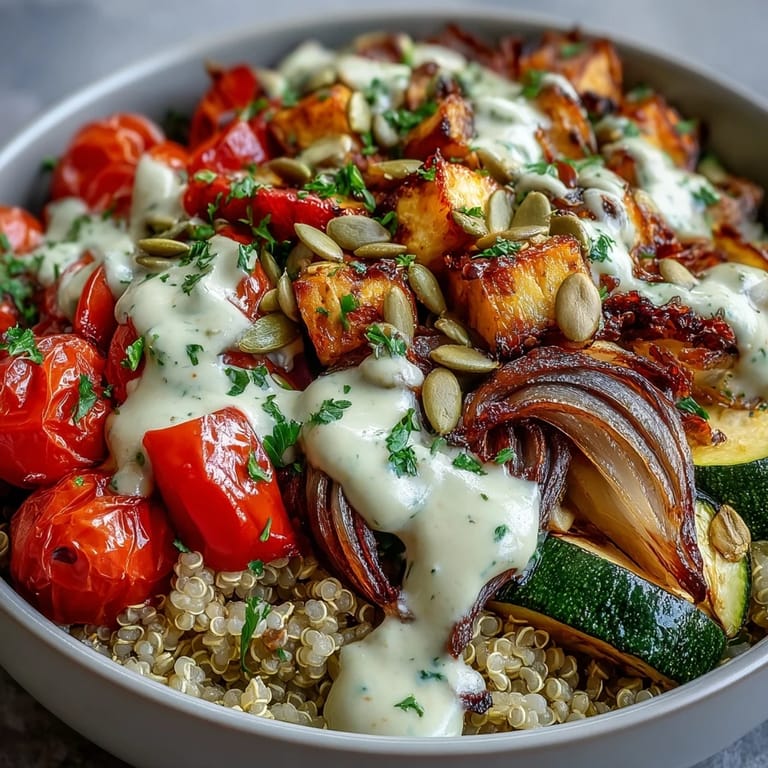
- Divide the fluffy quinoa among four bowls, top each with the roasted vegetables, then drizzle generously with the tahini sauce so every bite gets some of that creamy richness. Garnish with chopped fresh parsley and toasted pumpkin seeds if you have them, which add a little crunch and visual brightness.
 Pin it
 My partner ate this silently for the first few bites, which I've learned is the highest compliment in our kitchen—it meant the flavors were speaking for themselves. When he finally looked up and asked if this was something we could make every week, I realized this bowl had quietly become one of those meals that feels like it's been in my life forever.
Seasonal Swaps That Keep It Fresh
The beauty of this bowl is that it doesn't ask you to be loyal to one set of vegetables—it actually thrives on whatever your market or garden offers. In summer, I swap the carrot for fresh corn kernels and add grilled summer squash instead of zucchini, which gives everything a lighter feel. When fall arrives, I dice up roasted sweet potato and toss in some charred broccoli florets for something earthier and more substantial. Winter is when I lean into root vegetables and hardy greens, roasting chunks of butternut squash alongside Brussels sprouts that become crispy at the edges. The tahini sauce and quinoa stay constant, but the vegetables become a conversation with the season rather than a fixed recipe.
Making It More Substantial
There was a phase when I made this bowl strictly vegetarian, but then a friend mentioned she always added chickpeas, and suddenly the whole thing became filling enough for people who actually need to feel full until dinner. Now I roast a can of drained and patted-dry chickpeas right alongside the vegetables—toss them with a little olive oil and the same spices, and they become crispy little flavor bombs that add serious protein. You can also slice and pan-fry some tofu if you prefer something more neutral, letting the sauce and spices do the heavy lifting. A soft-boiled egg nestled into the center of the bowl adds richness and protein without changing the vegan nature of the base, which feels like having it both ways.
Storage and Meal Prep Secrets
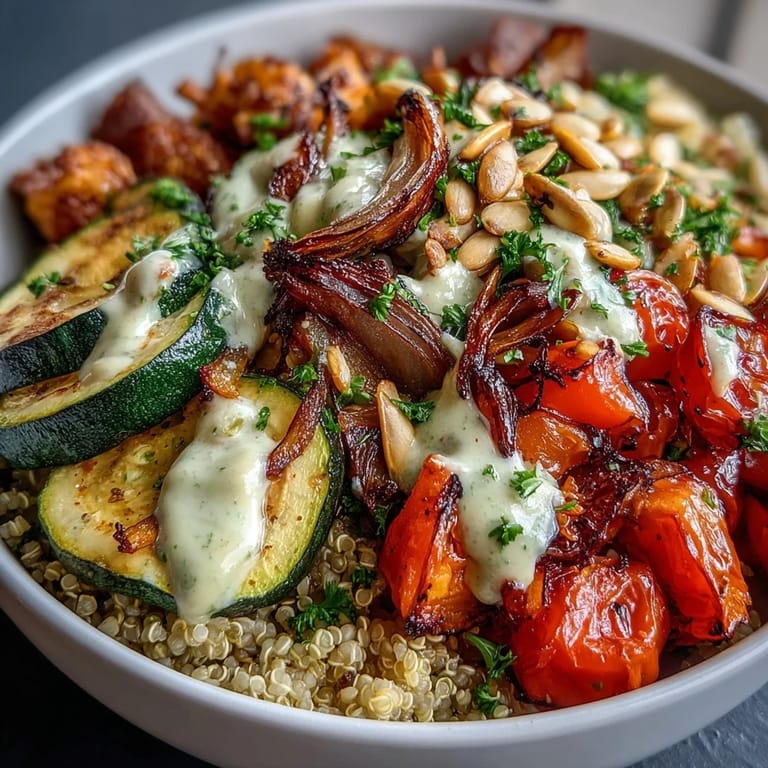
This bowl is genuinely forgiving to meal prep, which makes it dangerous in the best way—the kind of meal you can assemble on Sunday and still look forward to eating on Wednesday. The roasted vegetables actually taste better the next day once their flavors have settled and deepened, and the quinoa keeps for up to five days in an airtight container. The one thing I've learned is to keep the tahini sauce separate until you're ready to eat because it soaks into the grains over time and makes everything soft and less interesting. Store the sauce in a small jar and drizzle it fresh each time, and your bowl stays vibrant and textured even after sitting in the fridge. If you're batch cooking, you can have four assembled bowls ready to grab from the fridge, but I promise yourself five minutes to warm everything gently and add fresh sauce before eating—it transforms the experience.
- Roasted vegetables keep in an airtight container for up to five days and can be reheated gently or eaten cold depending on your mood.
- The tahini sauce thickens in the fridge, so thin it with a splash of warm water before drizzling if it's been sitting overnight.
- Everything tastes best at room temperature or slightly warm, so don't just eat it straight from the fridge unless you're in a true hurry.
 Pin it
 This bowl taught me that food doesn't need to be complicated to feel nourishing, and that sometimes the best meals are the ones where every ingredient gets to taste like itself. Make it once, and I promise you'll find yourself craving it on ordinary weeknights when you need something that feels both simple and intentional.
Frequently Asked Questions
- → Can I use different vegetables?
Absolutely. Swap in sweet potato, broccoli, eggplant, or any seasonal vegetables you enjoy. Just keep the total amount similar and adjust roasting time as needed for harder vegetables.
- → How long does this keep in the refrigerator?
Stored in airtight containers, the roasted vegetables and quinoa will keep for 4-5 days. The tahini sauce stays fresh for up to 3 days. Store components separately and assemble when ready to eat.
- → Can I make this ahead for meal prep?
Yes, this bowls perfectly for meal prep. Roast a large batch of vegetables, cook quinoa in bulk, and prepare the tahini sauce. Portion into containers and drizzle with sauce just before serving.
- → What can I use instead of tahini?
If you need a tahini substitute, try cashew butter, almond butter, or sunflower seed butter for a similar creamy consistency. Each will impart a slightly different flavor profile.
- → How can I add more protein?
Add chickpeas to the roasting pan, serve with grilled tofu, or top with roasted chickpeas. Hemp seeds, chopped walnuts, or a dollop of Greek yogurt also boost protein content.
- → Is this bowl gluten-free?
Yes, this bowl is naturally gluten-free. Quinoa is a safe gluten-free grain, just be sure to rinse it thoroughly before cooking to remove any bitter coating.