 Save
Save The first time I packed these mason jar noodles for my week, I realized I'd finally cracked the code on meal prep that doesn't taste like cardboard by Wednesday. My coworker opened her container at lunch and the steam rose up with this perfect sesame and ginger aroma, and suddenly everyone wanted to know what she was eating. That moment taught me that meal prep doesn't have to be boring—it just needs the right balance of fresh vegetables, a sauce that actually makes you excited to eat, and the practicality of just adding hot water when hunger hits.
I remember standing in my kitchen on a Sunday evening, my friend watching skeptically as I layered ingredients into jars like I was building tiny edible towers. When I handed her one to test the next day, she texted back a photo with the caption "This is witchcraft," and I've been making these ever since because there's something magical about the anticipation of what emerges when hot water meets cold noodles and crisp vegetables.
Ingredients
- Dried ramen or rice noodles (200 g): Cook them just until tender but still with a tiny bit of resistance because they'll soften more when you add hot water later—overcooked noodles turn mushy in the jar.
- Cooked chicken breast, tofu, or cooked shrimp (200 g, diced): Keep these bite-sized so they're easy to eat straight from the jar, and make sure they're completely cooled before layering so they don't wilt the vegetables below.
- Shredded carrots (1 cup): Raw carrots stay crisp all week and add a subtle sweetness that balances the savory sauce beautifully.
- Thinly sliced bell peppers (1 cup, red or yellow): The thinner you slice them, the faster they soften when the hot water hits, creating layers of texture.
- Baby spinach or kale (1 cup): This wilts slightly when the hot water is added, creating a tender green base that soaks up all that sauce.
- Thinly sliced scallions (1/2 cup): Slice these last because they're best when they still have that fresh, sharp bite.
- Bean sprouts (1/2 cup): These add crunch and stay delicate even after days in the refrigerator if you keep them sealed properly.
- Soy sauce (4 tbsp, or tamari for gluten-free): This is your flavor anchor—don't skip the quality here, and use tamari if you're cooking for anyone with gluten sensitivities.
- Rice vinegar (2 tbsp): The acidity keeps everything tasting bright and fresh, preventing the jar from tasting flat by day three.
- Sesame oil (2 tbsp): This is where the magic happens—a little goes a long way and transforms ordinary vegetables into something restaurant-quality.
- Honey or maple syrup (1 tbsp): Just a touch of sweetness rounds out the sharp and savory notes without making it dessert-like.
- Sriracha or chili sauce (2 tsp, optional): Add this only if you love heat, and remember that it intensifies as the jar sits in the refrigerator.
- Minced garlic (1 clove): Fresh garlic is essential here—jarred won't give you that same punch of flavor.
- Grated fresh ginger (1 tsp): Microplane it fresh right before assembling so it doesn't oxidize and lose its zing.
- Chopped cilantro, roasted nuts, sesame seeds, and lime wedges (optional toppings): Save these for serving because they're where you can customize each jar based on what sounds good that particular day.
Tired of Takeout? 🥡
Get 10 meals you can make faster than delivery arrives. Seriously.
One email. No spam. Unsubscribe anytime.
Instructions
- Cook and cool your noodles:
- Bring a large pot of water to a rolling boil and cook your noodles according to the package, but aim for the lower end of the time range so they're still just slightly firm in the center. Drain them into a colander and run cold water over them while gently stirring with chopsticks or a fork—this stops the cooking and prevents them from clumping together.
- Whisk your sauce into something irresistible:
- In a small bowl, combine the soy sauce, rice vinegar, sesame oil, honey, garlic, ginger, and Sriracha if you're using it, whisking until the honey dissolves completely and everything becomes glossy and unified. Taste it now—this is your moment to adjust the balance before the jars are sealed.
- Divide the sauce among your jars:
- Pour about 3 tablespoons of sauce into each of four large mason jars, spreading it evenly across the bottom as your flavorful foundation. This is where the magic starts because as the days pass, the sauce will be reabsorbed by all the ingredients above it.
- Layer your ingredients with intention:
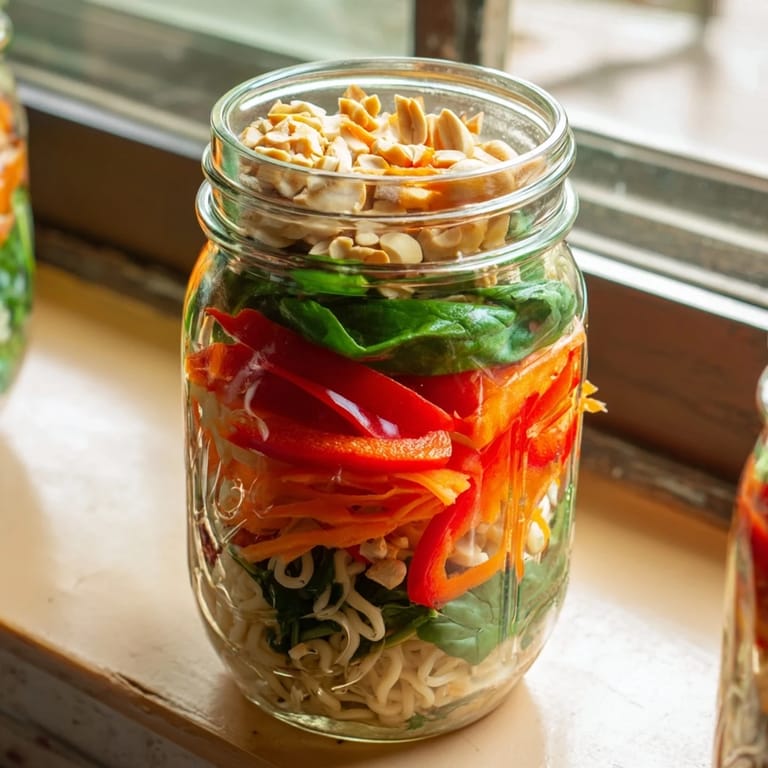
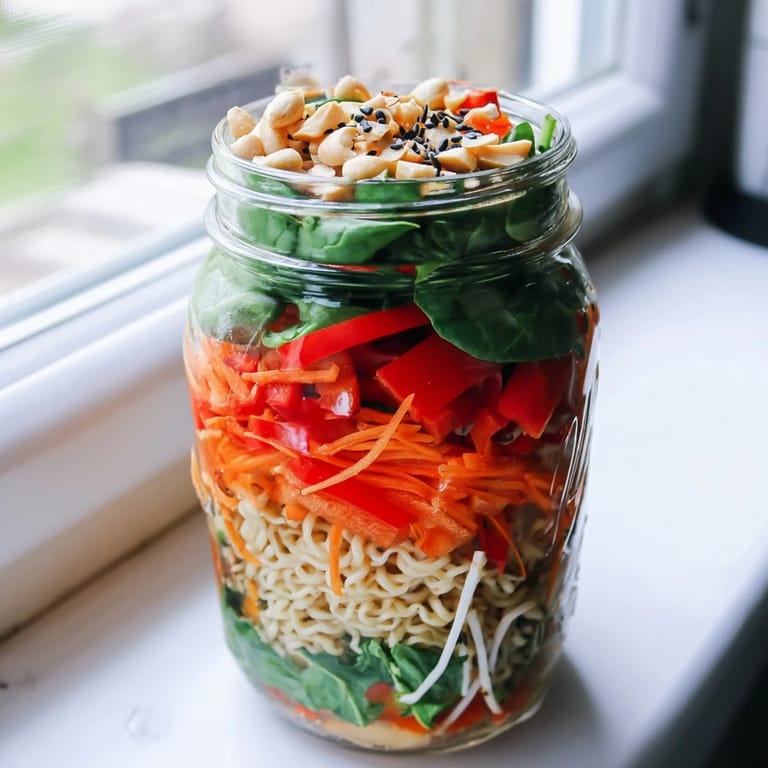
- Starting with the protein directly on top of the sauce creates a protective layer that keeps everything else from getting soggy while also soaking in all that flavor. Next, add your raw vegetables in whatever order feels right—carrots, bell peppers, spinach or kale, scallions, and bean sprouts—creating a rainbow of colors and textures that look beautiful when you open the jar.
- Crown each jar with noodles:
- Top everything with the cooled noodles as your final layer, packing them down gently so the lid seals properly without crushing them. The noodles act as a barrier that keeps the moisture from the sauce below from traveling upward too quickly.
- Seal and refrigerate until you need them:
- Screw the lids on tightly and place your jars in the refrigerator where they'll keep for up to four days, their flavors becoming more integrated and delicious as time passes.
- When hunger strikes, add hot water and let the magic happen:
- Remove the lid, pour about half a cup of hot water into the jar, and let it sit for two to three minutes while the noodles soften and the vegetables begin to wilt slightly. Give it a good stir, and you can either eat directly from the jar or pour everything into a bowl—both methods feel equally satisfying depending on where you are.
 Pin it
 There's something deeply satisfying about opening your lunch bag and finding a perfectly sealed jar of colors and flavors waiting for you, especially on those days when everything feels chaotic. It's become my favorite kind of self-care—preparing for future me who's going to be grateful that past me took thirty minutes to build this little edible gift.
Customizing Your Noodle Jars for Every Craving
The beauty of this recipe is that it adapts to whatever protein or vegetables you have on hand, so you're never locked into one version. I've made these with rotisserie chicken when I'm exhausted, with marinated tofu when I'm being vegetarian for a week, and with cooked shrimp when I want something that feels fancy but takes no extra effort. The sauce stays the same, but suddenly you have four entirely different meals that look and taste like you put real thought into them.
Low-Carb and Plant-Based Variations
Spiralized zucchini noodles or shirataki noodles work beautifully if you're watching carbs or exploring different textures, though they do require slightly different timing when adding hot water since they cook faster than traditional noodles. For a completely plant-based version, swap the animal protein for marinated edamame, chickpeas, or extra-firm tofu that's been pressed and pan-seared until it has crispy edges. The sauce is naturally vegan if you use maple syrup instead of honey, and suddenly this meal becomes accessible to everyone you might want to share it with.
Storage, Freshness, and Getting the Most Out of Your Prep
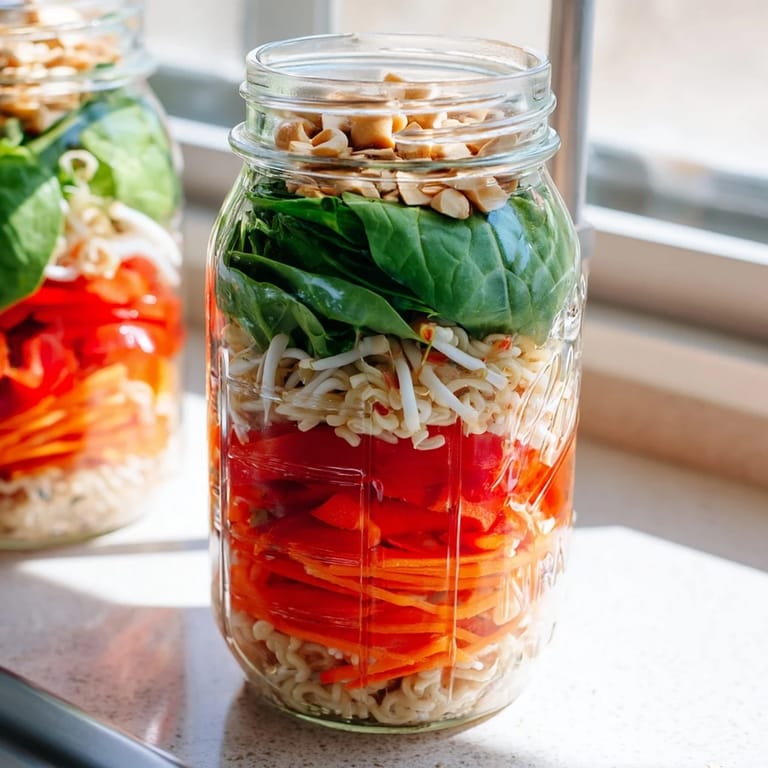
These jars keep beautifully in the refrigerator for up to four days, with the vegetables staying surprisingly crisp thanks to the sauce barrier and noodle insulation. I've learned through experimentation that adding toppings like nuts or cilantro right before serving preserves their texture and prevents them from getting soggy or losing their punch. If you find that by day four the noodles have absorbed too much sauce and feel a bit dense, you can add a splash more rice vinegar and sesame oil when you pour your hot water, which instantly brightens everything up again.
- Prep your vegetables the night before if you're short on time in the morning, keeping them in separate containers until assembly.
- If you notice any jars getting a bit watery, drain off some of the accumulated liquid before adding hot water.
- These jars are perfect for potlucks or office lunches because you can eat them directly from the jar without needing a bowl or utensils beyond a fork.
 Pin it
 These mason jar noodles have genuinely changed how I approach feeding myself during busy weeks, transforming meal prep from a chore into something I actually look forward to. There's real joy in the simplicity of it all—a little planning, fresh ingredients, and the certainty that delicious lunch is waiting for you.
Frequently Asked Questions
- → How long do mason jar noodles stay fresh?
When properly sealed and stored in the refrigerator, these layered noodle jars maintain quality for up to 4 days. Keep the lid tightly sealed to prevent any air exposure.
- → Can I prepare these jars ahead of time?
Yes, these are designed for meal prep. Assemble all four jars at once and refrigerate. This makes it convenient for grab-and-go breakfasts throughout the week.
- → What proteins work best for this preparation?
Cooked chicken breast, diced tofu, and cooked shrimp are excellent options. For vegetarian versions, use edamame or extra vegetables. Ensure proteins are cooked and properly diced before layering.
- → How do I serve the noodles once prepared?
Remove the lid and pour about 1/2 cup of hot water into the jar. Let it sit for 2-3 minutes to warm the ingredients and rehydrate the noodles. Mix well and eat directly from the jar or transfer to a bowl.
- → Can I customize the vegetables and sauce?
Absolutely. Swap vegetables based on preference and season—try cucumber, broccoli, or mushrooms. Adjust sauce heat by reducing or omitting Sriracha, and experiment with different oils or vinegars for flavor variations.
- → Are there low-carb alternatives available?
Yes. Use spiralized zucchini or shirataki noodles instead of traditional ramen or rice noodles to reduce carbohydrates while maintaining the meal's satisfying texture and flavor profile.