 Save
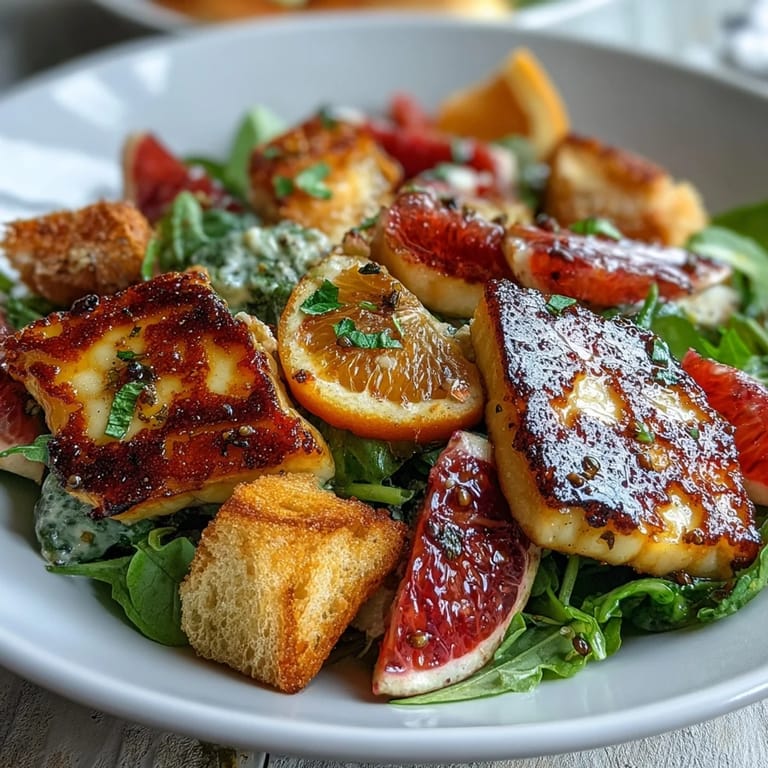
Save There's a moment every spring when I walk past the market and spot blood oranges still lingering on the vendor's stand, their deep crimson skin almost glowing under the afternoon sun. That's when I know it's time to make this salad, a dish that somehow tastes like both the Mediterranean coast and a cozy kitchen experiment. My neighbor Maria first made it for me years ago, and I remember being completely caught off guard by how the warm, salty halloumi played against the bright citrus and peppery greens. It's become my go-to when I want something that feels fancy but doesn't demand hours in the kitchen, and honestly, it's foolproof enough that even a rushed weeknight dinner turns into something memorable.
I made this for a dinner party last October when I was trying to use up some beautiful bread and happened to have halloumi in the fridge. My friend James walked in while I was frying the cheese and the smell alone had everyone hovering in the kitchen before we'd even sat down at the table. The croutons were still warm when we tossed everything together, and I remember the way the crunch cut through the soft, briny cheese. Everyone went quiet for a moment after that first bite, which is always the best sign.
Ingredients
- Halloumi cheese, 200 g sliced: This is your star ingredient, and it's worth finding the good stuff because it has a high melting point that lets it get gorgeously golden without collapsing into a puddle.
- Blood oranges, 2 peeled and sliced: The deep color isn't just pretty—the flavor is more complex and slightly less sweet than regular oranges, which keeps the salad from tipping into dessert territory.
- Mixed salad greens, 200 g: Use a mix of romaine, arugula, parsley, and mint if you can find them all; the mint especially changes everything by adding this cool, almost savory note.
- Cucumber, 1/2 sliced: English cucumbers work better here because they're less watery and their mild flavor won't compete with everything else going on.
- Cherry tomatoes, 200 g halved: Halve them so they don't roll around and because they release their juice slightly when cut, which seasons the whole bowl as you toss.
- Radishes, 4 thinly sliced: These are your textural wild card—peppery, crisp, and they stay that way throughout the meal.
- Red onion, 1 small thinly sliced: The thin slicing matters because it softens their bite just enough without making them disappear completely.
- Sourdough bread, 2 thick slices cut into cubes: Sourdough's tang holds up better than plain bread and actually gets better when it sits with the dressing, so don't worry if you make it ahead.
- Olive oil, 3 tbsp for dressing and 3 tbsp total for cooking: Use your best extra virgin olive oil in the dressing where you'll actually taste it; save the regular stuff for the croutons and frying.
- Fresh lemon juice, 1 tbsp: Always squeeze it fresh because bottled juice tastes metallic next to the sumac.
- Red wine vinegar, 1 tbsp: This adds a subtle richness that white vinegar just doesn't have, and it won't overshadow the other flavors.
- Ground sumac, 1 tsp: If you've never cooked with sumac, this is your introduction to a secret weapon that tastes like the essence of tartness and citrus without actually being acidic.
- Pomegranate molasses, 1 tsp: It looks mysterious in the bottle but it's just a reduction of pomegranate juice; it adds this deep sweetness that ties everything together.
- Sea salt and black pepper: Use what you have, but taste as you go because the halloumi will add some saltiness already.
Tired of Takeout? 🥡
Get 10 meals you can make faster than delivery arrives. Seriously.
One email. No spam. Unsubscribe anytime.
Instructions
- Toast your croutons:
- Preheat your oven to 180°C and toss those bread cubes with olive oil and salt, then spread them out on a baking sheet where they won't crowd each other. Bake for 8 to 10 minutes, giving them a shake or flip halfway through, until they're golden and crisp enough that they make a sound when you bite them.
- Make the dressing:
- Grab a small bowl and whisk together the olive oil, lemon juice, red wine vinegar, sumac, pomegranate molasses, salt, and pepper until it looks emulsified and the sumac particles are distributed throughout. Taste it and adjust—this is your moment to make it yours.
- Fry the halloumi:
- Heat a tablespoon of olive oil in a nonstick skillet over medium heat and once it shimmers, add your halloumi slices in a single layer. Let them sit for a minute or two per side until they develop this incredible golden crust that makes a tiny sizzle sound, then transfer them to a plate while they're still warm.
- Assemble the salad:
- In a large salad bowl, combine all your greens, cucumber, tomatoes, radish, and red onion, which is basically your entire foundation. Now gently add the blood orange slices, warm halloumi, and those croutons you just made.
- Dress and serve:
- Drizzle with your dressing and toss everything gently so nothing bruises or breaks, then serve immediately before the croutons have a chance to soften completely. This isn't a salad that improves with sitting, so get it on plates right away.
 Pin it
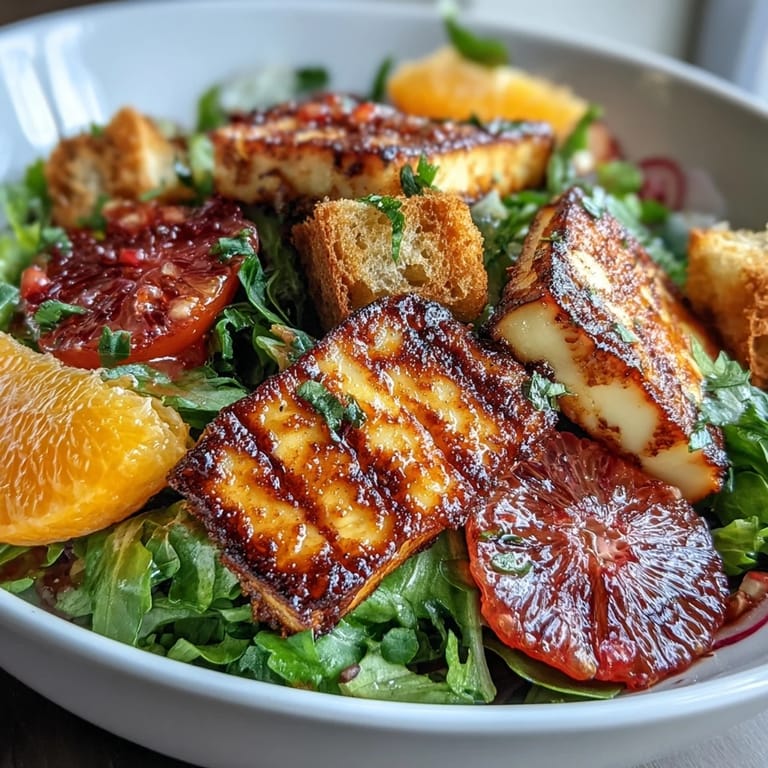
 There was this dinner where I made this salad for my partner's work friends, and halfway through the meal someone asked if I'd gone to culinary school. I hadn't, but the way the salad looked on everyone's plate—all those deep orange slices and golden cheese against the emerald greens—made it seem like I knew something they didn't. That's the real magic of this recipe: it photographs beautifully, tastes complex, but asks almost nothing of you.
The Blood Orange Question
Blood oranges have this incredibly short season, usually just a few months in winter and early spring, which is why I get a little territorial about them at the market. If you can't find them or if you're making this in summer, regular oranges work fine, though they'll be slightly sweeter and less dramatic looking. I've also substituted with ruby grapefruits when I'm feeling adventurous, which adds a gorgeous bitterness that makes the sumac sing even louder.
Why Halloumi Matters Here
Halloumi is one of those rare cheeses that you can actually cook without it turning into a greasy puddle, which is what makes it so brilliant in a warm salad. The high melting point means you get this contrast between the crispy exterior and the soft, squeaky interior that's honestly addictive. If you can't find halloumi, paneer works beautifully too, though it will be slightly more crumbly and less bouncy.
Making It Your Own
This salad is actually a jumping-off point rather than a rigid formula, which is part of why I keep making it. I've added toasted pistachios for crunch, tossed in some pitted Kalamata olives for earthiness, and once threw in some crispy chickpeas just because I had them. The beauty is that the dressing and the halloumi are doing so much of the heavy lifting that you can swap things around and it still holds together.
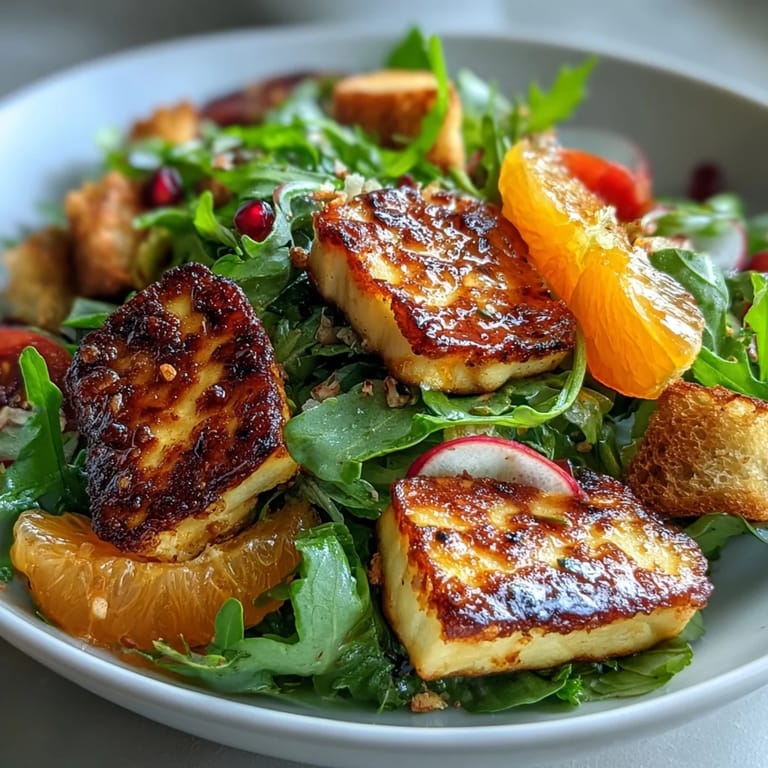
- Pomegranate seeds scattered on top at the last moment add both flavor and visual drama without any real work.
- A handful of fresh herbs like dill or cilantro can replace some of the greens if that's what you have in your garden.
- If you make this vegan, crispy tofu pressed and pan-fried exactly like the halloumi is genuinely delicious and no one will feel like they're missing out.
 Pin it
 This salad has become my answer to the question of what to make when I want something that tastes like I tried but doesn't feel like work. It's the kind of dish that makes people think you're more of a cook than you actually are, which honestly might be the best compliment any recipe can give you.
Frequently Asked Questions
- → Can I make the croutons ahead of time?
Yes, bake the sourdough croutons up to 2 days in advance. Store in an airtight container at room temperature and add just before serving to maintain crunch.
- → What can I substitute for halloumi?
Grilled paneer, firm feta, or even thick-cut tofu work well. For non-dairy options, try grilled cauliflower steaks or marinated tofu cubes.
- → How do I prevent the halloumi from getting rubbery?
Fry halloumi quickly over medium-high heat—just 1-2 minutes per side until golden. Overcooking makes it tough, so watch closely and serve warm.
- → Can I use regular oranges instead of blood oranges?
Absolutely. Navel or Valencia oranges provide similar sweetness and juice. Blood oranges add lovely color, but flavor remains delicious with any variety.
- → Is this salad good for meal prep?
Prepare components separately—dressing in a jar, croutons stored dry, vegetables chopped. Assemble just before eating to keep textures crisp and fresh.
- → What's the best way to slice blood oranges?
Peel completely, then slice crosswise into thin rounds. Remove any seeds with a paring knife. The rounds create beautiful presentation and release juices naturally.