 Save
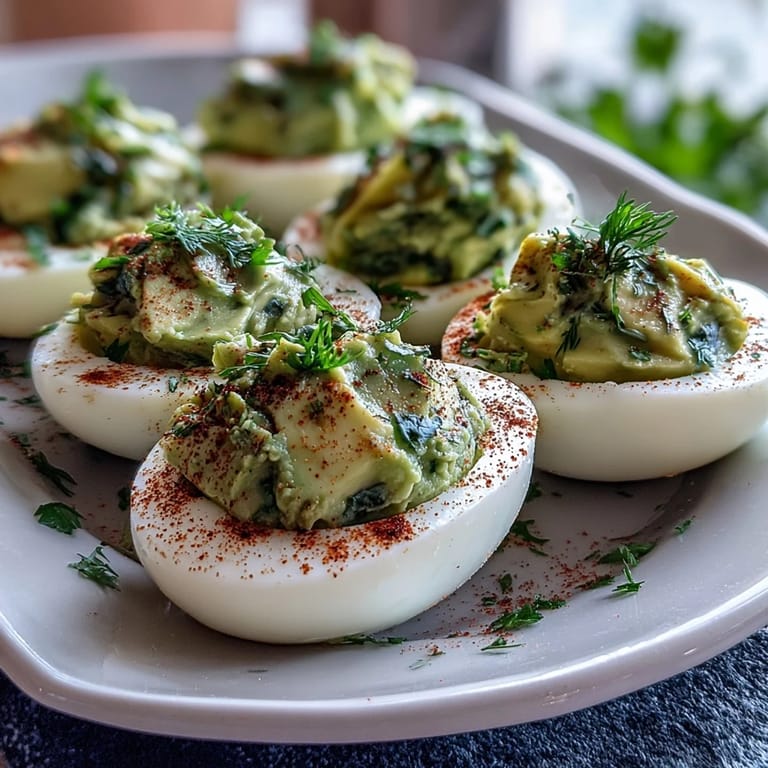
Save My neighbor Sarah showed up at my kitchen door one April afternoon with a basket of avocados from her tree and a simple challenge: make something that looks as good as it tastes for her garden party that weekend. I'd made deviled eggs a hundred times, but always the traditional yellow kind. That afternoon, watching the pale green flesh of her avocados catch the spring sunlight, something clicked. These eggs needed to be green, fresh, herbaceous—nothing like the heavy versions I'd grown up with. By the time she left with a sample plate two hours later, I knew I'd stumbled onto something special.
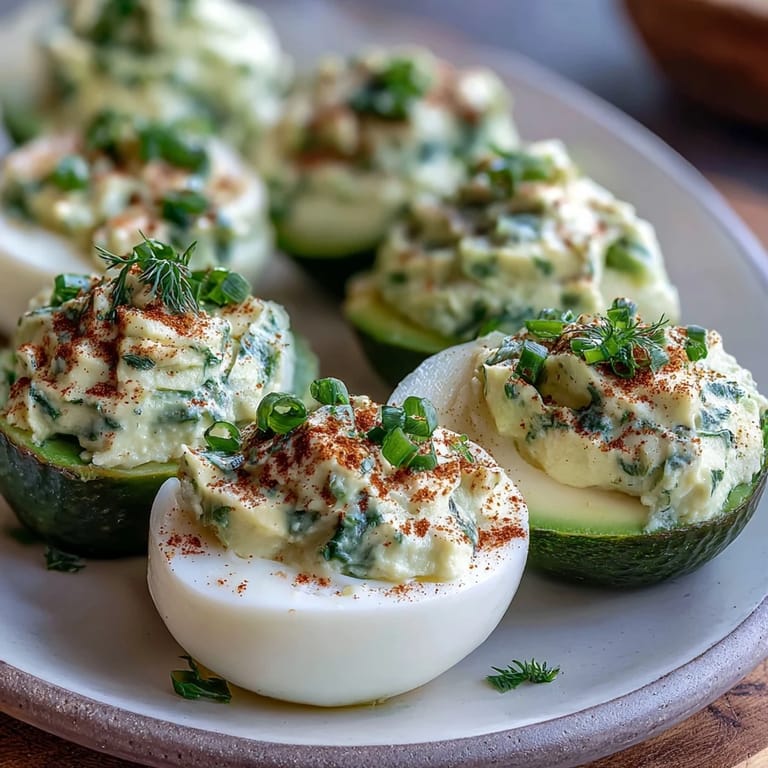
I remember pulling these out of the fridge for Sarah's party and watching her guests actually pause mid-conversation when they spotted the platter. One woman asked if they were fake because the color seemed too vibrant, too perfect. That moment of doubt before the first bite, followed by her immediate smile, made every second of preparation worth it. Her teenage daughter ate six of them before anyone else could get seconds, which felt like the highest compliment possible.
Ingredients
- 6 large eggs: Start with eggs at least a week old from your fridge—they peel infinitely better than fresh ones, and you'll save yourself the frustration of shells sticking to the whites.
- 1 ripe avocado, peeled and pitted: This is the star, so choose one that yields gently to thumb pressure but isn't mushy or brown inside; timing matters here since avocado oxidizes quickly.
- 2 tablespoons mayonnaise: Use quality mayo if you can find it—the difference between a grocery store brand and something better becomes obvious the moment you taste it.
- 1 teaspoon Dijon mustard: The sharpness cuts through the richness and keeps the filling from tasting one-dimensional.
- 1 teaspoon fresh lemon juice: This does double duty—it brightens the flavor and helps prevent the avocado from browning too quickly.
- 1 tablespoon chopped fresh chives: Grab them from the store or your garden; dried chives taste like sadness by comparison.
- 1 tablespoon chopped fresh dill: The herb that makes people ask what you did differently, even though it's just one tablespoon.
- 1/4 teaspoon garlic powder, 1/4 teaspoon salt, 1/8 teaspoon black pepper: These three work together quietly, building a savory foundation that lets everything else shine.
- Extra chopped chives, dill, paprika or chili flakes for garnish: The final flourish—don't skip this because presentation is half the joy of deviled eggs.
Tired of Takeout? 🥡
Get 10 meals you can make faster than delivery arrives. Seriously.
One email. No spam. Unsubscribe anytime.
Instructions
- Boil the eggs gently:
- Place eggs in a saucepan and cover with cold water, then bring to a boil over medium-high heat. Once the water reaches a rolling boil, cover the pan, remove it from heat, and let it sit undisturbed for 10 to 12 minutes—the residual heat cooks them perfectly without the grainy, greenish ring that ruins so many hard-boiled eggs.
- Shock them in ice water:
- Transfer the eggs immediately to a bowl of ice water and let them sit for at least 5 minutes while they cool completely. This stops the cooking process and makes peeling significantly easier because the shell contracts away from the white.
- Peel and halve:
- Once cooled, gently tap and roll each egg to crack the shell all over, then peel under a light stream of cool running water—the water helps separate the membrane from the white. Slice each egg in half lengthwise and use a small spoon to scoop out the yolks into a bowl, being careful not to damage the delicate whites.
- Make the filling:
- Add the avocado, mayonnaise, Dijon mustard, lemon juice, chives, dill, garlic powder, salt, and pepper to the bowl with the yolks. Mash everything together with a fork until you reach a smooth, creamy consistency—don't overthink it; some people like it slightly chunky, others prefer it silky, so go with your preference.
- Fill the eggs:
- Spoon or pipe the green mixture into each egg white half with the back of a spoon or a piping bag, mounding it slightly for visual appeal. If you're using a piping bag, a small star tip creates that restaurant-quality look that makes people think you're far more skilled than you actually are.
- Garnish and chill:
- Finish with a sprinkle of extra chives, dill, and a pinch of paprika or chili flakes if you'd like a hint of color and heat. Refrigerate until you're ready to serve, and don't make them more than a few hours ahead because the avocado will start to oxidize despite your best efforts.
 Pin it
 Three months after Sarah's party, I made these for my book club, and somehow they became the thing everyone texted me about instead of the book we were supposed to discuss. Someone's husband asked if I could cater their daughter's engagement party with just these eggs and nothing else. I laughed, but I also kind of considered it because there's something about creamy, fresh, beautiful food that makes people happy in a way fancy things sometimes don't.
The Avocado Timing Question
Choosing the right avocado is genuinely the most important decision you'll make in this recipe, and I've learned this through trial and error. A ripe avocado should feel like it's offering itself to you—yielding gently to gentle pressure but not collapsing entirely. If it's hard, wait another day or two and check again. If it's already soft and the skin is browning, you're cutting it close, and honestly, at that point, just use it and eat the browning as the price of deliciousness.
Why Fresh Herbs Make All the Difference
The first time I made this recipe, I used dried chives because I was in a hurry and didn't want to run to the store. The eggs tasted fine, technically edible, but they tasted fine in the way that beige walls are fine—technically complete but utterly forgettable. Fresh herbs cost a few extra dollars and maybe five minutes of chopping, but they transform something ordinary into something people actually want to eat. Once I switched to fresh, guests started complimenting these by name instead of just saying, well, that was good.
Serving and Storage Wisdom
These are best served chilled, straight from the refrigerator, because the coolness makes the filling taste fresher and the eggs feel more refreshing on the palate. They'll last about three days in an airtight container, though the avocado will gradually darken even with all your precautions, so eat them within 24 hours if you're picky about appearance. If you're bringing them to a party, keep them in the cooler until the last possible moment and use that extra lemon juice trick to extend their green vibrancy.
- Add hot sauce if you want subtle heat without it becoming obvious to everyone who doesn't like spice.
- Swap Greek yogurt for mayonnaise if you're going for something tangier and slightly less rich.
- Make these the morning of your event and cover them loosely with plastic wrap so they taste fresh when people actually eat them.
 Pin it
 These eggs have become my go-to when I need something that looks impressive but doesn't require the stress of actual cooking. They're the kind of recipe that reminds you that the best food doesn't have to be complicated—it just has to be made with attention and care.
Frequently Asked Questions
- → How do you boil eggs for the filling?
Place eggs in a saucepan with cold water, bring to a boil, cover and remove from heat. Let stand 10-12 minutes, then cool in an ice bath before peeling.
- → Can I substitute mayonnaise in the filling?
Yes, Greek yogurt works well as a tangy substitute for mayonnaise, offering a lighter texture.
- → How do I prevent avocado from browning in the mixture?
Adding fresh lemon juice to the avocado mixture helps maintain its color and freshness longer.
- → What herbs complement the avocado and egg filling?
Fresh chives and dill provide a bright, aromatic flavor that enhances the creamy mixture perfectly.
- → Can I add heat to the filling?
Yes, a dash of hot sauce or a sprinkle of chili flakes can add subtle heat without overpowering the flavors.