 Save
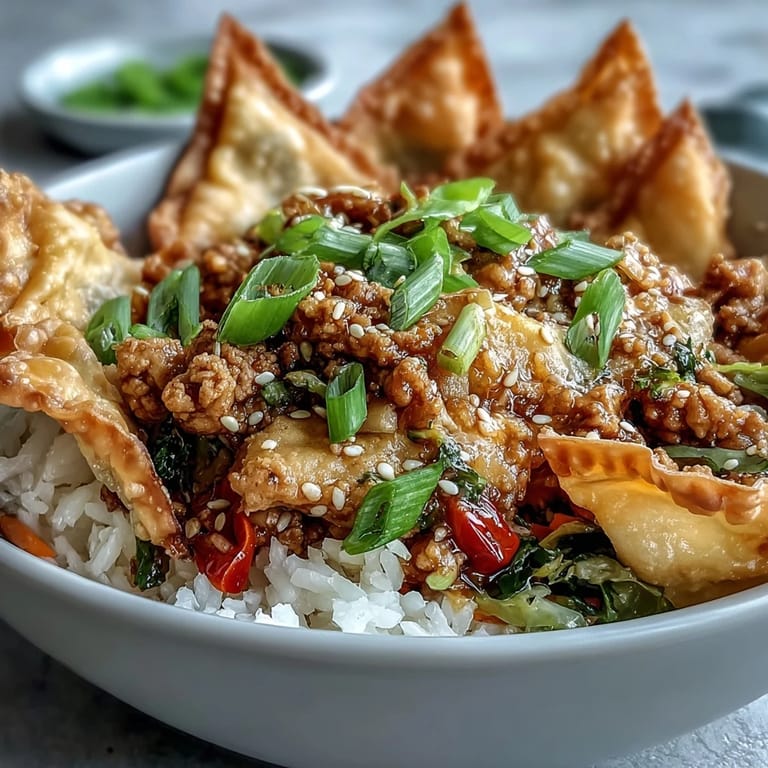
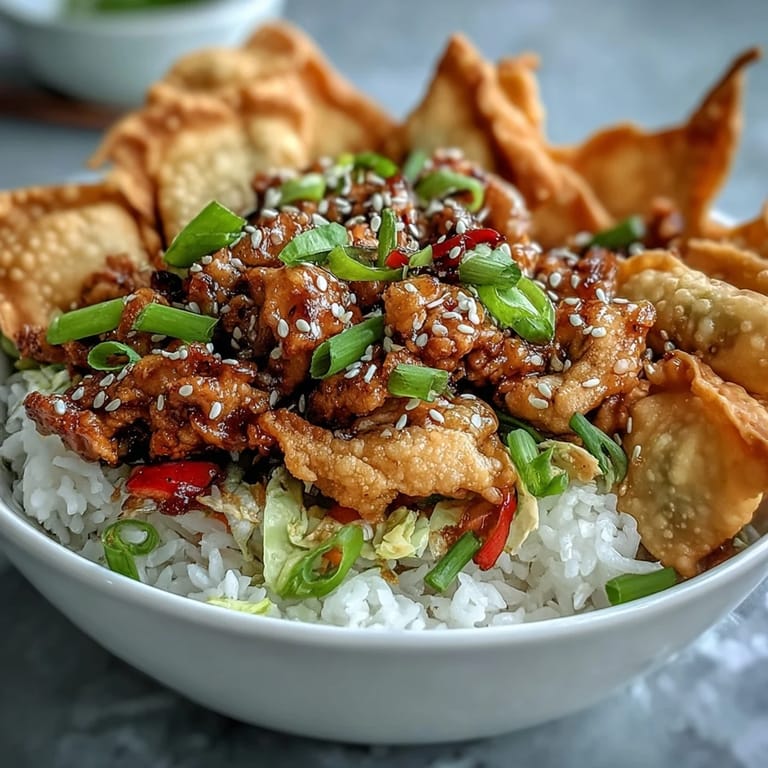
Save One Thursday night, my partner came home craving egg rolls but we were too tired to deal with rolling and frying. So I deconstructed the whole thing—scattered crispy wonton strips across a bowl of rice and piled on the savory chicken and cabbage filling we'd been working with all week. It was messy, it was easy, and honestly, it tasted even better than the traditional version. That spontaneous dinner became our go-to weeknight solution whenever we wanted that satisfying egg roll flavor without the fuss.
I made this for a dinner party last month and watched my friend who claims she doesn't like cabbage eat two full bowls without complaint. The way the soy sauce coats everything and the sesame oil adds that subtle richness just seemed to change people's minds about the vegetables. That's when I realized this dish has an almost sneaky appeal—it wins people over before they even realize what they're eating.
Ingredients
- Ground chicken: Use 85/15 or 90/10 if you can find it; it browns better and won't dry out as easily as ultra-lean versions.
- Fresh ginger and garlic: Don't skip these—they're the backbone of the flavor, and pre-minced versions honestly taste flat by comparison.
- Green cabbage: Slice it thin so it softens quickly but stays crisp; thick slices turn mushy.
- Soy sauce and hoisin: These two create the savory depth, but hoisin adds sweetness that balances the salt.
- Sesame oil: Just a teaspoon is enough—this stuff is potent and a little goes a long way.
- Rice vinegar: The acid cuts through the richness and makes everything taste brighter and more alive.
- Wonton wrappers: Baking them instead of frying keeps this dish lighter and honestly easier to execute perfectly.
Tired of Takeout? 🥡
Get 10 meals you can make faster than delivery arrives. Seriously.
One email. No spam. Unsubscribe anytime.
Instructions
- Get your wontons crisping:
- Preheat the oven to 375°F and line a baking sheet with parchment paper. Cut your wonton wrappers into thin strips—they'll shrink as they bake, so don't overthink the size. Toss them gently with oil and salt, spread them in a single layer, and slide them in for 7 to 9 minutes, stirring halfway through so they brown evenly.
- Brown the chicken:
- Heat 2 tablespoons of oil in a large skillet or wok over medium-high heat until it shimmers. Add your ground chicken and let it sit for a minute before stirring, so it gets those golden bits instead of just steaming. Break it up with a wooden spoon as it cooks, about 5 to 6 minutes total.
- Build the aromatics:
- Once the chicken is cooked through, add your minced garlic, grated ginger, and chopped onion. Sauté for about 2 minutes until the smell fills your entire kitchen—that's how you know the flavors are waking up.
- Add the vegetables:
- Stir in your carrot, cabbage, and red bell pepper, then let everything cook for 4 to 5 minutes. You want the vegetables tender enough to taste good but still with a little bite—this is where texture really matters.
- Season and finish:
- Pour in the soy sauce, hoisin, rice vinegar, and sesame oil, along with a crack of black pepper. Stir everything together and let it cook for just 1 to 2 minutes more so the flavors meld.
- Assemble and serve:
- Divide your cooked rice into 4 bowls, top each with a generous scoop of the chicken mixture, then crown it all with sesame seeds, green onions, and that handful of crispy wonton strips right before eating.
 Pin it
 My kid, who normally picks vegetables out of everything, asked for seconds of this without being asked. Seeing that happen made me realize that sometimes the presentation and texture matter more than anything else—mixing everything together in a bowl somehow feels more fun and less like "eating your vegetables."
Why the Deconstructed Approach Works
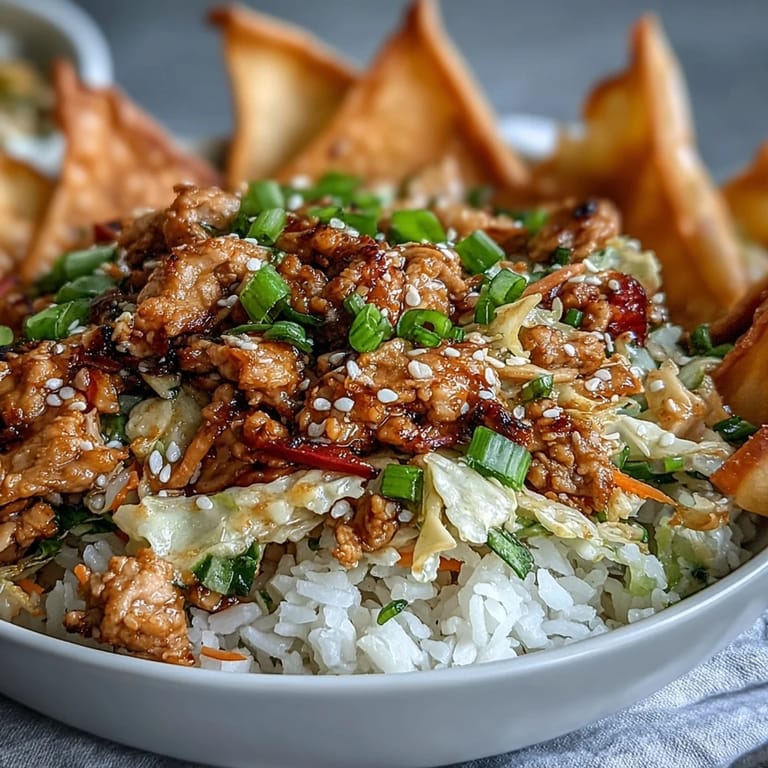
There's something about a bowl that makes people want to dig in more than a traditional wrapped egg roll. You can see all the colors, reach the crispy bits whenever you want, and adjust the ratios as you eat. Plus, if someone doesn't like a particular ingredient, they can easily push it aside instead of having to unwrap an entire roll.
Customizing Your Bowl
This recipe is incredibly flexible, which is part of why it became a regular in my kitchen. Swap the ground chicken for turkey, pork, or even skip the meat entirely and add extra vegetables or tofu. The sauce works with almost anything you throw at it, so feel free to experiment.
Making It Your Own
Once you nail the basic technique, you'll find yourself tweaking it based on what's in your fridge or what mood you're in. Some nights I add a splash of sriracha for heat, other times I throw in mushrooms or snap peas just because they're sitting there.
- Keep your wonton strips separate until serving time so they stay crispy and don't absorb moisture from the warm filling.
- If you make this ahead, store the chicken mixture and rice separately, then reheat gently before assembling.
- Leftovers actually taste better the next day because all the flavors have time to get to know each other.
 Pin it
 This bowl has quietly become one of my favorite things to make when I want something that tastes like it took effort but didn't actually steal my evening. It's the kind of dish that makes regular weeknight dinners feel a little bit special.
Frequently Asked Questions
- → Can I use ground meat other than chicken?
Ground turkey or pork work beautifully as substitutes. Adjust cooking time slightly to ensure the meat is fully browned and cooked through.
- → How do I make this gluten-free?
Replace soy sauce with tamari and hoisin with a gluten-free alternative. Use gluten-free wonton wrappers or simply skip them and top with extra toasted sesame seeds and crushed nuts for crunch.
- → Can I prepare the components ahead?
The chicken and vegetable mixture stores well in the refrigerator for up to 3 days. Reheat gently and make fresh wonton strips just before serving to maintain their crispiness.
- → What other vegetables can I add?
Shiitake mushrooms, bean sprouts, water chestnuts, or snow peas all complement the Asian flavors. Just add quick-cooking vegetables during the last 2-3 minutes of sautéing.
- → Can I make the wonton strips on the stovetop?
Yes, pan-fry the strips in hot oil for 1-2 minutes until golden. Drain on paper towels to remove excess oil. Baking produces lighter, less oily results.