 Save
Save There's something about the smell of butter and flour toasting in a pan that instantly transports me back to my grandmother's kitchen, where she'd make mac and cheese on quiet Sunday afternoons. She never measured anything precisely, just knew by feel when the roux had turned that perfect pale gold, and somehow it always came out creamy and perfect. Years later, I finally understood her method wasn't magic—it was just confidence built on repetition. Now when I make this dish, I'm not just cooking; I'm recreating those moments of warmth and comfort that made her kitchen feel like the safest place in the world.
I made this for my roommate during a particularly rough week—nothing fancy, just pasta, cheese, and butter—and watching her face light up when she took that first bite reminded me that sometimes the most meaningful meals are the ones that don't try too hard. She ate three bowls and didn't say much, but she didn't need to. That's when I knew this recipe had staying power.
Ingredients
- Elbow macaroni (350 g): The small tubes catch the sauce better than larger pasta shapes, and cooking it slightly under package time means it won't turn mushy when mixed with the hot cheese sauce.
- Unsalted butter (3 tbsp): This is your roux base, and unsalted lets you control the salt level throughout the dish.
- All-purpose flour (3 tbsp): This thickens the milk and cream into that luxurious, coat-the-spoon texture you're chasing.
- Whole milk and heavy cream (2 cups milk, 1 cup cream): The combination of both creates a sauce that's rich without being heavy, and the warmth prevents lumps when you whisk.
- Sharp cheddar cheese (200 g): This is your main flavor driver—don't skip the sharp variety, as mild cheddar gets lost in the background.
- Gruyère or Swiss cheese (75 g): These add a subtle nuttiness that makes people ask what you did differently.
- Parmesan cheese (50 g): The saltiness and granular texture give the dish complexity and help the sauce cling beautifully.
- Dijon mustard, garlic powder, onion powder, salt, and pepper: These aren't fillers—they're the seasonings that prevent the dish from tasting one-dimensional or flat.
- Panko breadcrumbs and melted butter (for baking): This topping transforms the texture, giving you a crispy contrast to the creamy interior.
Tired of Takeout? 🥡
Get 10 meals you can make faster than delivery arrives. Seriously.
One email. No spam. Unsubscribe anytime.
Instructions
- Set up your oven and pasta water:
- Preheat to 200°C (400°F) and grease your baking dish if you're going the baked route. Get a large pot of salted water boiling—it should taste like a pleasant sea. This salt is your only chance to flavor the pasta itself.
- Cook the macaroni properly:
- Drop the pasta in and fish it out about a minute or two before the package says it's done. It will continue cooking when it hits the hot cheese sauce, and there's no recovering from overcooked pasta. Drain and set aside.
- Build your béchamel base:
- Melt butter in a large saucepan over medium heat, then whisk in flour, stirring constantly for 1–2 minutes until it smells toasted but looks pale gold. This is the roux, and it's doing crucial work binding fat and flour together.
- Smooth in the milk and cream:
- Slowly pour in the warm milk and cream while whisking constantly, as if you're the only thing standing between yourself and lumpy sauce. The gradual approach is everything here—rush this step and you'll have little flour pockets ruining your sauce. Bring it to a gentle simmer and keep stirring for about 4–5 minutes until it coats the back of a spoon.
- Season and mellow the heat:
- Reduce to low, then stir in the mustard, garlic powder, onion powder, salt, pepper, and a pinch of cayenne. These seasonings bloom when they're in a warm, creamy base, so you'll taste them more fully than if you'd added them cold.
- Add the cheese in batches:
- Add cheddar first, then Gruyère, then Parmesan, stirring after each addition until completely melted and smooth. Adding them slowly prevents the sauce from becoming grainy, which happens when cheese heats too quickly.
- Fold in the pasta:
- Gently fold the cooked macaroni into the cheese sauce until every piece is coated in that creamy, golden blanket. This is where the dish comes together.
- Choose your finish:
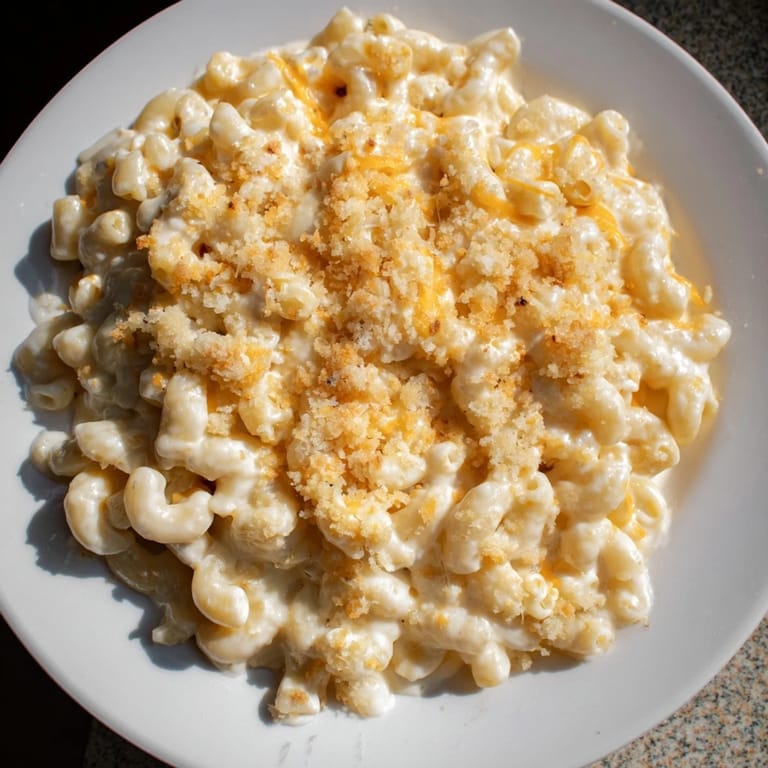
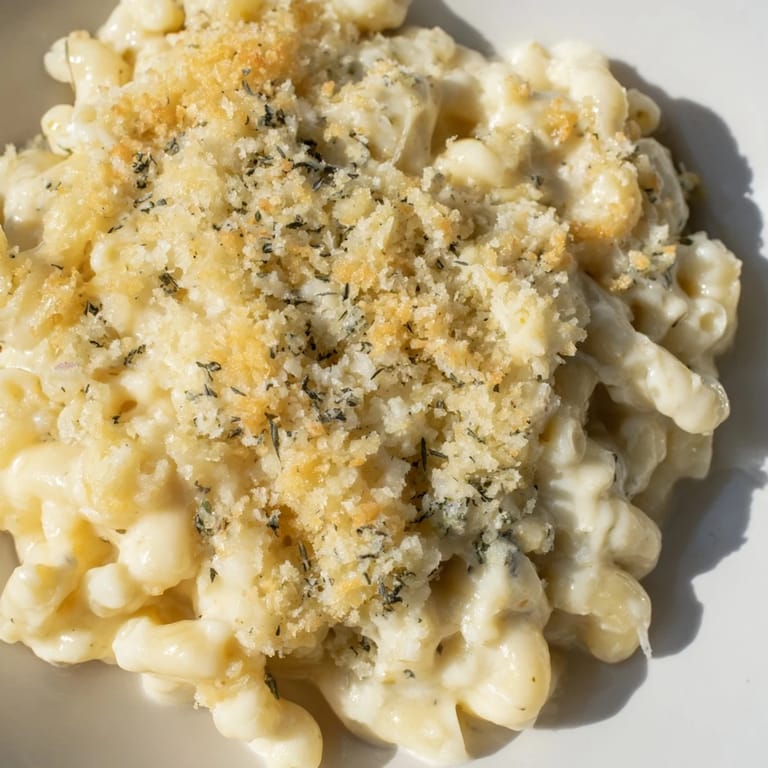
- For stovetop, serve it hot and creamy with a sprinkle of extra cheese. For baked, pour into your prepared dish, top with panko mixed with melted butter and Parmesan, and slide into the oven for 20–25 minutes until the top is golden and the edges are bubbling.
 Pin it
 There's a particular magic in sitting down to a bowl of mac and cheese that's still steaming, where you know every element—the pasta, the sauce, the crispy topping—came together because you understood the why behind each step, not just the what. That's the moment this dish stops being a recipe and becomes something you've genuinely made.
The Science of the Sauce
The béchamel is really just flour and fat creating a structure that can hold milk and cream without breaking. When you cook flour and butter together, you're making a paste that won't clump when liquid hits it—it's something that took me years to stop overthinking and just trust. The warmth of the milk matters because cold liquid causes the flour particles to seize up and form those awful little balls that no whisking can fix. Once you understand that this sauce is fundamentally just flour doing its job, you stop being afraid of it.
Cheese Selection and Strategy
Sharp cheddar is non-negotiable because it has the flavor intensity to stand up to the cream and butter without disappearing. Gruyère adds something almost creamy and complex that cheddar alone can't achieve, and Parmesan brings salt and a slight granular texture that makes the sauce taste more refined. I learned this the hard way by making mac and cheese with only mild cheddar once, and while it was perfectly fine, it was forgettable—just creamy pasta with no personality. Now I always use the cheese blend because I know the difference it makes.
Baked Versus Stovetop
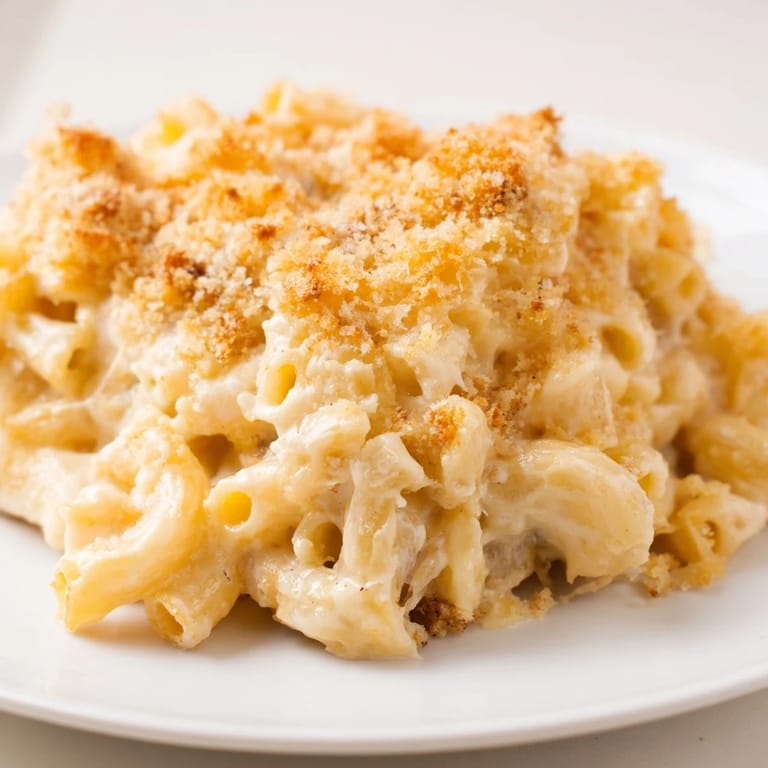
The stovetop version is for when you want immediate, luxurious creaminess—it's the version I make on weeknights when I'm hungry and tired. The baked version is for when you have 25 minutes to let the oven do the work, and you want that golden, crispy panko topping that shatters under your fork and contrasts beautifully with the soft, creamy interior. Neither is better; they're just different moods of the same dish.
- The stovetop version can be made ahead and gently reheated in a low oven without drying out, which makes it perfect for entertaining.
- If you bake it, the edges will crisp up more than the center—this is intentional and delicious, so don't worry if they look darker.
- Either way, serve it hot because mac and cheese loses its magic the moment it cools down.
 Pin it
 This is the kind of dish that reminds you why cooking matters—it's simple enough that anyone can make it, but thoughtful enough that it tastes like someone really cared. That someone is you.
Frequently Asked Questions
- → How do I achieve a smooth béchamel sauce?
Whisk continuously when adding warm milk and cream to the roux, cooking over medium heat until thickened but before boiling to avoid lumps.
- → Can I use different cheeses in the mix?
Yes, try Monterey Jack or mozzarella for milder flavors or extra-mature cheddar for a sharper taste.
- → What’s the best way to cook macaroni for this dish?
Boil macaroni in salted water until just shy of al dente, then drain to finish cooking in the sauce, ensuring perfect texture.
- → How does baking change the dish?
Baking adds a golden, crunchy panko topping and intensifies flavors while providing a comforting crust over the creamy pasta.
- → Any tips to customize flavors?
Incorporate cooked bacon, sautéed mushrooms, or blanched broccoli for added texture and taste variations.
- → What tools are essential for preparation?
A large pot for pasta, saucepan for sauce, whisk, baking dish if baking, and grater for fresh cheeses.