 Save
Save There's something about the smell of toasted sesame oil on a sweltering afternoon that just stops you cold. I discovered these noodles completely by accident, standing in my kitchen with wilted lettuce in one hand and the sudden realization that I'd been craving something cool, something slippery, something that felt alive on my tongue. That first bowl changed how I thought about noodles altogether—suddenly they weren't just a blank canvas, they were the star.
I made this for a potluck once and watched people go back for seconds, then thirds, while everything else sat untouched. My friend Marcus kept asking for the recipe, and when I told him it was just sesame paste and soy sauce, he didn't believe me until he tasted it again. That's when I knew I'd stumbled onto something special.
Ingredients
- Wheat noodles or spaghetti (350 g): Use what you love—I've learned that thinner noodles catch the sauce better, but thicker ones give you a more satisfying chew.
- Sesame oil (1 tbsp for noodles, 1 tbsp toasted for sauce): Don't skip the step of tossing cooked noodles in plain sesame oil; it's the difference between a clumpy mess and silky strands.
- Tahini (4 tbsp): This is where the richness comes from, and using good quality paste makes you taste the difference instantly.
- Smooth peanut butter (2 tbsp): It adds body and a subtle depth that pure sesame paste alone can't quite deliver.
- Low-sodium soy sauce (3 tbsp): Low-sodium lets the other flavors shine rather than making everything taste like salt.
- Rice vinegar (2 tbsp): The acid is essential—it brightens everything and keeps the sauce from feeling heavy.
- Honey (1 tbsp): A touch of sweetness balances the sesame's nuttiness and the vinegar's bite.
- Fresh ginger and garlic: Grated rather than minced gives you these punchy, clean flavors that make the whole dish sing.
- Chili oil (1-2 tsp): Optional but worth it if you like a whisper of heat threading through each bite.
- Cold water (3-5 tbsp): You'll use this to adjust the sauce—start with less, you can always add more.
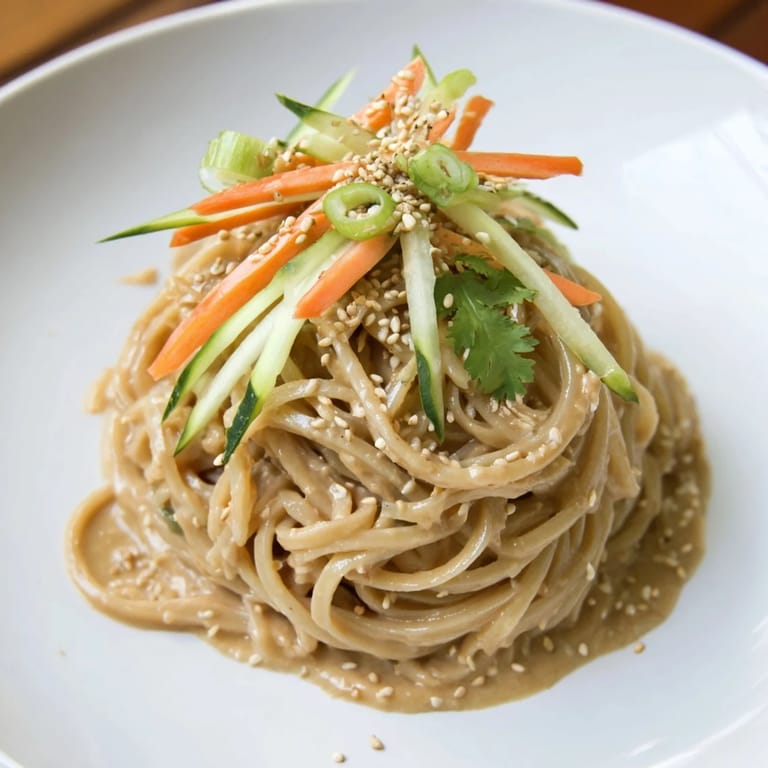
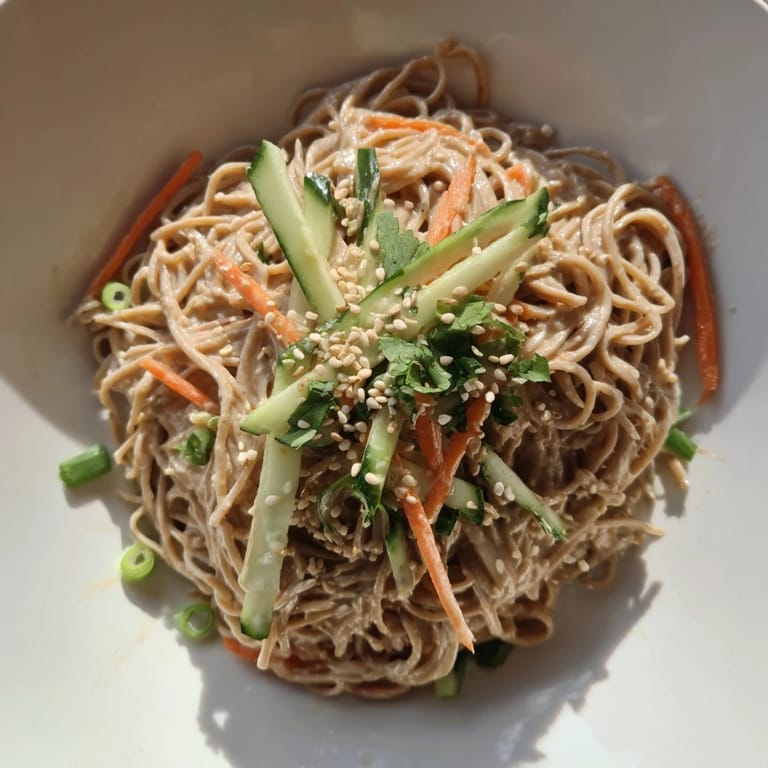
- Cucumber, carrots, spring onions: Julienne them if you can; the thin cuts absorb the cool noodle bites instead of sitting as thick chunks.
- Toasted sesame seeds, cilantro, peanuts, lime: These toppings aren't garnish—they're the finishing moments that make each spoonful feel different.
Tired of Takeout? 🥡
Get 10 meals you can make faster than delivery arrives. Seriously.
One email. No spam. Unsubscribe anytime.
Instructions
- Cook and chill the noodles:
- Follow the package instructions but err on the side of slightly firmer—overcooked noodles turn mushy when dressed. Rinse under cold water until they're completely cool, then toss with sesame oil so they don't clump together like a solid block.
- Build your sauce:
- Whisk tahini, peanut butter, soy sauce, rice vinegar, honey, toasted sesame oil, ginger, and garlic in a bowl. The mixture will look thick and reluctant at first, but as you gradually add cold water, it transforms into something silky and pourable—watch for that moment when it goes from paste to sauce.
- Marry the noodles and sauce:
- Pour the sauce over the noodles and toss thoroughly, making sure every strand gets coated. The tossing matters more than you'd think—it's the difference between pockets of pure noodles and sauce that actually touches everything.
- Compose your bowl:
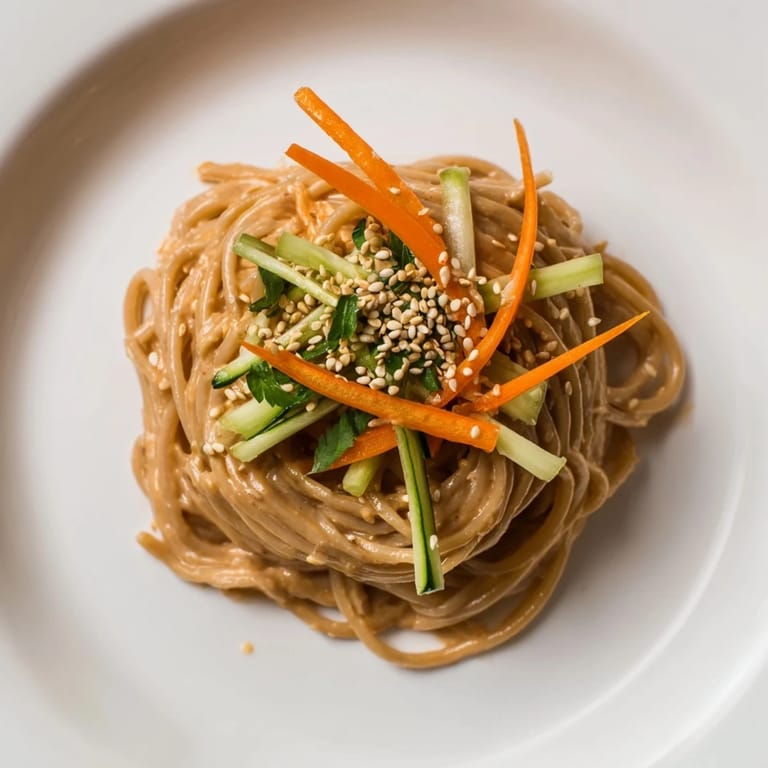
- Arrange noodles in bowls and top with the fresh vegetables, sesame seeds, and cilantro. The arrangement isn't just pretty—it means you get a bit of everything in each spoonful.
- Chill or serve:
- A 10-minute chill in the fridge deepens the flavors, but honestly, it's good hot from the pan too, especially on a night when you can't wait another second.
 Pin it
 There was a summer I made these noodles at least twice a week, and my partner teased me mercilessly until he realized I was making them because they meant I got to sit on the porch with a cold bowl and actually taste my food instead of rushing through dinner. That's when food stops being about hunger and becomes about a moment you're giving yourself.
Why the Sauce Works
The real magic here is that tahini and peanut butter are working in tandem—the tahini gives you that earthy, nutty backbone that sesame is famous for, while the peanut butter adds a creaminess that makes the whole thing feel indulgent without any dairy. I tried making this with only sesame paste once, and it was thinner, less satisfying, missing that full-bodied richness that makes you close your eyes on the first bite. The rice vinegar cuts through all that richness so the sauce doesn't feel heavy, and the ginger adds a subtle sharpness that wakes up your palate between bites.
Make-Ahead Secrets
This is one of those rare dishes that genuinely improves if you make it a few hours or even a day ahead. The sauce continues to sink into the noodles and the flavors deepen in a way that tastes almost more intentional than when it's fresh. I've made this on Sunday and eaten it for lunch all week, and by Thursday it still tastes like something I carefully planned instead of something I threw together.
When You Want to Make It Your Own
The beauty of this dish is how forgiving it is—you can shuffle the vegetables based on what's in your fridge, add shredded chicken or tofu for protein, or lean harder into the heat with extra chili oil. I've added finely shredded cabbage when I wanted more crunch, swapped in lime juice for some of the vinegar when I was feeling bright and citrusy, and even stirred in a bit of peanut sauce when I wanted to push the richness even further. None of these changes broke the recipe; they just made it feel like mine.
- Try adding edamame for extra protein and a pop of green.
- A drizzle of sriracha on top adds heat without changing the sauce.
- Cold shrimp tossed in at the end turns this into a complete meal.
 Pin it
 These noodles have become my answer to the question of what to eat when you want something that feels intentional but doesn't ask much of you. They're proof that simple ingredients, when they're treated with a little thought, become something you'll keep making forever.