 Save
Save My neighbor knocked on my door one Tuesday evening with a container of leftover noodles from her restaurant shifts, and instead of just reheating them, I started building around what she'd brought—slicing chicken, pulling together vegetables, whisking a quick sauce that somehow tasted like every good meal I'd eaten in Southeast Asia. That bowl changed how I thought about weeknight cooking, proving that the best dishes come together when you stop overthinking and just let flavors do what they naturally do together.
I made this for my sister after she mentioned being tired of sad desk lunches, and watching her take that first bite—how her eyes lit up at the combination of textures and that perfect salty-sweet-spicy balance—reminded me why I love cooking for people. She now makes it every Sunday and swears it's changed her relationship with meal prep.
Ingredients
- Boneless, skinless chicken breast or thighs: Thighs are more forgiving because they stay juicy even if you accidentally overcook them, but slicing thin means either cut cooks through in minutes flat.
- Tamari or low-sodium soy sauce: Tamari has this deeper, rounder flavor that regular soy sauce doesn't quite reach, and it's the backbone that makes everything else taste intentional.
- Fish sauce: I know it smells like low tide, but those few tablespoons add an umami punch that makes people ask what your secret ingredient is.
- Rice vinegar: The acidity keeps the sauce bright instead of heavy, cutting through the richness of the sesame oil like a tiny flavor alarm bell.
- Honey: Just enough sweetness to round out the sharp edges without turning this into dessert.
- Toasted sesame oil: Use the real stuff—it's nutty, aromatic, and worth every penny compared to the generic versions.
- Neutral oil: This keeps the sesame oil from burning while still letting it flavor everything evenly.
- Garlic and ginger: Fresh ginger makes a noticeable difference in how alive the whole bowl tastes, so don't skip it if you can help it.
- Rice noodles: They're delicate and absorb sauce beautifully, though wheat noodles work if that's what you have on hand.
- Fresh vegetables: The crunch matters here—it's the textural contrast that makes each bite interesting instead of one-note.
- Sesame seeds and lime: These finishing touches feel small until you taste how they complete the whole picture.
Tired of Takeout? 🥡
Get 10 meals you can make faster than delivery arrives. Seriously.
One email. No spam. Unsubscribe anytime.
Instructions
- Build your sauce first:
- Whisk together tamari, fish sauce, rice vinegar, honey, sesame oil, neutral oil, garlic, and ginger in a bowl—you're looking for something that smells complex and tastes balanced between salty, sweet, and tangy. Split this into two portions and set one aside while the chicken takes a 15-minute bath in the other.
- Get the noodles ready:
- Follow the package timing and don't be shy about rinsing them under cold water afterward—this stops them from clumping into a solid mass as they cool. A light toss with a tiny bit of neutral oil keeps them from sticking to each other while you work on everything else.
- Cook the chicken with intention:
- Heat your skillet or wok until it's genuinely hot—you want to hear a sizzle the moment the marinated chicken hits the pan. Those 5 to 7 minutes are non-negotiable; you're looking for cooked-through meat with light browning at the edges, which means flavor but not dryness.
- Assemble with care:
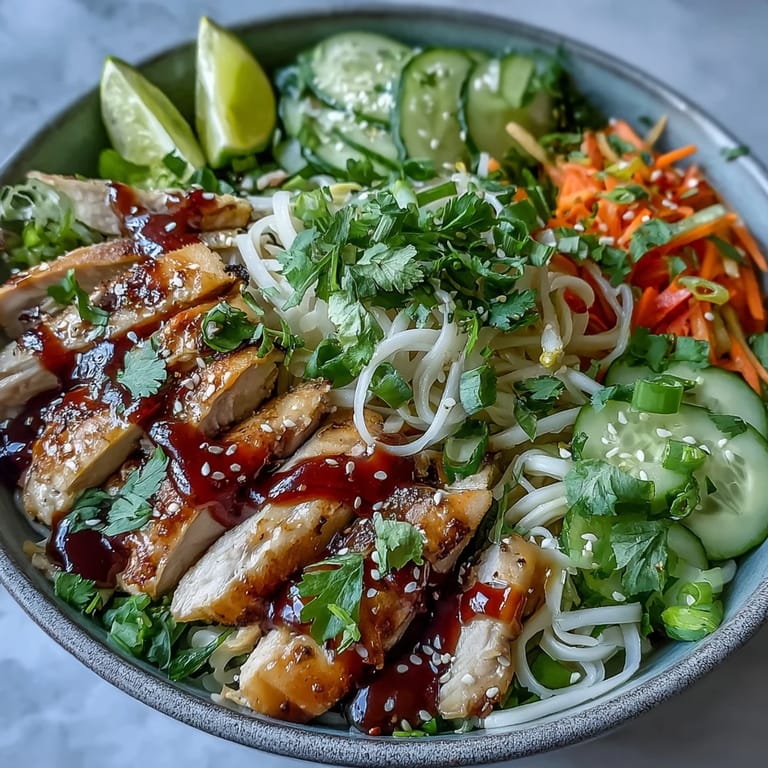
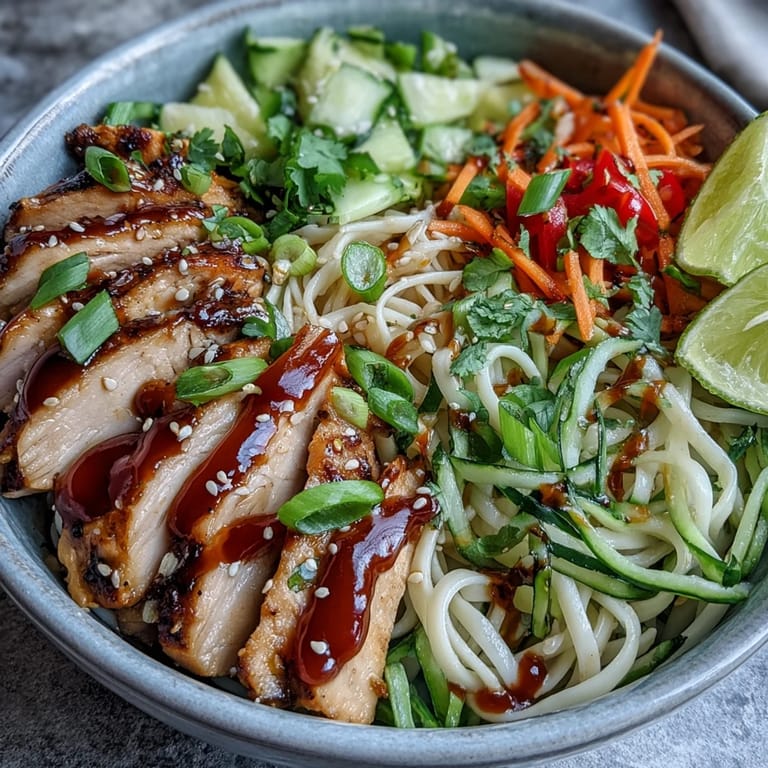
- Divide warm noodles among bowls, then arrange your chicken and vegetables on top like you're building something worth photographing. This matters because presentation changes how food tastes, and people slow down to actually enjoy the layers.
- Finish strong:
- Drizzle that reserved sauce over everything, then scatter cilantro, sesame seeds, and a squeeze of lime across the top. Serve immediately while the noodles are still slightly warm and everything else still has its snap and freshness.
 Pin it
 One afternoon while testing this recipe, my 6-year-old wandered into the kitchen and asked if he could help, so I let him arrange vegetables on a bowl like he was decorating art. He ate every bite without complaining, and that's when I realized this dish has a gift for turning skeptics into believers.
The Sauce is Everything
This sauce carries all the weight of the dish, so tasting it before you commit it to the whole bowl is crucial—it should make your mouth water, feel balanced between opposing flavors, and hint at what's coming. If it tastes too salty, thin it with a splash of rice vinegar; if it's too acidic, add a touch more honey. By the time you're satisfied with those ratios, you've already won half the battle.
Vegetable Prep Matters More Than You Think
The way you cut your vegetables determines the entire eating experience—thin slices mean they absorb sauce better and cook slightly from the warmth of the noodles, while thick chunks feel raw and disconnected. I learned this the hard way after lazily hacking vegetables into irregular chunks and wondering why the bowl felt disjointed. Consistency in size isn't just for looks; it changes how everything tastes together.
Make It Your Own
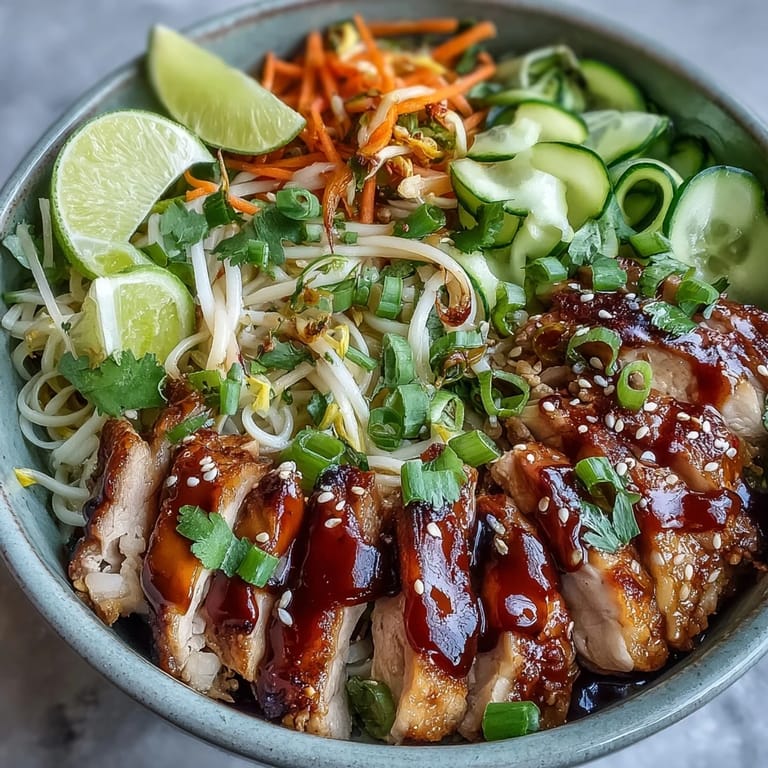
This recipe is a foundation, not a prison—I've made it with tofu for vegetarian friends, swapped rice noodles for ramen when that's what I had, and added shredded cabbage on days when I needed more volume. The sauce stays constant because it's what ties everything together, but the protein and vegetables can shift based on what's in your kitchen or your mood that day.
- Edamame or snap peas add different textures and sweetness that play beautifully with the savory sauce.
- Shredded cabbage bulks things up cheaply and brings a subtle crunch that competes with the other vegetables.
- If you go vegetarian, skip the fish sauce or use a mushroom-based alternative that captures some of that umami depth.
 Pin it
 This bowl has become my go-to when I need to feed people well without drama, and I keep making it because it never disappoints. Every time, someone asks for the recipe, and I love that I get to pass this moment along.
Frequently Asked Questions
- → What type of noodles work best?
Rice noodles are traditional and gluten-free, but wheat noodles, soba, or even udon work beautifully in this dish. Cook according to package directions and rinse with cold water to prevent sticking.
- → Can I make this vegetarian?
Substitute the chicken with firm tofu cubes and replace fish sauce with a vegetarian alternative or additional soy sauce. Marinate the tofu just as you would the chicken for best flavor absorption.
- → How spicy is this dish?
The base version is mild to medium heat from chili flakes. Adjust the spice level by adding more Sriracha, fresh chili peppers, or omitting the heat altogether for a family-friendly version.
- → Can I prepare this ahead?
Prepare the sauce and marinate the chicken up to 24 hours in advance. Slice vegetables and cook noodles beforehand, but assemble bowls just before serving to maintain texture and freshness.
- → What vegetables can I add?
Edamame, snap peas, shredded cabbage, bok choy, or mushrooms make excellent additions. Use whatever crisp vegetables you have on hand for a colorful, nutritious bowl.
- → How do I store leftovers?
Store components separately in airtight containers for up to 3 days. Keep sauce separate and reheat noodles and chicken gently, tossing with sauce before serving topped with fresh garnishes.