 Save
Save There's something about arranging cheese and vegetables on a board that makes time stop. I discovered this platter on a friend's sunny veranda last summer, where the simplicity of it all—just good cheese, crisp vegetables, and a few dips—somehow became the entire afternoon. No fussing, no fancy cooking, just the satisfaction of creating something beautiful that everyone immediately wanted to eat.
I made this for a birthday picnic last spring, and watching people fill their own plates at their own pace, standing around chatting, felt like the most civilized way to eat. The board sat there for hours—people kept coming back for one more radish, one more cube of feta—and honestly, that's when I knew this was the kind of recipe worth making again and again.
Ingredients
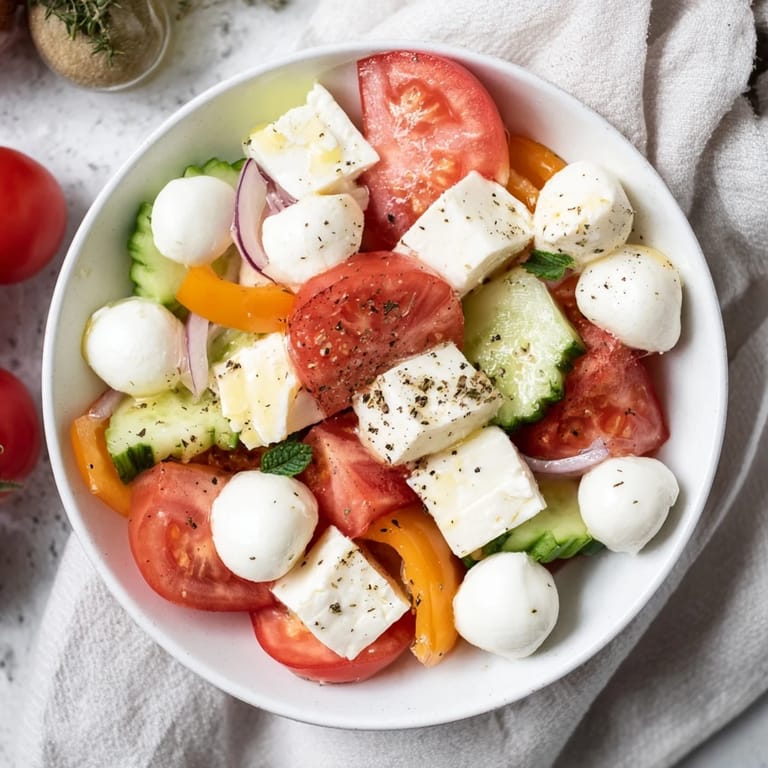
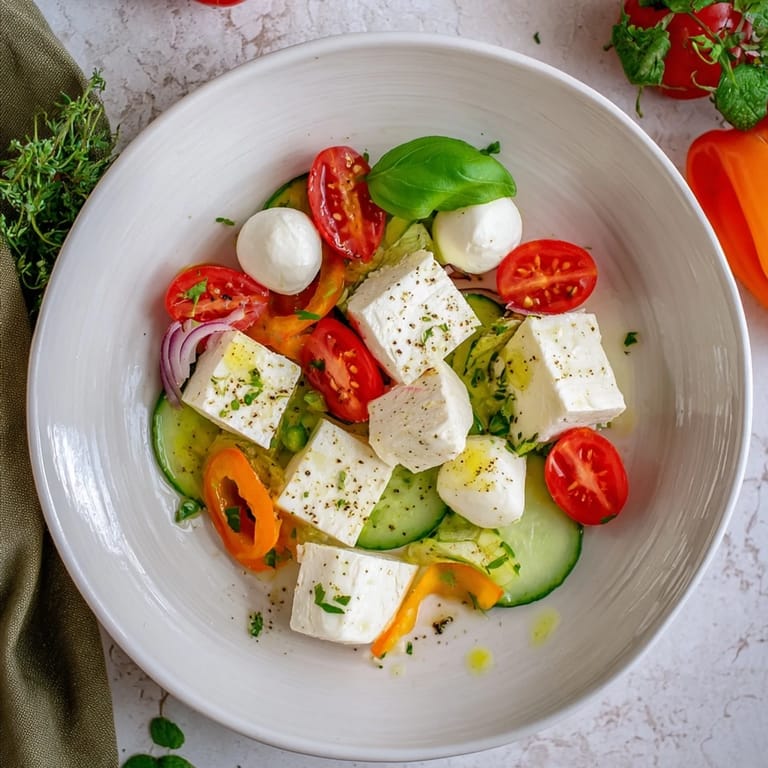
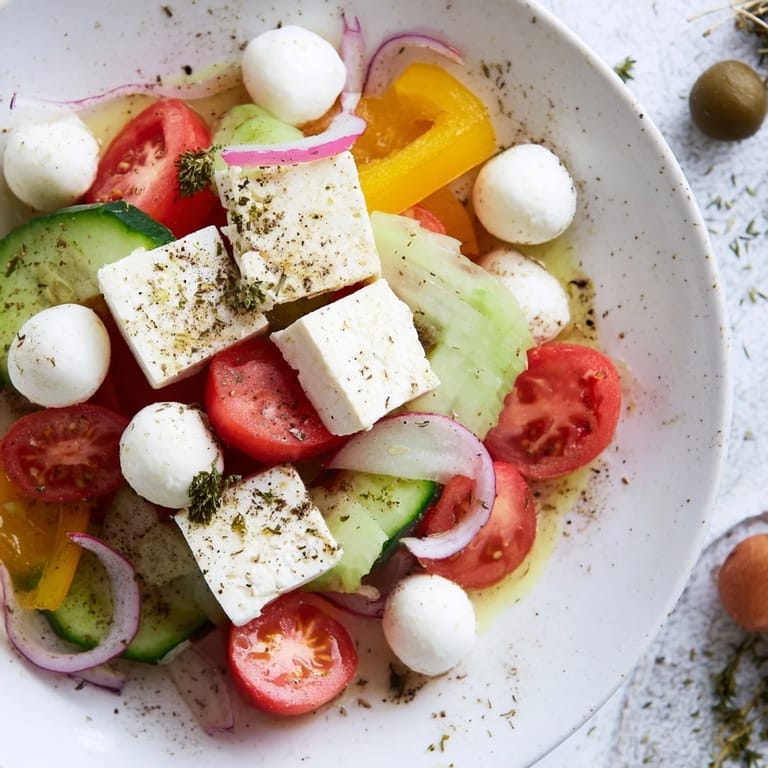
- Feta cheese: The salty anchor of the whole platter; I've learned that cutting it into cubes rather than crumbles keeps everything from getting dusty and actually makes it easier to eat.
- Fresh mozzarella balls: These soft pockets of creaminess balance the sharp feta beautifully, and draining them well is the trick so they don't weep onto everything.
- Cucumber: Slice it thick enough to hold up without falling apart, thin enough that it picks up the salt and olive oil you'll drizzle over it.
- Cherry tomatoes: Halving them exposes the juicy inside and makes them less likely to roll away across the board.
- Yellow bell pepper: The bright color is half the appeal, and stripping it into long pieces makes it look intentional rather than hastily thrown together.
- Red onion: Thin slices are essential; nobody wants a mouthful of raw onion, but a whisper of it wakes up the palate.
- Radishes: These stay crisp for hours and add a peppery crunch that surprised me the first time I added them.
- Kalamata olives: Keep them pitted so people can relax and eat without worrying, and a separate small bowl prevents the brine from soaking into everything.
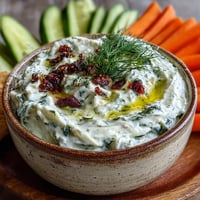
- Hummus and tzatziki: These are your flavor anchors, the dips that turn a vegetable into something irresistible.
- Extra virgin olive oil: A good one makes a real difference; I use one I actually like drinking, not the industrial stuff.
- Fresh herbs: Mint and dill add that final moment of freshness, almost like you've picked them moments before serving.
- Crispbreads or pita: These are the vehicles that make this interactive and fun; go gluten-free if needed, but don't skip them.
Tired of Takeout? 🥡
Get 10 meals you can make faster than delivery arrives. Seriously.
One email. No spam. Unsubscribe anytime.
Instructions
- Set your stage:
- Find a large platter or wooden board that feels generous—this is not the time to crowd things together. Leave white space, actual breathing room between each element. The emptiness is part of the beauty.
- Position the cheeses:
- Place your feta cubes and mozzarella balls in distinct areas, giving them each room to be noticed. I like to put them where the afternoon light hits.
- Arrange the vegetables in clusters:
- Group the cucumber slices in one spot, the tomatoes in another, the bell pepper strips somewhere else. Think of it like a color-blocked painting rather than a scattered mess. Each cluster should have maybe 3 inches around it of bare board.
- Nestle in the olives and dips:
- A small pile or bowl for the olives keeps them from rolling, and shallow bowls for hummus and tzatziki let people actually dip into them without chaos. I often place these slightly offset so they don't become the only thing people reach for.
- Add the finishing touches:
- Drizzle everything lightly with good olive oil, then scatter salt and pepper so it catches the light. Toss on your mint and dill sprigs at the very last second so they stay bright green and fragrant.
 Pin it
 The best part happened when someone I'd just met at that picnic asked if she could take a photo before eating. Nobody had asked me that before. Suddenly this simple board felt like something worth documenting, worth remembering, and I realized that beautiful food—even when it requires zero cooking—has this quiet power to make people slow down.
The Art of Negative Space
I used to pack every inch of my boards until a chef friend pointed out that the white space is actually doing the work. A crowded platter feels chaotic; an airy one feels confident. This is where patience pays off—resist the urge to fill every gap, and watch how much more inviting the whole thing becomes. The vegetables taste better when they're not competing for visual attention.
Timing and Temperature
Assemble this no more than an hour before serving if your vegetables are freshly cut, longer if you've prepped them ahead and kept them crisp in water. Room temperature is ideal for everything except the dips, which benefit from a quick chill. I learned this the hard way when I made this on a hot day and watched the cheese start to sweat; now I keep the board in a cool spot until the moment guests arrive.
Making It Your Own
This is genuinely one of the most flexible things you can make. Swap out vegetables with what's seasonal and what catches your eye at the market. Add roasted chickpeas for crunch, some marinated artichokes, thin slices of prosciutto if you want protein. The structure stays the same but the personality shifts completely based on what you choose. Here's where creativity actually matters:
- Try a sprinkle of sumac or dried oregano on the feta for a flavor surprise that feels intentional.
- Swap goat cheese for feta if you want something creamier, or go fully vegan with plant-based cheeses if that's what your crowd needs.
- A cold wine pairing—Sauvignon Blanc or light rosé—turns this from a snack into a proper experience.
 Pin it
 A mezze platter is less of a recipe and more of a permission to take your time, arrange things thoughtfully, and feed people with intention. It's one of my favorite things to make for exactly that reason.
Frequently Asked Questions
- → What cheeses are used in the platter?
Feta cheese cubes and fresh mozzarella balls (bocconcini) create a creamy, mild cheese combination.
- → Can the dish be made vegan-friendly?
Yes, substitute plant-based feta and vegan mozzarella alternatives, and omit dairy-based dips like tzatziki.
- → What vegetables complement this mezze platter?
Sliced cucumber, cherry tomatoes, yellow bell pepper strips, red onion, radishes, and Kalamata olives add fresh, crisp textures and vibrant colors.
- → How should the platter be served?
Arrange ingredients spaced apart on a large board with bowls of hummus and tzatziki, then drizzle lightly with olive oil and garnish with mint and dill.
- → Is this dish suitable for gluten-free diets?
Yes, when served with gluten-free crispbreads or pita alternatives, it fits gluten-free dietary needs.