 Save
Save The first time I arranged layers of pâté and jam in a shallow dish, I wasn't thinking about impressing anyone—I was hunting through my fridge at dusk, trying to rescue some beautiful fig jam before it disappeared into the back of a shelf. A friend appeared in the kitchen just as I'd scattered those first hazelnuts across the dark spread, and when she tasted it, the surprise in her eyes told me something had worked. That moment taught me that the most elegant dishes sometimes arrive by accident, born from a handful of good ingredients and the willingness to layer them thoughtfully.
I remember bringing this to a dinner party on a rainy November evening when everyone arrived looking tired from their week. Someone broke open a nut-studded layer while chatting, and suddenly the room shifted—there was real laughter, genuine curiosity about where each bite came from, and someone asking for a second helping before I'd even set down the rest of the appetizers. That's when I understood: sometimes the most generous thing you can offer isn't quantity, but a moment that makes people feel genuinely welcomed.
Ingredients
- Smooth duck or chicken liver pâté (200 g): This is your foundation—rich and earthy—so seek out quality store-bought versions or make your own if you have the time; the creaminess contrasts beautifully with everything layered on top.
- Fig jam and blackcurrant jam (4 tbsp and 2 tbsp): The jam cuts through the pâté's richness with its subtle tartness and jewel-like color, creating visual intrigue before you even taste it.
- Roasted hazelnuts and toasted walnuts (50 g and 30 g): These aren't just texture—they're the hidden surprise that makes people pause mid-bite and wonder what they just discovered; toast them yourself if possible for maximum flavor.
- Toasted baguette, crackers, or vegetable sticks: Your delivery vehicle; choose what fits your table and your guests' preferences, and toast the bread ahead of time so it stays crisp.
- Fresh chives or parsley: A whisper of green that brightens the dark elegance of the finished dish and adds a subtle, fresh note.
Tired of Takeout? 🥡
Get 10 meals you can make faster than delivery arrives. Seriously.
One email. No spam. Unsubscribe anytime.
Instructions
- Prepare your vessel:
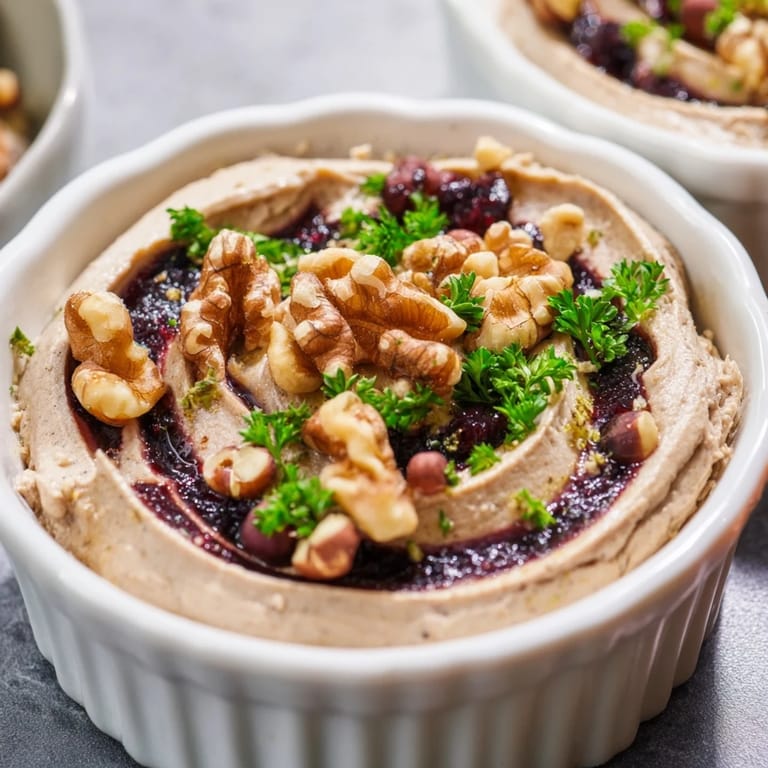
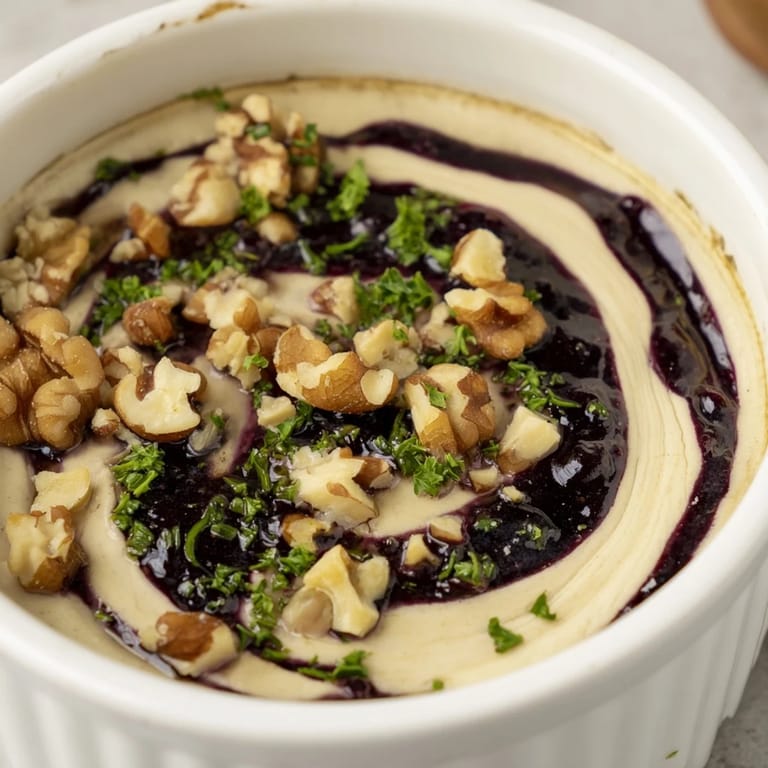
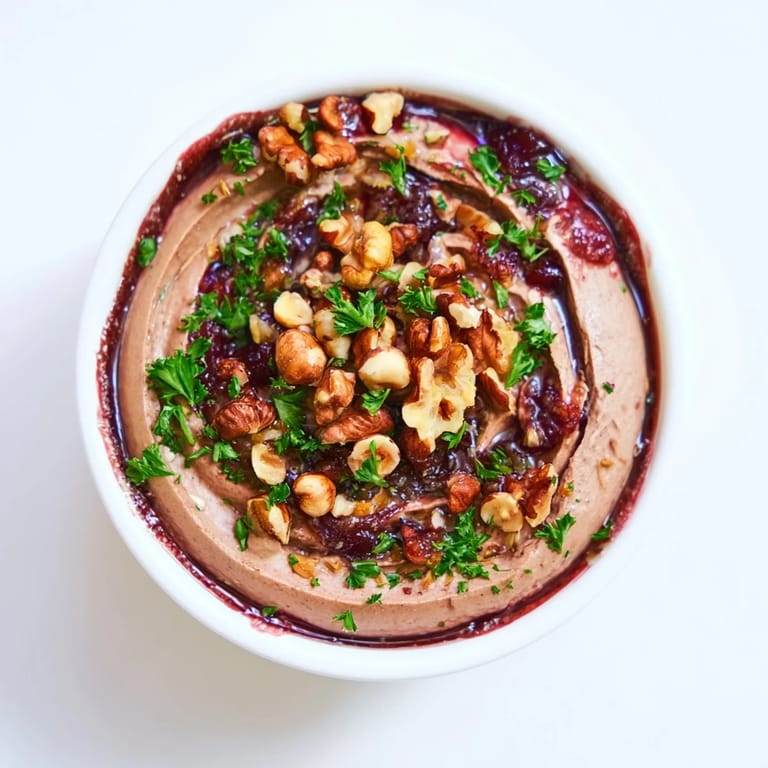
- Choose a shallow dish or individual ramekins—the shallow shape lets all three layers show themselves when you look down at the finished appetizer, making every element visible and inviting.
- Spread the first pâté layer:
- Work the pâté gently into an even base, letting it fill the space without pressing too hard; you want it smooth but not dense.
- Dot with jam and swirl:
- Drop spoonfuls of fig and blackcurrant jam across the pâté, then use a knife or spatula to make loose swirls—aim for marbled effect, not perfect lines, because imperfection looks more intentional.
- Hide the first layer of nuts:
- Scatter hazelnuts and walnuts over the jam, pressing them gently so they nestle into the surface rather than sitting on top; you want some visible, some buried as a surprise.
- Add the second pâté layer:
- Spread the remaining pâté over the nuts, sealing them beneath a new creamy surface that feels almost like a secret layer.
- Layer jam and nuts once more:
- Repeat the jam dots and nut scatter to create visual interest and ensure the final bites hold that same textural complexity as the first.
- Smooth and garnish:
- Use a spatula to gently smooth the top, then crown it with a few chopped nuts and a scattered handful of fresh herbs; this last gesture ties everything together.
- Serve with your chosen vehicles:
- Arrange toasted baguette slices, crackers, or vegetable sticks alongside the dish, letting guests build their own bites at their own pace.
 Pin it
 There's a particular magic in watching someone cut into this dish and discover the layers—that moment when anticipation meets reality and the sweetness of the jam surprises them all over again. That's the moment this stops being an appetizer and becomes an experience, something small enough to hold on a plate but generous enough to change the mood of a gathering.
The Art of Layering
Layering isn't just about stacking ingredients; it's about creating contrast—in flavor, texture, and color. When you work with something as dark as pâté, the bright jewel tones of jam and the raw warmth of nuts become architectural elements. I learned this slowly, through trial and error, eventually understanding that each layer should have a reason to exist, a conversation it's meant to have with the layers around it. The visual discipline matters as much as the taste.
Timing and Temperature
This recipe asks nothing of heat or time in the traditional sense—no oven, no stovetop—but temperature still matters quietly in the background. Cold pâté holds its shape, jam stays defined, and nuts don't warm into sogginess; all of this works best when you assemble moments before serving, or refrigerate for up to four hours if you need to prepare ahead. I once made this in the morning for an evening gathering and found that the flavors deepened and settled as they sat together, the layers beginning to marry subtly while remaining distinct.
Variations That Work
While this recipe holds its own as written, I've found it welcomes gentle experimentation without losing its soul. Try pairing different jam combinations—cherry with fig, apricot with blackcurrant—or substitute hazelnuts and walnuts with pistachios or pecans for an entirely different character. The structure stays the same, but the personality shifts with each choice you make, which means this dish can evolve with your mood and what's already living in your pantry.
- Swap traditional nuts for seeds like pumpkin or sunflower if you're cooking for someone with allergies, and you'll find the crunch and nuttiness still deliver.
- Try tart jams like cherry or raspberry if you prefer a brighter, more assertive contrast against the rich pâté.
- Serve cold straight from the fridge for maximum crispness, or let it rest at room temperature for five minutes if you prefer the pâté's texture to soften slightly.
 Pin it
 This dish reminds me that elegance doesn't require complexity, and that sometimes the most generous host is the one who takes fifteen minutes to arrange something beautiful and lets it speak for itself. Serve it, watch your guests discover it, and know you've given them something small but unforgettable.
Frequently Asked Questions
- → Can I use other nuts instead of hazelnuts and walnuts?
Yes, seeds like pumpkin or sunflower can substitute nuts for a nut-free version while maintaining crunchiness.
- → Is it necessary to use both fig and blackcurrant jams?
Combining both jams creates a sweet and tart balance, but you can experiment with cherry or raspberry jams for variation.
- → How should I serve this dish for a gluten-free option?
Serve with gluten-free crackers or fresh vegetable sticks instead of traditional baguette slices.
- → Can store-bought pâté be used?
Store-bought pâté works well, but check allergen information on the label if dietary restrictions apply.
- → What garnishes enhance this dish’s flavor?
Fresh herbs such as chives or parsley add a bright herbal note that complements the creamy and sweet layers.