 Save
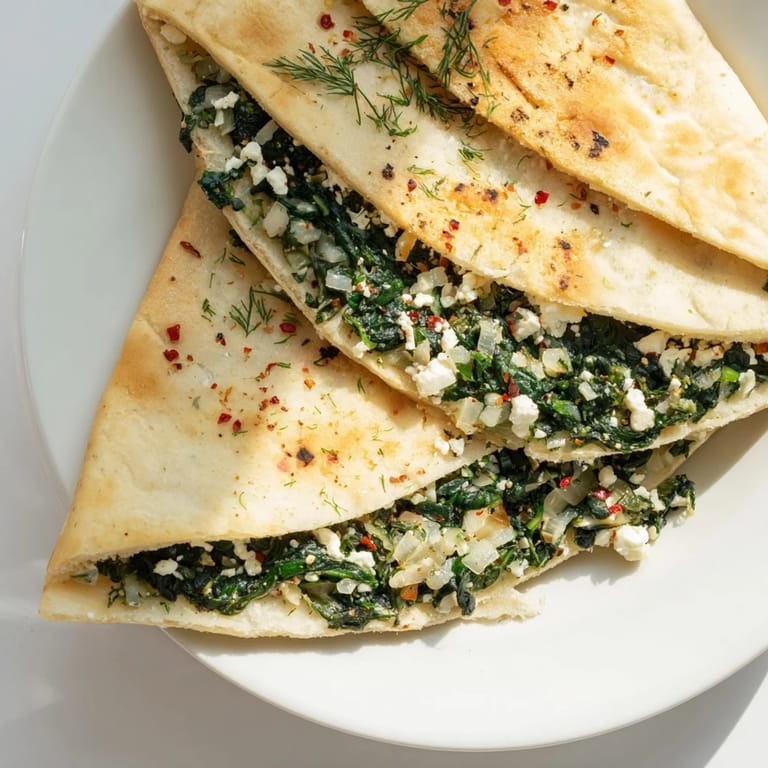
Save Years ago, a Turkish friend brought these to a casual dinner, and I watched her fold them at the stove while we talked, moving with such ease that I thought I'd never manage it myself. When I finally tried making them in my own kitchen, I realized how forgiving they actually are—soft dough, a simple spinach filling, and patience with the pan is really all you need. Now they're something I make when I want to feel like I'm feeding people properly, with minimal fuss but maximum flavor.
I made a batch for my neighbor last spring when she was recovering from surgery, and the look on her face when she tasted them—like she was suddenly transported somewhere warm and comforting—made me realize this recipe was worth keeping close. Now whenever I fold these, I think about feeding people in small, meaningful ways.
Ingredients
- All-purpose flour (2 cups): The foundation of everything—I've found that letting it rest after mixing really does matter, making the dough easier to work with.
- Warm water (2/3 cup): Temperature matters more than you'd think; too hot kills the dough, too cold and it won't come together smoothly.
- Olive oil (2 tablespoons for dough, 1 for the filling): Good quality oil changes the flavor profile, especially in the dough where it creates a subtle richness.
- Fresh spinach (8 oz): Wash it thoroughly and chop it fine so it distributes evenly through the filling—the smaller pieces cook faster too.
- Feta cheese (5 oz): Crumble it by hand rather than using a food processor; you want texture, not paste.
- Fresh herbs (dill and parsley, 2 tablespoons each): These are non-negotiable for authentic flavor—dried herbs lose their brightness in the filling.
- Onion and garlic: Sautéing them first softens their edge and lets them meld into the spinach rather than shout from every bite.
- Red pepper flakes (optional): I keep them optional because some people come to flatbread looking for comfort, not heat.
Tired of Takeout? 🥡
Get 10 meals you can make faster than delivery arrives. Seriously.
One email. No spam. Unsubscribe anytime.
Instructions
- Make the dough:
- Combine your flour and salt in a large bowl, then make a well in the center and add the olive oil and warm water. Mix until shaggy, then knead for about 5–6 minutes—you'll feel it transition from rough to smooth under your hands, which is oddly satisfying. Cover it and let it rest for 20 minutes while you handle the filling.
- Cook the filling:
- Heat oil in a skillet over medium heat and add your chopped onion, giving it a few minutes to soften and turn translucent. Add the garlic, then the spinach in batches, stirring until it wilts down completely and any water has evaporated—this step prevents soggy flatbreads. Let it cool slightly before mixing in the feta, herbs, and spices.
- Assemble the flatbreads:
- Divide your rested dough into 4 pieces and roll each one into a thin oval, about 8 inches long. Spoon 1/4 of the filling onto one half of each oval, leaving a half-inch border, then fold over and pinch the edges closed like you're sealing a secret.
- Pan-cook until golden:
- Heat a nonstick skillet or griddle over medium heat and place your first flatbread in the dry pan. Cook for 3–4 minutes per side until the surface is golden and cooked through—you want a little color, not just pale. Work through the rest while the pan stays warm.
 Pin it
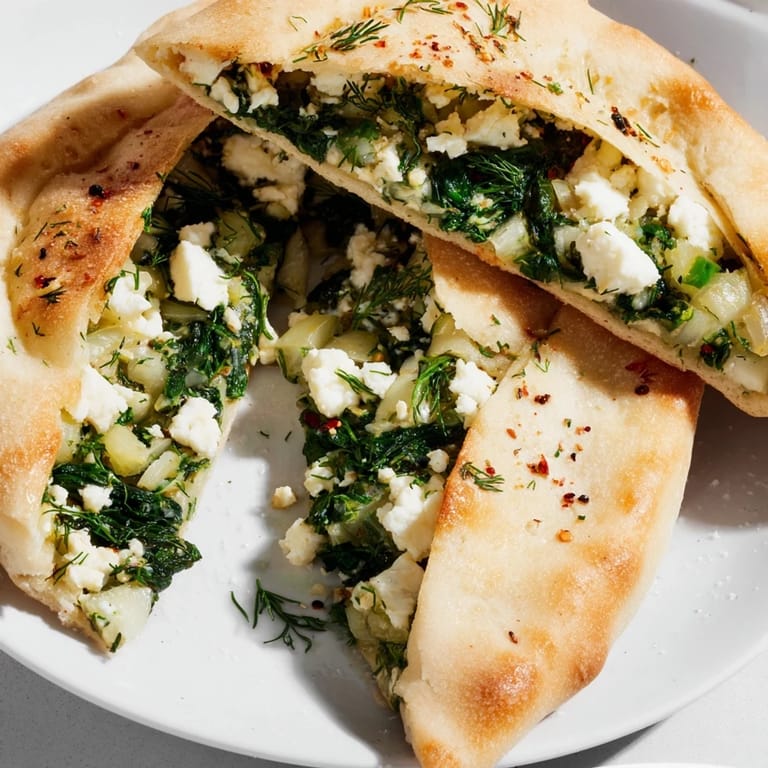
 My daughter once bit into one of these flatbreads and said it tasted like someone had figured out how to make vegetables taste like they actually wanted to be eaten. That sentence has stuck with me because it's true—the spinach isn't hidden or apologized for, it's celebrated.
Why This Works as Comfort Food
There's something about hand-folded food that feels more intentional than anything else you could make. These flatbreads land somewhere between a snack and a proper meal, which makes them perfect for moments when you're feeding people but not cooking a whole production. They're warm, filling, and taste like someone took time with them.
Making Them Ahead of Time
I've learned that you can prep the spinach filling hours in advance and keep it in the fridge, then assemble and cook when you're ready. The dough is a bit more time-sensitive since it needs that 20-minute rest, but even that's flexible if your schedule demands it. This flexibility is honestly one of the reasons I come back to this recipe again and again.
Serving and Storage
Serve them warm, ideally right off the pan, though they're perfectly respectable at room temperature. If you brush them with melted butter or olive oil after cooking, they stay softer longer and get a little shine that looks intentional. These keep well for a day or two in an airtight container, and you can reheat them gently in a skillet to restore some of that fresh-off-the-pan texture.
- Pair them with a cool yogurt sauce or a fresh tomato salad to cut through the richness of the filling.
- If you're making extras, freeze them uncooked on a baking sheet and cook straight from frozen—just add a minute or two to the cooking time.
- Store leftovers in an airtight container at room temperature for up to 2 days, or refrigerate for longer.
 Pin it
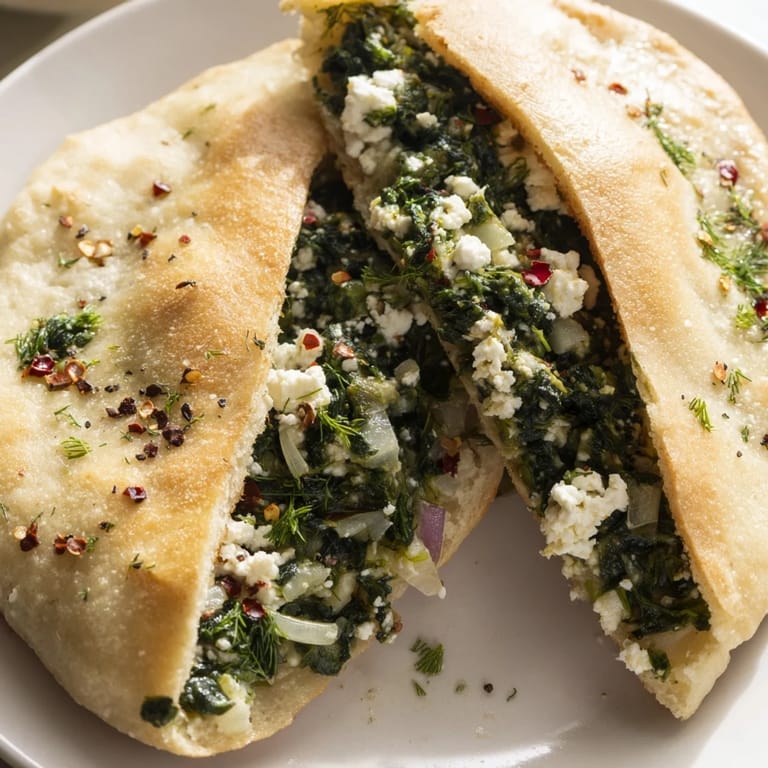
 These flatbreads have become my answer to the question of what to bring when you want to contribute something that feels special. They're proof that simple can be extraordinary.
Frequently Asked Questions
- → What type of flour is best for the dough?
All-purpose flour works well to create a soft yet sturdy dough that cooks evenly on the skillet.
- → Can I use frozen spinach instead of fresh?
Yes, just make sure to thaw and drain frozen spinach thoroughly to avoid excess moisture in the filling.
- → How can I add extra flavor to the flatbreads?
Brushing the cooked flatbreads with melted butter or olive oil enhances richness and adds a lovely sheen.
- → What herbs complement the spinach and feta filling?
Fresh dill and parsley contribute bright, aromatic notes that balance the creaminess of the cheese and earthiness of spinach.
- → How should I cook the flatbreads for best results?
Cook each flatbread over medium heat in a dry nonstick skillet until golden and cooked through, about 3-4 minutes per side.