 Save
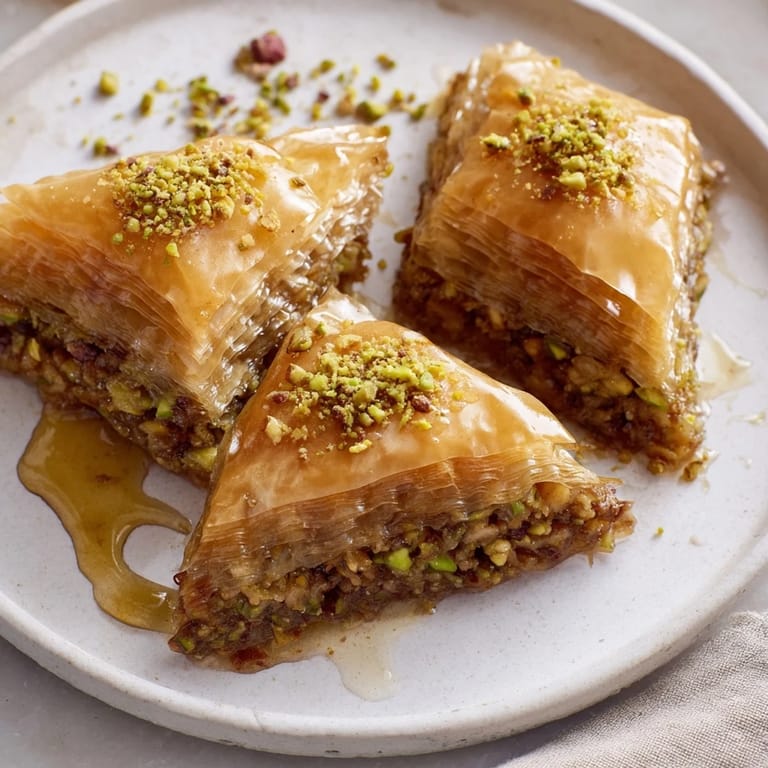
Save My first encounter with baklava was at a family gathering where my aunt emerged from the kitchen with a tray that glistened under the light, the honey catching the afternoon sun. The kitchen smelled like toasted hazelnuts and warm butter in a way that made everyone pause mid-conversation. She'd learned this recipe from a woman in Istanbul, and watching her cut those precise diamond shapes with such confidence felt like witnessing something sacred. That moment taught me that baklava isn't just dessert—it's patience made golden and crispy.
I made this for my roommate's birthday last fall, and I remember the exact moment she walked in—her face did that thing where surprise and disbelief happen at the same time. She bit into a piece still warm from the oven, and the honey-soaked phyllo crackled between her teeth while hazelnuts released their gentle nuttiness. She didn't say anything for a solid thirty seconds, which somehow meant more than any compliment could.
Ingredients
- Phyllo dough (16 sheets, thawed): The foundation of everything—make sure it's fully thawed or it'll crack and tear on you, which I learned the hard way before my second attempt.
- Unsalted butter (150 g, melted): Each layer needs to be brushed generously; stingy butter means the pastry won't achieve that golden-brown crispness that makes it sing.
- Hazelnuts (100 g, finely chopped): Toast them lightly before chopping if you have the time—it deepens their flavor in a way that feels almost deliberately luxurious.
- Pistachios (100 g, finely chopped): Their subtle sweetness balances the earthiness of hazelnuts, creating a filling that feels more refined than either nut alone.
- Granulated sugar (100 g for filling): This sweetens the filling itself, so you get complexity beyond just the honey syrup.
- Ground cinnamon (1 tsp, optional): It's optional, but include it—the warmth it brings is what makes people ask you to make this again.
- Honey (150 g): Use real honey; the cheap stuff doesn't absorb the same way and the flavor becomes one-dimensional.
- Granulated sugar (100 g for syrup): This balances the honey so the syrup isn't cloyingly sweet.
- Lemon juice (1 tsp): A tiny but essential brightening note that stops everything from feeling heavy.
- Water (120 ml): The vehicle that carries all the sweetness into the waiting pastry below.
Tired of Takeout? 🥡
Get 10 meals you can make faster than delivery arrives. Seriously.
One email. No spam. Unsubscribe anytime.
Instructions
- Set yourself up for success:
- Preheat your oven to 180°C and brush your baking pan with melted butter, covering every corner so nothing sticks later. Have all your ingredients prepped and within arm's reach—this is one of those recipes where momentum matters.
- Create the phyllo foundation:
- Peel four sheets of phyllo and lay them in the pan, brushing each one with butter as you go, using gentle motions so the delicate layers don't crack. You'll notice how the butter makes them glisten—that's exactly what you want.
- Build your first nut layer:
- Toss your chopped hazelnuts and pistachios with the sugar and cinnamon in a bowl until evenly combined, then sprinkle one-third of the mixture across your phyllo base in an even layer. This is where the filling gets its foundation.
- Repeat the layering dance:
- Add four more buttered phyllo sheets, then another third of the nut mixture, then four more phyllo sheets with the final third of nuts, finishing with the last four sheets of phyllo brushed with butter on top. By the end, you'll have created something that feels almost architectural.
- Cut with intention:
- Using a sharp knife, cut your assembled baklava into diamond or square shapes while it's still cool and slightly firm—this matters more than you'd think, as warm baklava crumbles instead of cutting. Wipe your knife between cuts for cleaner lines.
- Bake until golden:
- Slide it into the oven for 35 to 40 minutes, watching until the top turns a deep golden brown and you can hear the pastry crackling slightly. The kitchen will smell absolutely incredible at this point.
- Prepare your honey syrup:
- While the baklava bakes, combine water, honey, sugar, and lemon juice in a saucepan and bring it to a boil, then reduce the heat and let it simmer gently for 10 minutes so the flavors meld together. This should be ready just as your baklava comes out of the oven.
- The crucial marriage:
- The moment your baklava is golden and hot, pour the hot honey syrup over it in an even drizzle, letting it soak in immediately. This is the secret to baklava that stays tender inside while remaining crisp outside.
- Patience, the final ingredient:
- Let everything cool completely before serving—this allows the syrup to fully absorb into the pastry and the whole thing to set properly. Breaking into this too early will give you a mess; waiting gives you perfection.
 Pin it
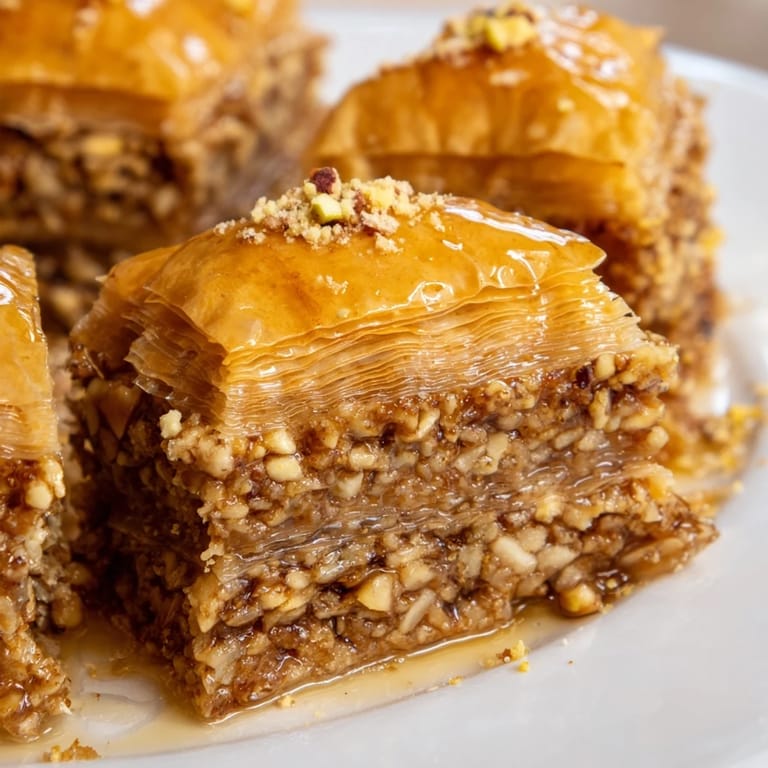
 There's a moment right after baklava comes out of the oven when you pour that hot honey over it and watch it immediately disappear into the layers—a kind of small magic that happens in your own kitchen. I think that's when baklava stops being just a recipe and becomes something people remember about you.
Why This Works
Baklava succeeds because of contrasts—crisp meets soft, nutty meets sweet, warm meets cool. The phyllo gets its shatter from butter and heat, the filling stays tender because the honey syrup keeps it moist, and the whole thing balances because lemon juice prevents the sweetness from overwhelming everything. It's a dessert that understands itself.
Making It Your Own
While this recipe is classically Turkish, it welcomes small adjustments without losing its soul. Some families prefer more cinnamon, others swap in walnuts for hazelnuts, and some drizzle a touch of orange blossom water into the syrup. The structure stays the same, but your version becomes yours.
Storage and Keeping
Baklava stays crisp and delicious for up to five days in an airtight container at room temperature, and honestly, it's often even better on day two when the flavors have had time to settle into each other. Don't refrigerate it unless your kitchen is unusually warm—cold temperatures make the honey crystallize and change the texture.
- Keep it covered so it doesn't dry out and lose that delicate crispness.
- If you need to make it ahead, assemble everything unbaked and freeze it for up to a month, then bake straight from frozen (adding 5 minutes to baking time).
- Wrapped individually in parchment, pieces freeze beautifully and thaw in about an hour at room temperature.
 Pin it
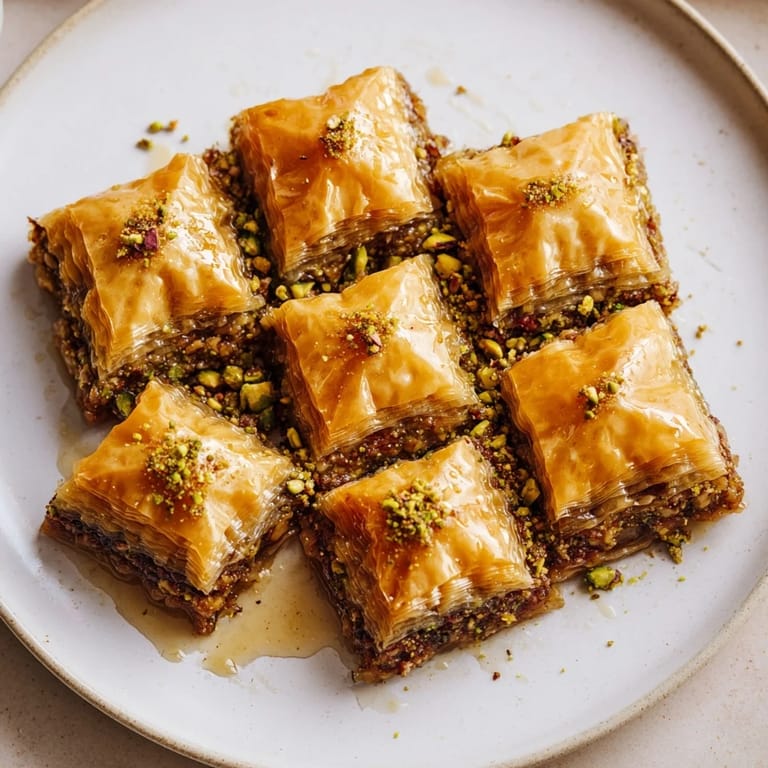
 Making baklava is an act of presence—there's no rushing through the layering, no shortcuts that actually work. When you hand someone a piece of something you made with your own hands that tastes like honey and hazelnuts and time well spent, that's when dessert becomes something more.
Frequently Asked Questions
- → What type of nuts are used in this dessert?
Finely chopped hazelnuts and pistachios form the aromatic filling, providing a rich and crunchy texture.
- → How is the pastry prepared before baking?
Phyllo sheets are layered and brushed with melted butter to create a flaky, golden crust once baked.
- → What is the purpose of the honey syrup?
The warm honey syrup is poured over the hot pastry after baking, soaking in to enhance sweetness and moistness.
- → Can any nuts be substituted?
Yes, walnuts can replace hazelnuts for a different flavor profile while maintaining the dessert’s texture.
- → How should the dessert be stored?
Store in an airtight container at room temperature for up to five days to maintain freshness and texture.
- → Is cinnamon necessary in the filling?
Cinnamon is optional but adds a warm, aromatic note that complements the nuts.