 Save
Save The first time I made Tom Yum Wonton Soup was during a thunderstorm when I couldn't leave the house but craved something that would warm me from the inside out. The kitchen filled with the aromatic scent of lemongrass and lime as I folded little parcels of savory pork. My hands awkwardly crimped the first few wonton wrappers until I found a rhythm. Something magical happened when those delicate dumplings met the vibrant, spicy broth, creating a fusion that now defines comfort in my home.
Last winter when my friend Mei visited from overseas, I served this soup on her first night. She grew quiet after the first spoonful, then looked up with misty eyes saying it reminded her of home but with a twist she never expected. We spent the evening catching up over steaming bowls, the spicy broth fogging up our glasses as we laughed about old times. The soup became our tradition whenever we manage to be in the same city.
Ingredients
- Wonton wrappers: Look for the thinner variety if available, they cook more quickly and have a lovely delicate texture that melts beautifully against the robust broth.
- Lemongrass: The woody outer layers hide the fragrant interior, so smash it well with the back of your knife to release its essential oils before adding to the broth.
- Kaffir lime leaves: These little green powerhouses add a citrusy complexity that regular lime juice alone cant achieve, try tearing rather than cutting them to release more aroma.
- Ground pork: Choose something with a little fat content, around 15-20% is perfect as it keeps the wontons juicy and tender through the cooking process.
- Fish sauce: The secret depth-builder in this soup, adding it gradually and tasting as you go prevents overwhelming the broth with saltiness.
Tired of Takeout? 🥡
Get 10 meals you can make faster than delivery arrives. Seriously.
One email. No spam. Unsubscribe anytime.
Instructions
- Craft your wontons:
- Mix the ground meat with aromatics until just combined, being careful not to overwork the mixture or your wontons will become tough. Watch how the wrapper transforms from stiff to silky as you moisten the edges, then fold them like little treasure pouches.
- Build your aromatic base:
- Let the lemongrass, galangal, and lime leaves dance in the simmering broth, releasing their essential oils. You can almost see the flavors blooming as the clear broth takes on a golden hue.
- Balance the flavors:
- This is where magic happens with the holy trinity of Thai cooking, adding fish sauce for salt, lime juice for sour, and a touch of sugar to round everything out. Trust your taste buds more than the recipe measurements here.
- The gentle poach:
- Lower your wontons into the simmering broth with care, watching them transform from pale parcels to plump pillows. They will tell you when theyre done by floating happily to the surface.
- Final flourish:
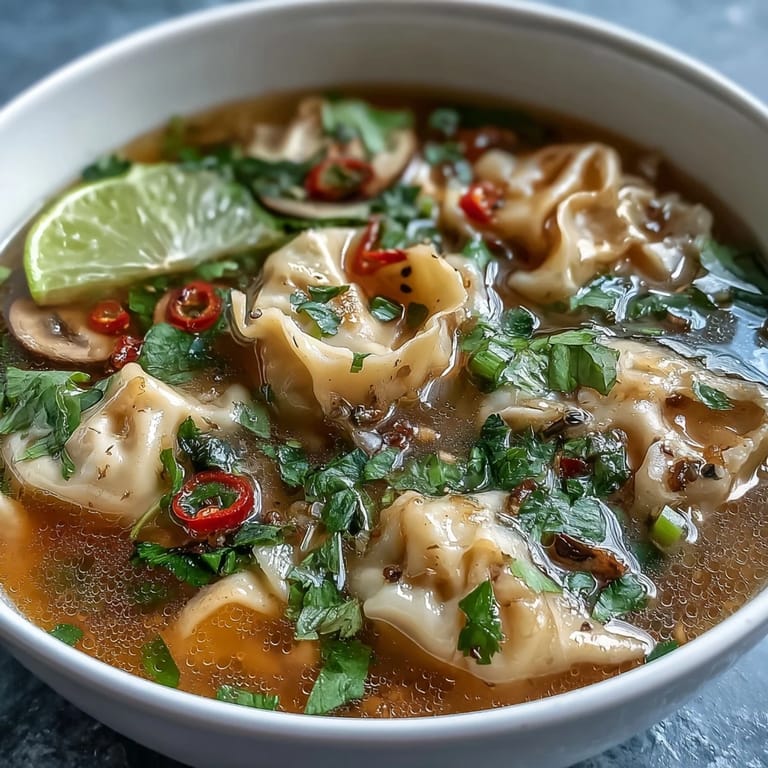
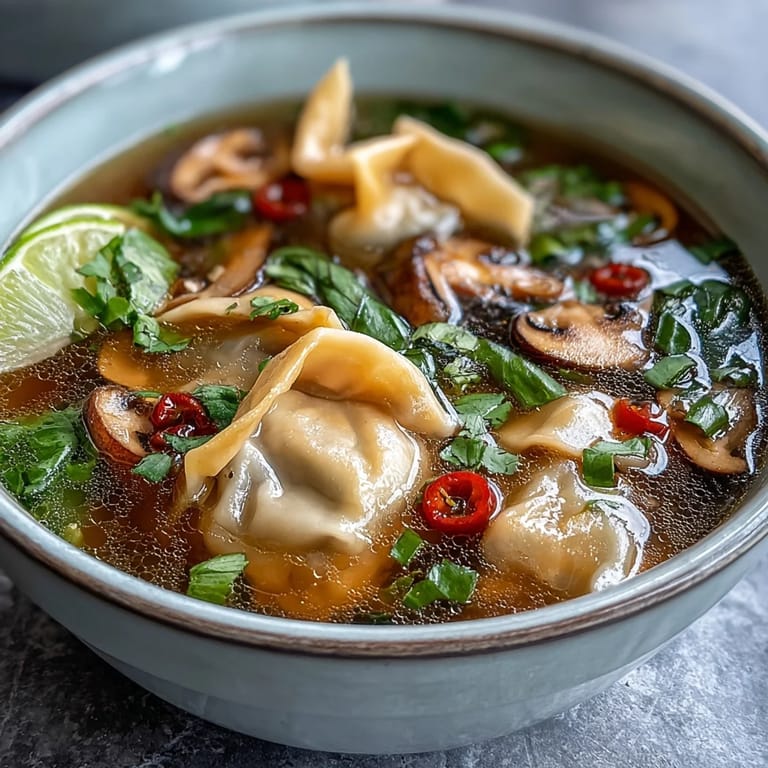
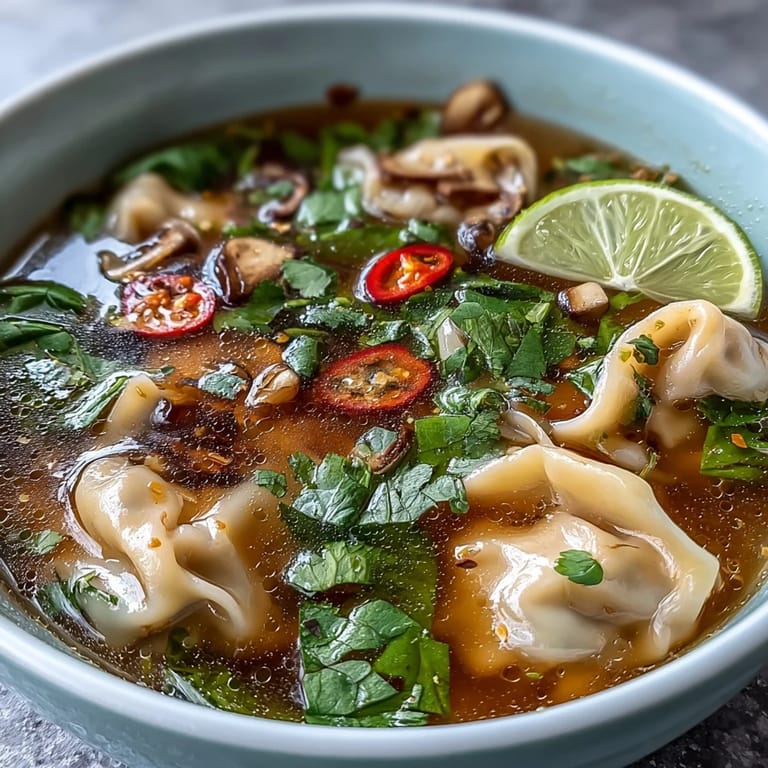
- Finish with tender greens and vibrant garnishes that bring color and freshness. Each bowl should look like a little edible work of art with floating wontons, bright herbs, and the occasional chili flash.
 Pin it
 One particularly hectic evening when everything was going wrong, I served this soup to my family without the usual fanfare. My teenage son, who typically inhales food without comment, paused mid-slurp and said, Mom, this soup makes everything better. In that moment, the hours spent hunting down galangal at three different markets felt completely worth it. Sometimes the most meaningful connections happen over a humble bowl of soup.
Flavor Building Blocks
The brilliance of this fusion soup lies in understanding how the Thai and Chinese elements complement each other without competing. The bright, assertive notes of lemongrass and lime cut through the richness of the pork wontons, creating a balance that neither cuisine would achieve alone. Ive found that adding the aromatics in stages rather than all at once creates distinct flavor notes rather than a muddled taste profile.
Make-Ahead Options
This soup has saved me countless times when entertaining because so much can be prepared in advance. The wontons can be assembled and frozen raw on a baking sheet, then transferred to freezer bags once solid, lasting up to a month. Ive even prepared the broth base two days ahead, keeping the final additions of lime juice and delicate greens until just before serving to preserve their brightness and texture.
Adapting Your Soup
The beauty of this recipe lies in its flexibility, allowing you to adjust elements based on your preferences or what you have available. After many iterations, Ive learned that the soup transforms entirely with simple tweaks.
- For a richer flavor profile, try roasting the chicken bones before making your stock, adding a deeper savory dimension that complements the bright aromatics.
- If kaffir lime leaves prove impossible to find, a combination of lime zest and bay leaf creates a surprisingly effective substitute that still captures that citrusy complexity.
- When serving to spice-sensitive guests, keep the chilies whole rather than sliced, allowing them to infuse the broth without overwhelming heat.
 Pin it
 This soup has become more than a recipe in my home, its a reminder that cultures can blend together creating something greater than the sum of their parts. Just like friendships across different backgrounds, this fusion creates harmony in unexpected ways.
Frequently Asked Questions
- → What makes tom yum broth distinctive?
The broth combines lemongrass, kaffir lime leaves, galangal, and fresh lime juice for its signature zesty, aromatic profile. Fish sauce adds depth while chilies provide heat.
- → Can I make wontons ahead of time?
Yes, assemble wontons and freeze them on a baking sheet before transferring to a bag. Cook frozen wontons directly in the broth, adding 1-2 minutes to cooking time.
- → Is this soup very spicy?
The spice level is adjustable. Start with fewer chilies and add more gradually. You can also serve chili oil on the side so diners control the heat.
- → What can I substitute for galangal?
Fresh ginger works as a substitute, though the flavor profile will be slightly different. Use slightly more ginger than the galangal called for.
- → How do I store leftovers?
Store soup and wontons separately in airtight containers. The broth keeps for 3-4 days, while cooked wontons are best eaten within 2 days. Reheat gently to avoid tearing the wrappers.
- → Can I make this vegetarian?
Use vegetable stock, fill wontons with seasoned tofu or mushrooms, and replace fish sauce with soy sauce or tamari. Omit shrimp or substitute with more vegetables.