 Save
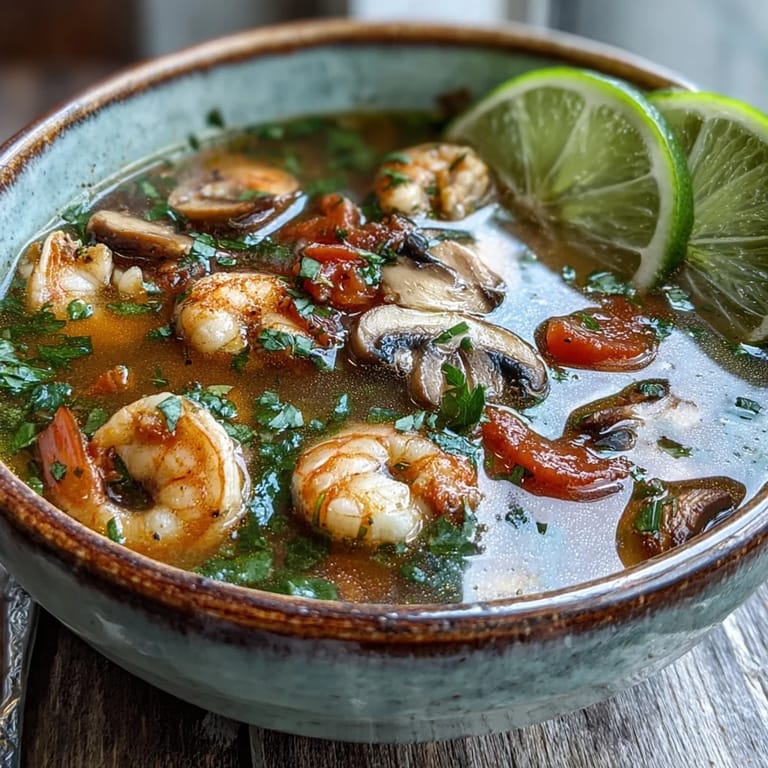
Save I still remember the first bowl of tom yum I had in Bangkok, perched on a plastic stool as rain pattered on the tin roof above. The steam carried aromas I couldn't even name then - floral lemongrass, pungent galangal, aromatic lime leaves. Back home, it took me years to recreate that perfect balance of flavors, but now this soup transports me straight back to that tiny street stall whenever I make it.
Last winter when my friend Mei was feeling under the weather I showed up at her door with a thermos of this tom yum soup. She called the next day saying shed slept better than shed had in weeks and demanded I teach her how to make the broth. We spent that afternoon comparing notes on whether ginger was an acceptable substitute for galangal while the kitchen windows fogged with aromatic steam.
Ingredients
- Lemongrass: Look for firm stalks that give slightly when pressed and remove the tough outer layers before smashing with the side of your knife to release those citrusy oils.
- Kaffir Lime Leaves: These wrinkly dark green leaves might look unassuming but they provide that distinctive floral aroma that makes tom yum instantly recognizable.
- Galangal: If possible avoid substituting ginger as galangal has a sharper pine like quality though in a pinch ginger will still create a delicious soup.
- Thai Chiles: These tiny peppers pack serious heat so start with fewer than you think you need you can always add more later.
- Fish Sauce: This ingredient provides the crucial umami foundation so dont skip it though vegetarians can substitute a good quality soy sauce.
Tired of Takeout? 🥡
Get 10 meals you can make faster than delivery arrives. Seriously.
One email. No spam. Unsubscribe anytime.
Instructions
- Infuse the Broth:
- Start by bringing your stock to a gentle simmer not a rolling boil so the aromatics have time to release their flavors gradually. Youll know its ready when your kitchen fills with a fragrant citrusy aroma that makes everyone ask whats cooking.
- Prep Your Aromatics:
- Bruise the lemongrass by pressing firmly with the flat side of your knife before cutting into 3 inch pieces this helps release the essential oils. For the galangal slice it thinly as it wont soften much during cooking.
- Add Vegetables:
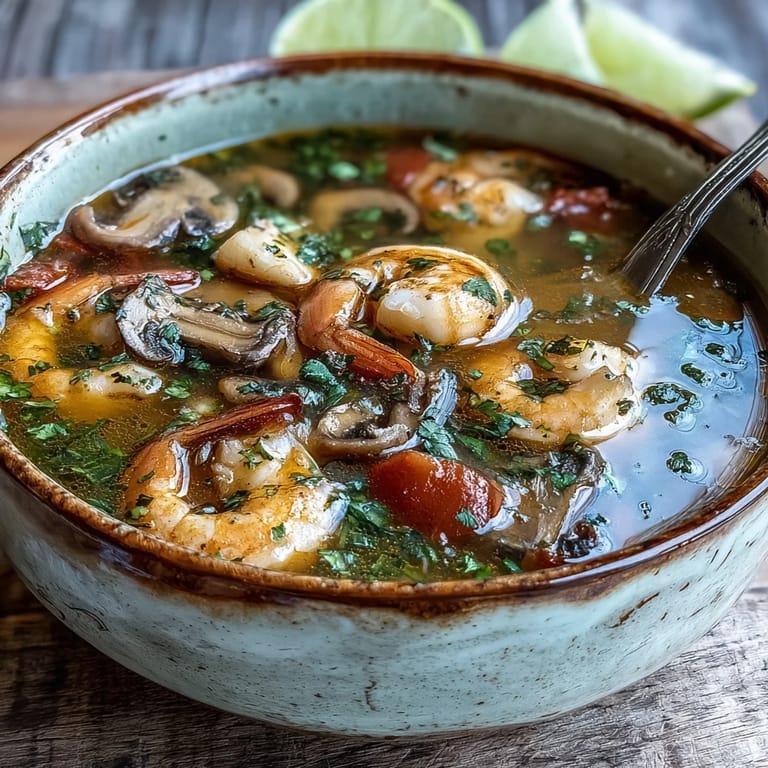
- The mushrooms will shrink considerably so dont worry if the pot looks too full initially. Allow them to simmer until they develop that wonderful meaty texture that soaks up the broth.
- Cook the Protein:
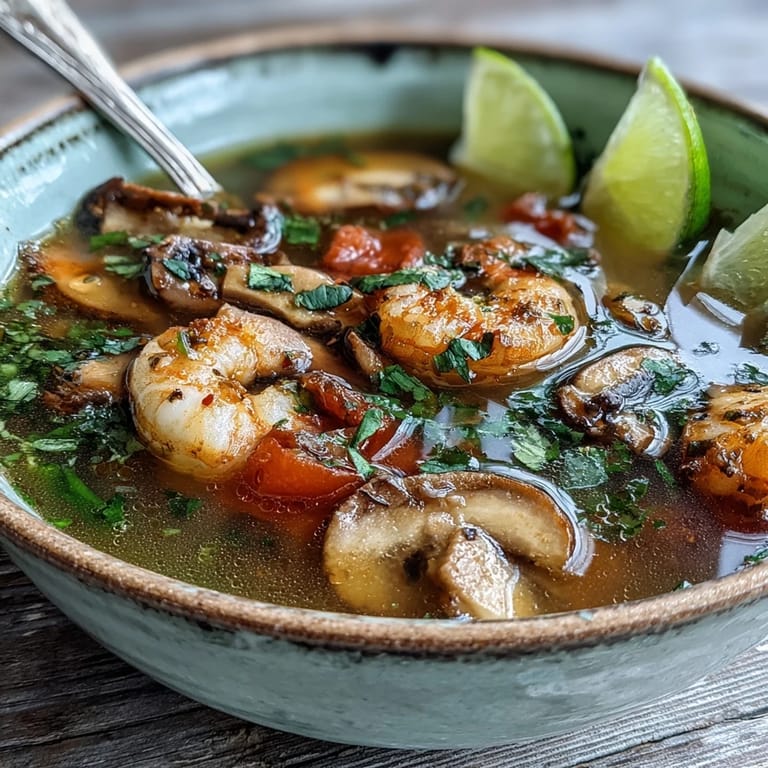
- Shrimp cook remarkably quickly so keep a close eye on them they should just turn pink and curl slightly. Overcooking will make them tough and rubbery.
- Balance the Flavors:
- This is where the magic happens as you adjust the fish sauce salt lime juice sour and chili heat to create that perfect harmony. Everyone has their own ideal balance so taste as you go.
 Pin it
 My partner who normally shies away from spicy foods surprised me by requesting this soup when recovering from a cold. I made a milder version with just one chile and extra lime and watched as his expression changed from skeptical to delighted with the first spoonful. Now its become our shared comfort food a bridge between his American palate and my love for bold Thai flavors.
Finding the Ingredients
Dont be intimidated if youve never shopped for Thai ingredients before most Asian markets carry everything you need in their produce and sauce sections. I befriended the owner of my local Asian grocery who now sets aside fresh kaffir lime leaves for me whenever they get a shipment. If you absolutely cannot find galangal or kaffir lime leaves some stores sell frozen versions that work surprisingly well or you can order them online dried though the flavor profile will be slightly different.
Adjusting the Spice Level
The beauty of making tom yum at home is controlling exactly how fiery it becomes. I learned through painful trial and error that chiles can vary dramatically in heat level even within the same variety. When cooking for guests I now add just one chile to the broth then serve a small dish of fresh chile slices on the side so everyone can customize their own bowls. This practice saved a dinner party once when I discovered my friend could handle spice levels that would make a fire eater wince.
Serving Suggestions
While tom yum is often served as a starter in Thai restaurants I frequently make it the star of the meal especially on weeknights. Ladling it over a small mound of jasmine rice in the bowl transforms it into a complete one dish meal that satisfies even the heartiest appetites. The rice soaks up that incredible broth and tames the spiciness just enough.
- For a more substantial meal add rice noodles during the last few minutes of cooking.
- A side of crisp cucumber salad provides a cooling counterpoint to the soups heat.
- Keep extra lime wedges and fish sauce on the table so everyone can adjust their bowl to taste.
 Pin it
 Every time I make this soup I feel connected to that rainy afternoon in Bangkok where I first discovered these flavors. Its more than just dinner its a moment of warmth and comfort that never fails to brighten even the dreariest day.
Frequently Asked Questions
- → How spicy is Tom Yum?
The heat level depends on the number of Thai birds eye chiles used. Start with one chile and adjust to your preference. The broth should be pleasantly spicy without being overwhelming.
- → Can I make this vegetarian?
Yes, substitute vegetable stock for chicken stock, replace shrimp with firm tofu, and use soy sauce instead of fish sauce. The result is just as flavorful and satisfying.
- → What makes the broth sour?
Fresh lime juice provides the characteristic sour element. Add it towards the end of cooking to preserve its bright acidity. Adjust the amount to achieve your preferred tanginess.
- → Can I use dried herbs instead of fresh?
Fresh lemongrass, kaffir lime leaves, and galangal are ideal for authentic flavor. If unavailable, use dried lemongrass and lime leaves, though fresh ginger can substitute for galangal in a pinch.
- → How do I store leftovers?
Store cooled soup in an airtight container for up to 3 days. Reheat gently on the stovetop, adding fresh lime juice and herbs before serving to revive the flavors.
- → What can I serve with Tom Yum?
Steamed jasmine rice is the traditional accompaniment, soaking up the flavorful broth. You can also serve it with rice noodles or enjoy it as a light starter.