 Save
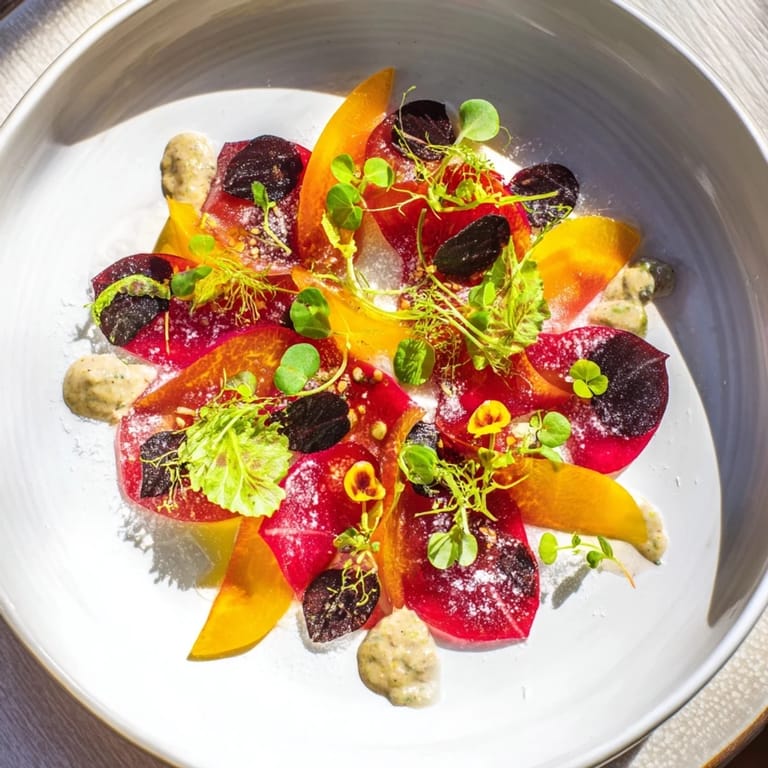
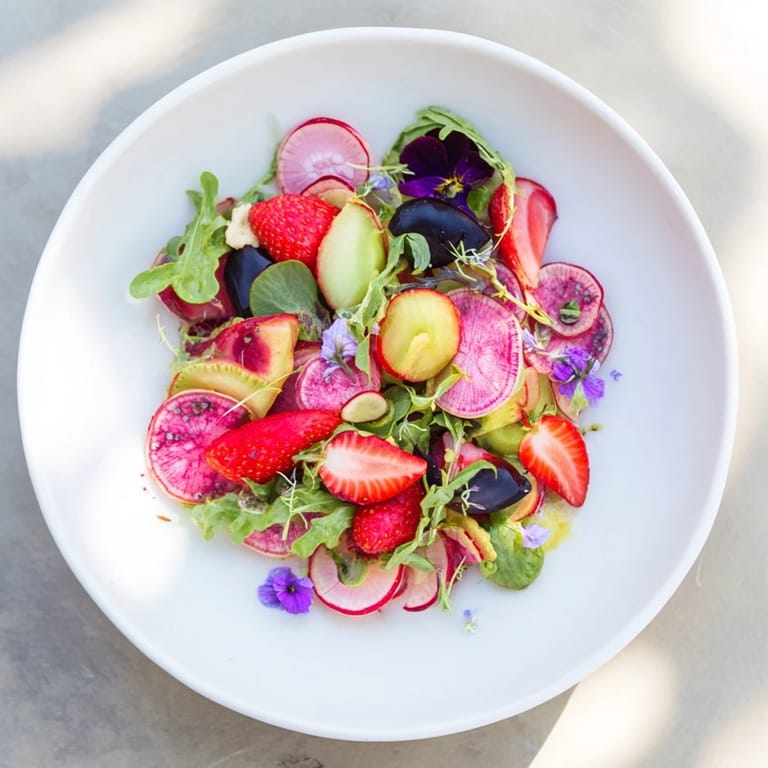
Save I discovered this dish while staring at a plate of roasted beets, genuinely wondering why something so earthy couldn't feel dramatic. That's when it clicked: the real magic wasn't in cooking, it was in the arrangement. I started playing with contrast, layering golds against crimsons, then tucking dark elements behind bright ones like a stage set. What began as curiosity became obsession, and soon I was slicing vegetables at midnight just to see how light and shadow could dance on a plate.
The first time I made this for friends, I watched them pause before eating, phones in hand, capturing it from every angle. Someone asked if I'd hired a food stylist. That's when I realized this dish does something rare: it makes people slow down and actually look at what they're about to eat, not just dig in.
Ingredients
- Golden beets: The warm, buttery undertone is your light. Choose ones that feel firm and slice them paper-thin so they'll catch light like stained glass.
- Red beets: Deep, jewel-toned drama. Don't skip wearing gloves unless you want hands that look like you've committed a minor food crime.
- Watermelon radish: This is your secret weapon for visual punch. The pale flesh with hot pink center creates an almost impossible pop.
- Baby arugula: Keeps things fresh and peppery. Use it generously to break up the root vegetables.
- Blackberries: They sit like tiny shadows in the landscape. Buy them a day ahead so they've lost their bloom slightly and feel more textured.
- Black olives: Halved and positioned to create actual depth. Pitted ones save you from awkward moments.
- Black tahini: The anchor, the artist's final touch. If you can't find it, regular tahini mixed with a pinch of squid ink or activated charcoal works.
- Extra virgin olive oil: Use one you'd actually taste alone. This isn't the place for the cooking bottle.
- Lemon juice: Sharp enough to cut through richness, bright enough to complement the earthy vegetables.
- Honey: Just a teaspoon prevents the dressing from tasting like vinegar. Agave swaps in seamlessly for vegan versions.
- Microgreens: The very last layer, purple radish or basil varieties add color and fine texture.
Tired of Takeout? 🥡
Get 10 meals you can make faster than delivery arrives. Seriously.
One email. No spam. Unsubscribe anytime.
Instructions
- Slice with intention:
- Use a mandoline if you have one, but a very sharp knife works beautifully too. The thinner these slices, the more elegantly they'll layer and the better they'll taste. Aim for the thickness of a playing card.
- Build your base layer:
- Start with the golden and red beets, overlapping them like roof tiles in alternating colors. This is your foundation, and it's where the composition really begins.
- Add the bright elements:
- Fan the watermelon radish across the beets, letting some slices stand almost vertical for height. Scatter the arugula loosely so it looks foraged, not fussy.
- Place the shadows:
- Nestle blackberries and black olives into the gaps, positioning them where they'll create visual contrast. They should feel like they're tucked behind the brighter elements.
- Whisk the dressing:
- Combine oil, lemon, and honey in a bowl, whisking until it emulsifies slightly. Taste it alone—this is where the flavor bridge happens before everything comes together.
- Apply the dark contrast:
- Spoon the tahini in small amounts around the plate, using the back of your spoon to streak and smear it. Think of this like painting, not dotting.
- Finish with grace:
- Scatter microgreens across the entire plate as your final punctuation mark. A few edible flowers can echo the drama if you have them.
- Serve right away:
- This dish is best within minutes of plating, while everything is fresh and the tahini still feels creamy.
 Pin it
 There was a quiet moment during dinner when someone just looked at their plate for a long time, then looked back up at me. They didn't take a photo. They just ate slowly, and I knew the arrangement had done exactly what I'd hoped: it made the vegetables taste better because they looked like they mattered.
The Language of Color on a Plate
This dish taught me that what we see absolutely changes what we taste. The moment you notice the watermelon radish's shock of pink, your palate expects brightness. When you see that dark tahini, you're already prepared for earthiness. Your eyes are doing half the work before your fork even moves. Once you understand that principle, plating stops feeling like decoration and starts feeling like communication.
Why Raw Vegetables Can Feel Luxurious
There's something subversive about serving uncooked vegetables as an appetizer with this level of presence. No roasting, no reducing, no long braise. Just careful slicing, thoughtful arrangement, and a simple dressing. It respects what the ingredients already are while celebrating their textures and colors. This is how vegetables become not just healthy, but genuinely craveable.
Pairing and Variations That Work
I've made this dish at least a dozen ways now, and each version revealed something new. A crisp Sauvignon Blanc cuts through the richness beautifully, while a light Pinot Noir echoes the earthiness. Beyond wine, the plate itself adapts: add roasted purple carrots for deeper shadow, use black garlic instead of olives for a different kind of umami, or swap the arugula for peppery radicchio leaves.
- Dark beets can replace red ones entirely if you want a more monochromatic, moody approach.
- Roasted walnut pieces echo the tahini's texture without overwhelming the delicacy.
- A touch of balsamic reduction instead of lemon brings a different sweetness if your palate leans that direction.
 Pin it
 This recipe taught me that sometimes the most memorable meals happen in the quiet moments between people realizing something beautiful has landed in front of them. Make it, plate it with care, and watch what happens.
Frequently Asked Questions
- → How do you achieve the shadow effect in this dish?
By strategically layering blackberries and black olives beneath the bright beet and radish slices, the dish creates a silhouette that adds depth and visual interest.
- → Can the honey in the dressing be substituted?
Yes, honey can be replaced with agave syrup to make the dish vegan-friendly without altering the balance of flavors.
- → What tools are best for slicing the vegetables thinly?
A mandoline slicer or a very sharp knife ensures even, thin slices essential for the layering and presentation.
- → Are there any allergen concerns with the ingredients?
This dish contains sesame from the tahini and may have traces of gluten depending on packaged ingredient sources. Also, olives can contain pits if not fully pitted.
- → What drinks pair well with this starter?
Light wines such as a crisp Sauvignon Blanc or an earthy Pinot Noir complement the fresh and layered flavors beautifully.