 Save
Save I discovered this cheese board by accident at a gallery opening in Provence, where a passing server handed me a slate with the most beautiful arrangement of soft cheeses dusted in purple. The goat cheese had this delicate lavender coating that made me pause before tasting it, wondering if something so pretty could actually taste good. It did—it was subtle, elegant, and completely unhurried. I've been recreating versions of it ever since, though I finally nailed the balance when I stopped overthinking and just trusted the colors to do their work.
The first time I made this for friends, I was so nervous about the plating that I rearranged it four times. My partner finally laughed and said, "It's cheese and fruit, not a Michelin test." The moment everyone started building their own bites and the conversation stopped being small talk, I understood it wasn't about perfection—it was about creating a moment where people could linger.
Ingredients
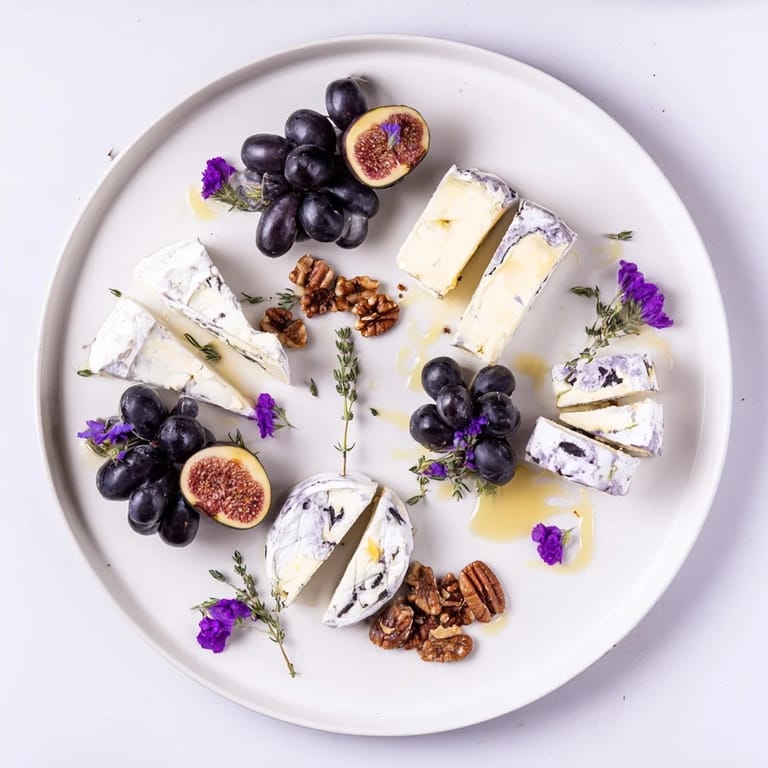
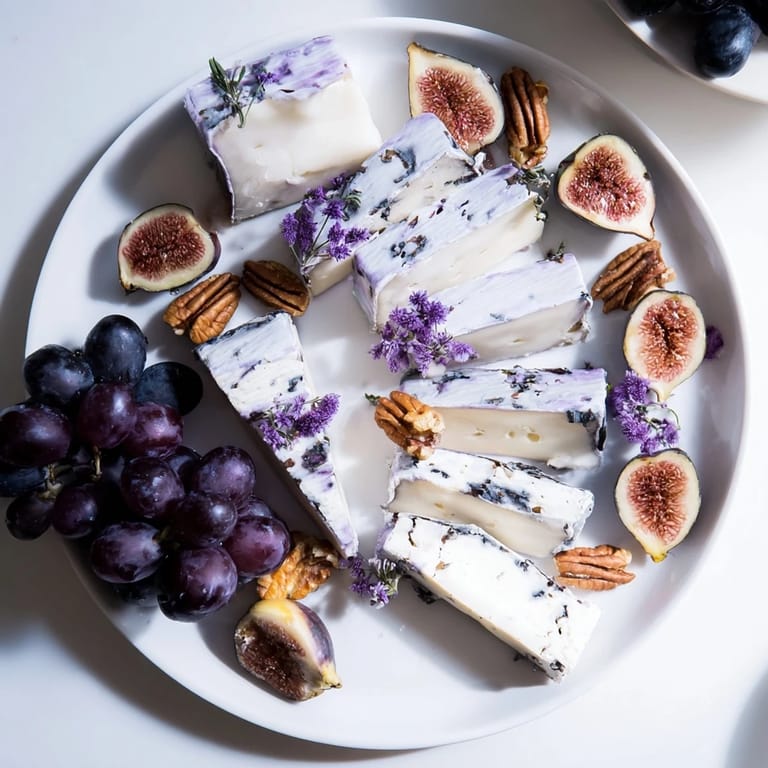
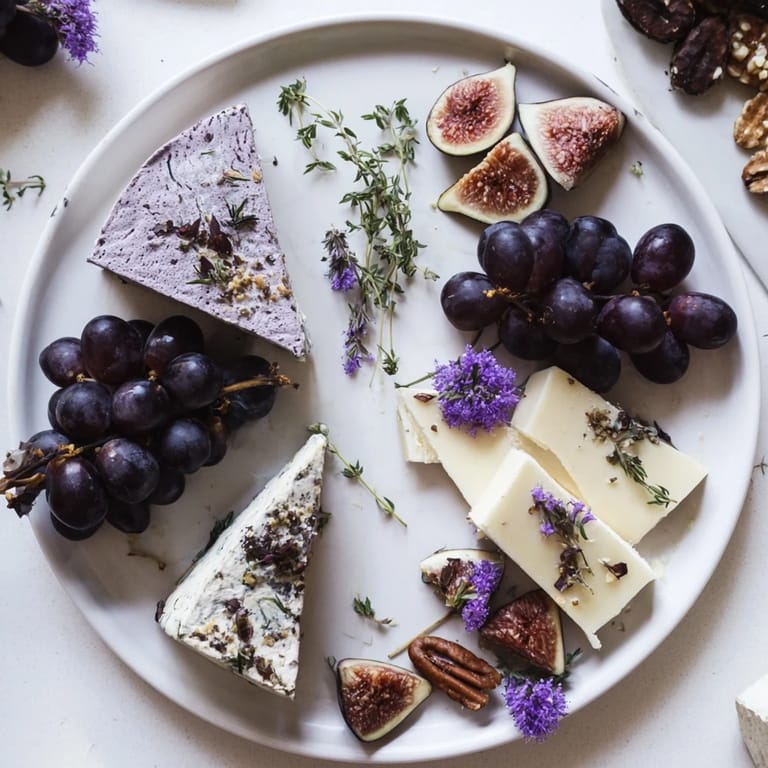
- Lavender-coated goat cheese: This is the anchor of the whole board, so don't skip it—the coating is edible and adds an unexpected floral note that ties everything together.
- Ash-rinded brie: Look for one that's still slightly firm in the center; it should yield gently to pressure but not be fully liquified.
- Red or black grapes: Halving them makes them easier to eat and shows intention in your plating.
- Fresh figs: If you can't find them, dried figs work beautifully, though they're denser and richer.
- Candied walnuts or pecans: These add a sweet crunch that balances the creamy cheeses and tart fruit.
- Lavender honey: If you can find it, use it—it doubles down on the theme without being heavy-handed.
- Edible flowers: Buy from a specialty grocer or farmers market, never from a regular florist, as those are treated with pesticides.
- Fresh thyme: A small handful, stems and all, scattered across the board adds aroma and visual texture.
- Toasted baguette slices: Toast them just before serving so they're still warm and crisp.
- Charcoal or black sesame crackers: These create a visual contrast that makes the board feel intentional.
Tired of Takeout? 🥡
Get 10 meals you can make faster than delivery arrives. Seriously.
One email. No spam. Unsubscribe anytime.
Instructions
- Start with your anchor cheeses:
- Place the lavender goat cheese and ash-rinded brie on opposite sides of your board, leaving room for everything else to breathe. Think of them as the conversation starters.
- Build clusters of fruit and nuts:
- Group grapes and figs in small pockets around the cheeses, then tuck candied nuts into the gaps. This creates natural pathways for your guests to follow.
- Add the golden notes:
- Drizzle just enough lavender honey over the goat cheese to catch the light, then set extra in a small bowl nearby so people can add more if they like.
- Garnish for color and aroma:
- Scatter edible flowers and thyme sprigs across the board without overthinking placement—a little chaos makes it look genuine. The thyme will release its scent as people handle the board.
- Bring in your bread and crackers:
- Add toasted baguette and dark crackers in small stacks or fanned arrangements, leaving gaps so the board still feels open and inviting.
- Serve immediately:
- The moment it's plated is its moment—crackers stay crisp, everything is at the right temperature, and you can watch how people interact with it.
 Pin it
 There was one evening when a guest who thought they didn't like lavender tried the goat cheese with a fig, and their whole face changed. They said it wasn't floral like perfume, but floral like a memory they couldn't quite place. That's when I realized this board was less about feeding people and more about giving them a quiet moment of discovery.
Why Color Matters Here
The moment I started thinking about this board as a visual composition instead of just a collection of foods, everything clicked. The purples and greys aren't accidental—they create a mood that feels both luxe and approachable. When you plate with color intention, even people who usually skip cheese boards find themselves drawn in. I've learned that the eye eats first, and once you've caught someone's attention with beauty, the flavors have permission to be subtle.
Pairing and Timing
This board is a natural lead-in to a meal, not the meal itself, though honestly it works as a complete dinner if you're not too hungry. I serve it with a chilled Provence rosé because the wine is as delicate as the cheeses, or a floral white like Gewürztraminer if people prefer something with more body. The key is giving everything time to breathe—bring it out and don't rush. People who might normally eat quickly start moving slower when they're surrounded by pretty things and good flavors.
Small Details That Shift Everything
The difference between a cheese board that feels forced and one that feels natural comes down to negative space. Don't fill every inch of your board. Leave breathing room so people can see each element clearly and feel like they're making a choice rather than navigating clutter. I learned this the hard way by over-plating until a friend gently moved some things aside and suddenly the whole board looked ten times better.
- Toast your baguette slices just before serving so they have that crucial crack and warmth that makes people want to reach for them.
- If you're making this ahead for a party, keep the board components separate and assemble it no more than thirty minutes before guests arrive.
- Trust the simplicity—this recipe works because each flavor gets to be itself without competing for attention.
 Pin it
 This board has become my answer to the question "what do I bring?" because it arrives looking like you've done something remarkable, and somehow it always becomes the moment people remember from the evening. That's the real magic of it.
Frequently Asked Questions
- → What cheeses are featured in the Lavender Haze platter?
The platter includes lavender-coated goat cheese and ash-rinded brie, offering a mix of soft textures and delicate flavors.
- → How can I enhance the floral notes on the board?
Drizzling lavender honey over the goat cheese highlights floral aromas, but regular honey complements it well if preferred.
- → What accompaniments best pair with this cheese selection?
Seedless grapes, fresh or dried figs, candied walnuts or pecans, and edible flowers create a balance of sweetness, texture, and visual appeal.
- → Are there gluten-free options for serving the platter?
Yes, substituting the baguette with gluten-free crackers allows the platter to suit gluten-sensitive guests.
- → What garnishes add aroma and color to the board?
Fresh thyme sprigs and edible flowers such as violets or pansies provide both fragrance and vibrant visual contrast.
- → Can this platter be paired with any specific beverages?
Chilled floral white wines like Gewürztraminer or a Provence rosé complement the cheese and honey beautifully.