 Save
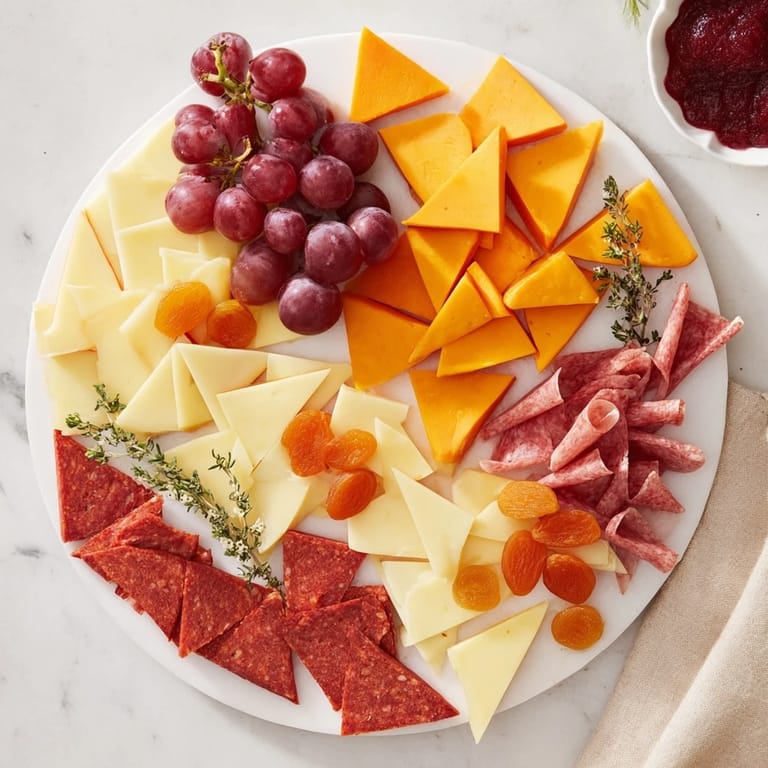
Save I discovered the power of presentation by accident during a gallery opening afterparty, when a friend's minimalist charcuterie board—arranged entirely in geometric shapes—stopped people mid-conversation. Everyone gravitated toward it, not just for the taste, but because each triangle and rhombus felt intentional, almost precious. That night, I realized that cutting cheese and meat into purposeful shapes transforms a simple spread into something that feels curated and special, worthy of a second look and a lingering conversation.
I made this for the first time when my brother challenged me to create something "Instagram-worthy" without trying too hard. As I sat cutting the third round of triangles, my hand started to ache, but then I stepped back and saw the pattern emerging on the board—suddenly it felt like solving a puzzle instead of prepping food. When guests arrived and actually paused to photograph it before eating, I understood that those aching fingers had been worth it.
Ingredients
- Manchego cheese, 150 g cut into triangles: Its nutty, slightly crystalline texture holds a sharp edge beautifully and won't crumble when cut cold.
- Aged cheddar, 150 g cut into triangles: The firmness of well-aged cheddar makes it ideal for geometric precision; avoid softer young versions.
- Brie, 100 g chilled and sliced into firm wedges: Chill it for at least an hour before cutting so it stays intact and doesn't collapse into a puddle on your board.
- Gruyère, 100 g cut into rhombuses: Its dense structure means your knife will glide through cleanly if you use smooth, confident strokes.
- Prosciutto, 120 g folded or cut into triangles: Fold it gently in thirds before slicing so the delicate layers stack without tearing.
- Soppressata, 120 g sliced and trimmed into rhombuses: Slice it thin first, then trim the edges with a steady hand to create symmetrical shapes.
- Chorizo, 100 g sliced diagonally into rhombuses: The diagonal cut makes the natural oils and spices more visible and adds visual interest.
- Seedless red grapes and green grapes, 1 small bunch each: These natural spheres provide color contrast and break the geometric pattern just enough to feel organic.
- Dried apricots, 50 g cut into diagonal pieces: If you're feeling ambitious, trim them into small diamonds; if not, their natural irregular shape still works.
- Marcona almonds, 50 g: Their buttery flavor and roasted warmth add richness; regular almonds work but lack that subtle sweetness.
- Fig jam, 2 tbsp: A small bowl of jam anchors the board with color and gives guests something rich to spread on crackers.
- Gluten-free seed crackers, 100 g broken into triangles: Breaking them yourself gives you crackers that actually match your theme instead of fighting against random shapes.
- Fresh rosemary or thyme sprigs: These aren't just garnish; they perfume the board and signal that thought went into every detail.
Tired of Takeout? 🥡
Get 10 meals you can make faster than delivery arrives. Seriously.
One email. No spam. Unsubscribe anytime.
Instructions
- Start with a sharp knife and a clear workspace:
- Use a large chef's knife sharpened before you begin; a dull blade will slip and crush delicate cheeses instead of gliding through them. Lay out a clean cutting board and have your serving board within arm's reach so you can move pieces directly without them warming up in your hands.
- Cut all firm cheeses into triangles first:
- Slice the Manchego, aged cheddar, and Gruyère into thick slices, then angle your knife to create clean triangular wedges. Work methodically and let the knife do the work rather than forcing it; each cut should feel purposeful, not rushed.
- Prepare the Brie with care:
- Because Brie is softer even when chilled, cut it in firm, confident strokes and work quickly; hesitant or sawing motions will compress it. Chill the knife between cuts if the cheese starts to stick.
- Slice meats and trim to shape:
- For prosciutto, fold it into thirds gently before cutting into triangles so the folds create natural layers. Slice soppressata and chorizo thin, then use your knife at an angle to trim the edges into clean rhombuses, rotating the board as you work to make consistent angles.
- Arrange on your board with intention:
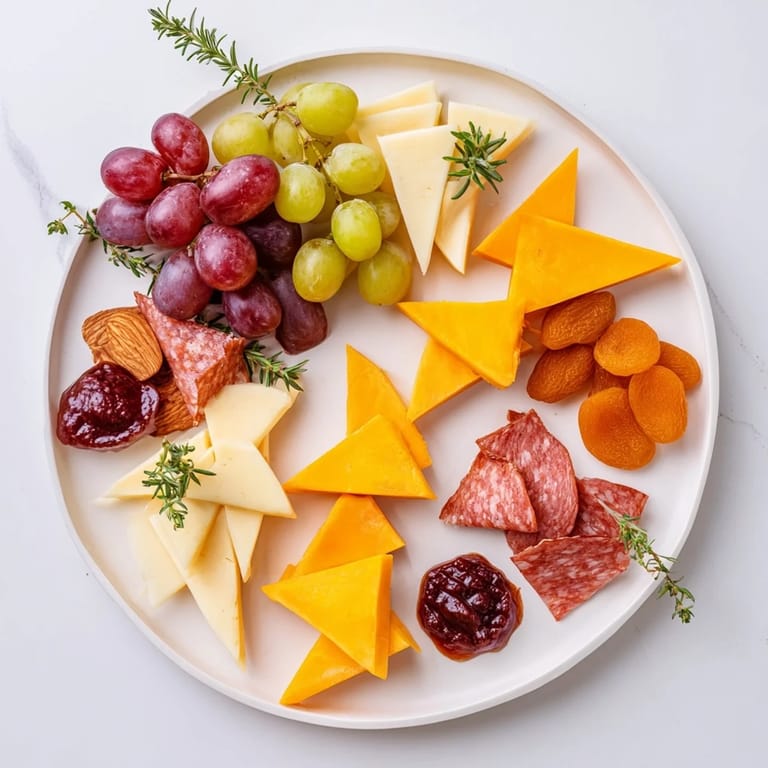
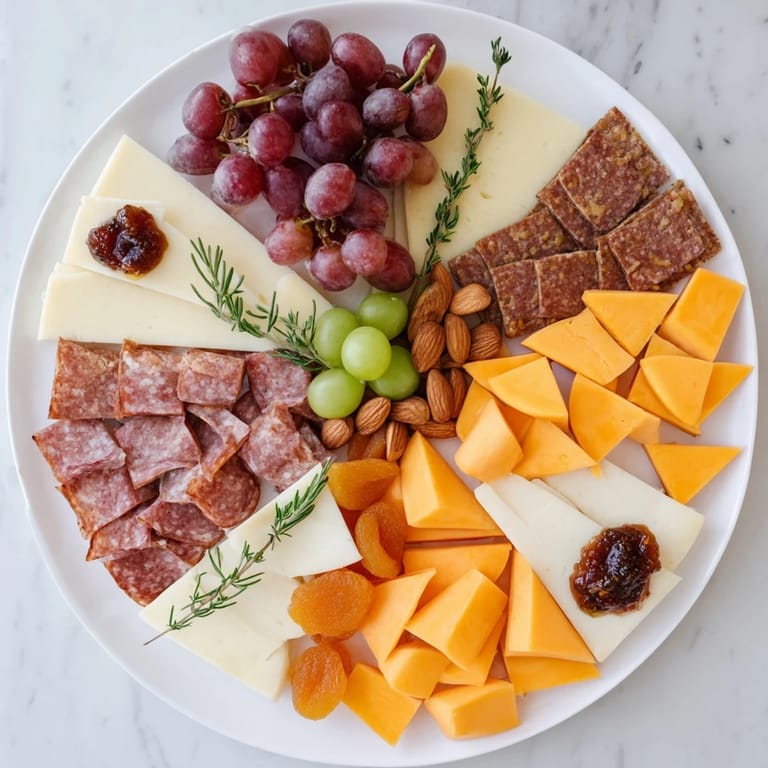
- Create visual rhythm by alternating shapes and colors, clustering similar items slightly rather than spreading them evenly. Leave some breathing room so each piece feels like it has space to exist and be appreciated.
- Add fruits, nuts, and garnishes:
- Place grapes in small clusters to frame sections of cheese and meat, scatter the almonds into gaps, and position the fig jam in a small bowl or spread small dollops directly on the board. Finish with sprigs of rosemary or thyme tucked between items for aroma and movement.
- Serve immediately while everything is at its peak:
- The longer a charcuterie board sits, the more the cheeses soften and the meats dry out; bring it straight from preparation to the table so guests see it at its most sculptural and vibrant.
 Pin it
 I'll never forget the moment my sister, who usually just grabs food without comment, stopped and said, "This is too beautiful to eat." She meant it as a compliment, but we both laughed because of course it was meant to be eaten—yet somehow, making it beautiful made it taste better, or maybe it just made the eating feel more intentional and present.
The Geometry of Flavor
When you cut cheese and meat into shapes instead of just slicing them randomly, something shifts in how people experience them. The triangles and rhombuses force your eye to slow down and follow the pattern, which means you're noticing textures and colors you'd normally miss. It's the difference between grabbing a slice and choosing a piece; one feels thoughtless and the other feels deliberate.
Building Your Board with Intention
The magic of this board isn't just in individual ingredients but in how they talk to each other on the same surface. The nutty Manchego bridges sweet fig jam, the salty soppressata echoes the umami in Gruyère, and the bright grapes cut through the richness of prosciutto. Think of the board as a flavor journey where each piece you choose pulls you toward the next, creating a conversation between textures and tastes instead of a random collection of foods.
Wine Pairings and Serving Ideas
I learned the hard way that what you pour matters as much as what you plate. A crisp Sauvignon Blanc cuts through the richness of aged cheddar and soppressata, while a dry rosé echoes the sweetness of fig jam without overwhelming the delicate prosciutto. If you're not serving wine, sparkling water with a squeeze of lemon mirrors that same refreshing contrast. Set the board out about 15 minutes before guests arrive so the cheeses warm just enough to release their flavor without becoming a soft puddle.
- Sauvignon Blanc or Albariño bring acidity that cleanses the palate between bites of rich meats.
- A dry or off-dry rosé adds floral notes that complement the fig jam and dried apricots without fighting the savory elements.
- If wine isn't an option, sparkling water or an herbal tea keeps the experience feeling intentional and paired.
 Pin it
 Every time I make this board, I'm reminded that appetizers are often the first impression, the opening act that sets the mood for everything that follows. When it's made with care and intentionality, even something as simple as cutting cheese into triangles becomes a gift to your guests.
Frequently Asked Questions
- → What shapes are used for the cheeses and meats?
Cheeses and cured meats are precisely cut into triangles and rhombuses, creating an eye-catching geometric design.
- → How are accompaniments arranged on the board?
Grapes and dried apricots are clustered in small groups, while Marcona almonds are scattered to fill spaces, all enhancing the visual layout.
- → Can other cheeses be substituted?
Yes, any firm cheeses that hold their shape when cut can be used to maintain the geometric theme.
- → What garnishes add aroma and color?
Fresh sprigs of rosemary or thyme are added to provide aromatic appeal and color contrast.
- → What tools help achieve precise cuts?
Using a large sharp chef’s knife and a cheese knife on a sturdy cutting board ensures clean and accurate geometric slices.
- → Is the platter suitable for gluten-free diets?
Yes, gluten-free seed crackers are included, making this arrangement compatible with gluten-free preferences.