 Save
Save The first time I made French onion soup was on a rainy Sunday when the windows fogged up and the kitchen filled with the sweet aroma of slowly caramelizing onions. I'd just returned from a trip to Paris where I'd been served a bubbling crock of this classic at a tiny bistro near Montmartre. Standing at my stove for nearly an hour, patiently stirring those onions until they transformed into golden strands of sweetness, I realized some dishes simply can't be rushed.
Last winter, I served this soup during a power outage when a snowstorm hit our neighborhood. We huddled around the gas stove with headlamps, and I ladled the steaming soup into mugs since we couldn't use the broiler for the cheese topping. My daughter melted the cheese with a kitchen torch instead, creating dramatic shadows on the walls. Somehow, that improvised meal became one of our favorite family memories.
Ingredients
- Yellow onions: The foundation of this entire dish, I've learned that yellow onions specifically provide the perfect balance of sweetness and savory depth when caramelized properly.
- Beef broth: After trying countless variations, I've found that homemade beef broth creates unparalleled richness, but a good quality store-bought version enhanced with a splash of wine works wonderfully too.
- Gruyère cheese: This might seem like a splurge ingredient, but its nutty flavor and superior melting quality transforms the soup into something truly special.
- Crusty French bread: Look for a loaf with a sturdy structure and good chew that won't immediately disintegrate when placed atop the soup.
- Fresh thyme: These tiny leaves release their herbaceous oils gradually into the broth, creating layers of flavor that dried simply can't match.
Tired of Takeout? 🥡
Get 10 meals you can make faster than delivery arrives. Seriously.
One email. No spam. Unsubscribe anytime.
Instructions
- Begin the caramelization:
- In a heavy pot, melt butter with olive oil over medium heat before adding your thinly sliced onions. This initial cooking stage is about patience, not speed.
- Transform the onions:
- After about 15 minutes, sprinkle onions with sugar and salt, then continue cooking until they reach a deep golden brown, stirring frequently to prevent burning. The aroma will shift from sharp to sweet as they transform.
- Build the flavor base:
- Add garlic until fragrant, then deglaze with wine, scraping all those precious browned bits from the bottom of the pot. This step captures concentrated flavor that would otherwise be lost.
- Create the soup:
- Pour in broth along with thyme, bay leaf, and pepper, then simmer for 30 minutes uncovered. The kitchen will fill with an incredible savory scent as the flavors meld.
- Prepare the topping:
- Toast bread slices under the broiler until golden on both sides. I like mine with just a hint of char around the edges.
- Assemble and finish:
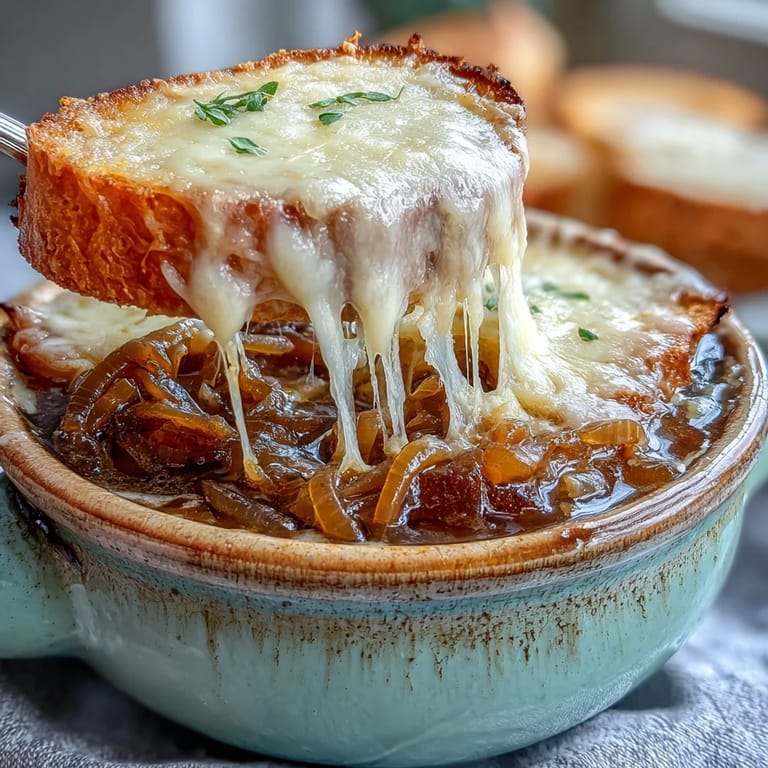
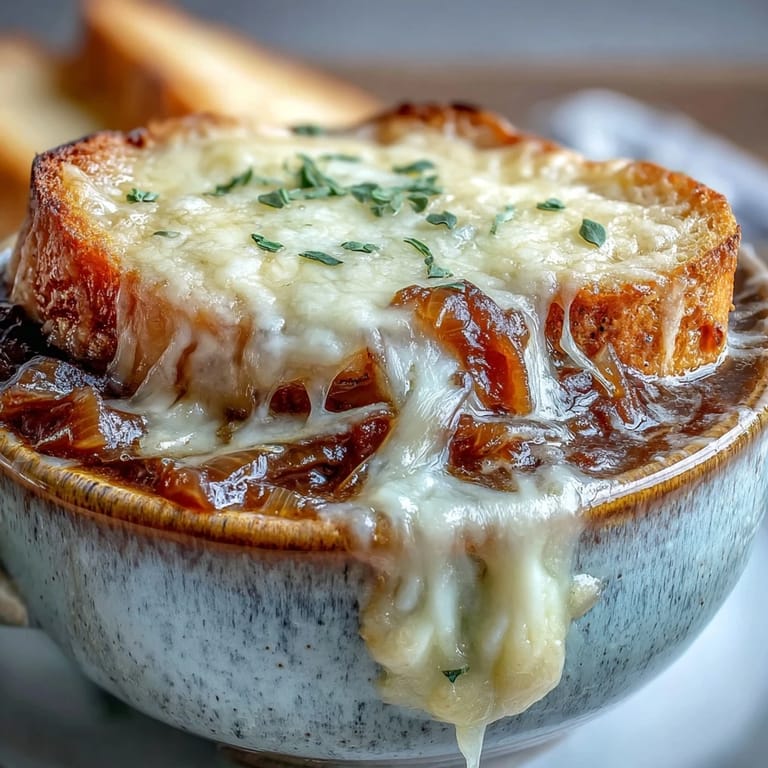
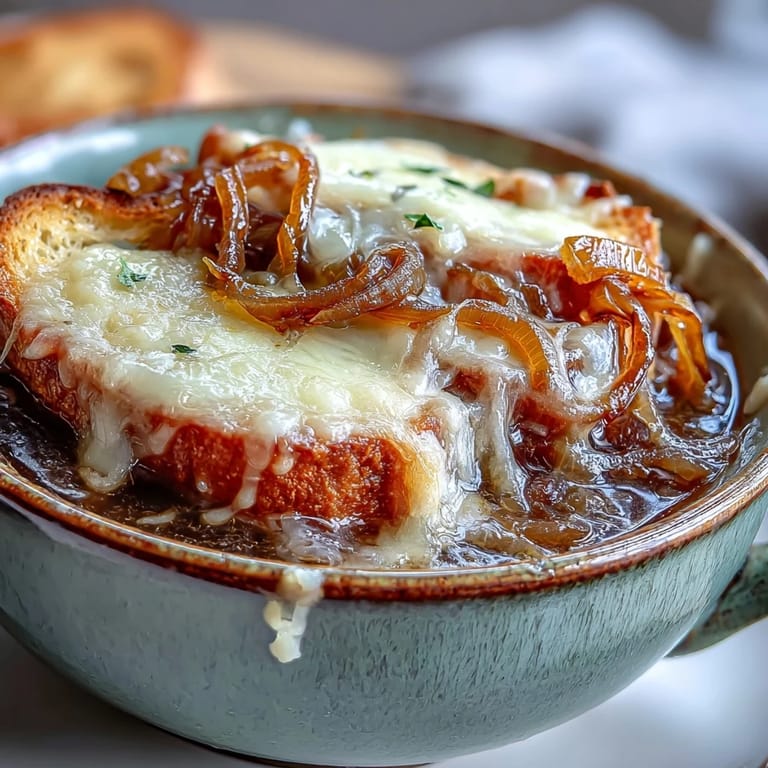
- Ladle hot soup into oven-safe bowls, top with toast and a generous handful of Gruyère. The moment the cheese bubbles and browns under the broiler is pure anticipation.
 Pin it
 My neighbor Catherine, who grew up in Lyon, tried my French onion soup last Christmas Eve and grew quiet after the first spoonful. When I asked if something was wrong, her eyes were misty as she explained it tasted exactly like her grandmother's version from her childhood. She asked for the recipe written by hand, not printed, which felt like the highest compliment. We now have a standing date every holiday season to make a batch together.
The Art of Onion Selection
After years of experimentation, I've discovered that large yellow onions provide the perfect balance for this soup. While sweet onions might seem like a natural choice, they actually become too candy-like when caramelized, and white onions lack the depth needed. I slice mine about 1/4 inch thick, as thinner slices can disappear entirely while thicker ones remain too pronounced in the finished soup.
Making It Ahead
The soup base actually improves when made a day ahead, as the flavors have more time to develop and meld. I often prepare everything up to the bread and cheese stage, then refrigerate overnight. When ready to serve, I reheat the soup until steaming hot before adding the bread and cheese topping. This approach has saved me countless times when entertaining.
Serving Suggestions
French onion soup stands beautifully on its own as a light meal, but I've found it pairs wonderfully with a simple green salad dressed with a bright vinaigrette to cut through the richness. On particularly cold nights, I sometimes serve small portions as a starter before a main course of roasted chicken or beef.
- Consider providing small side plates for the cheese-topped bread if some guests prefer to enjoy it separately from the soup.
- A crisp white wine like Chablis or a light-bodied red such as Pinot Noir complements the soup's flavors without overwhelming them.
- For an elegant touch, sprinkle a few fresh thyme leaves over the melted cheese just before serving.
 Pin it
 This soup has taught me that sometimes the simplest ingredients, given proper attention and time, can create the most profound flavors. Each spoonful is a reminder that good cooking isn't always about complexity but about understanding transformation.
Frequently Asked Questions
- → Why does caramelizing onions take so long?
Caramelization is a slow chemical process that converts the onions' natural sugars into complex flavor compounds. Rushing this step means missing out on the deep, rich sweetness that makes this dish exceptional. Patience yields the best results.
- → Can I make this vegetarian?
Absolutely. Simply substitute vegetable broth for the beef broth. The soup will still be incredibly flavorful thanks to the properly caramelized onions, white wine, and herbs. Many people actually prefer the lighter, cleaner taste of the vegetarian version.
- → What cheese works best as a Gruyère substitute?
Emmental and Swiss cheese are excellent alternatives with similar melting properties and nutty flavors. Comté or Fontina also work well. Avoid cheeses that don't melt smoothly or become stringy, as they won't create that classic bubbly topping.
- → Can I freeze this for later?
The soup base freezes beautifully for up to 3 months. However, freeze it without the bread and cheese topping. When ready to serve, thaw and reheat the soup, then add fresh bread and cheese under the broiler for the best texture and flavor.
- → What type of onions should I use?
Yellow onions are ideal because they strike the perfect balance between sweetness and pungency. Red onions can be too sweet, while white onions may be too sharp. For the most authentic flavor, stick with large yellow onions sliced thinly.
- → How do I know when onions are properly caramelized?
Properly caramelized onions should be deep golden brown, almost mahogany in color, with a jam-like consistency. They should taste naturally sweet, not burnt or bitter. This typically takes 30-40 minutes of patient stirring and watching.