 Save
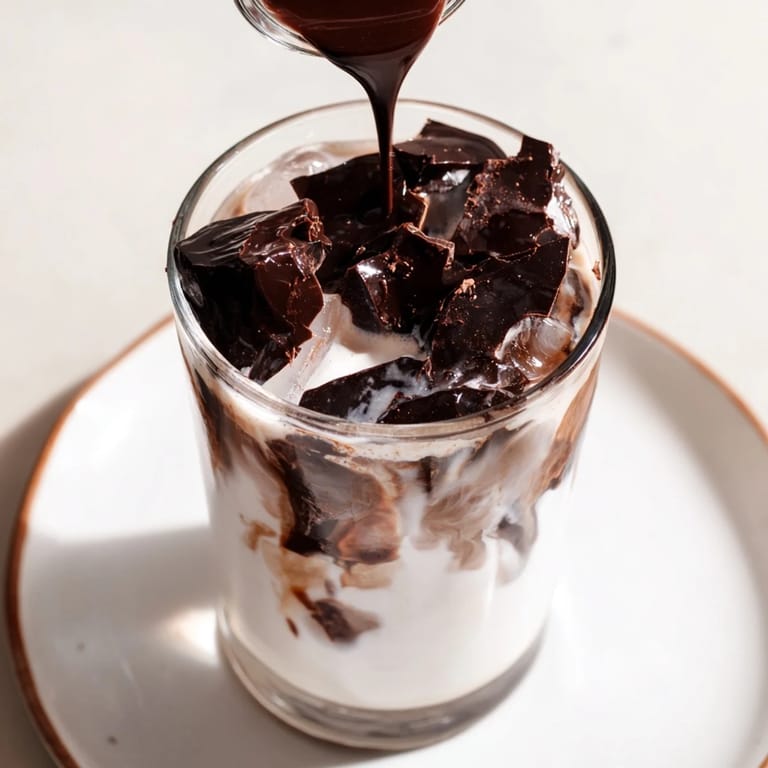
Save There's a specific moment I chase every time I make this drink: that satisfying crack when a spoon breaks through the chocolate shell. It happened by accident one afternoon when I was experimenting with pouring warm chocolate over an iced latte, watching it set into this glossy dark disk. The espresso was still steaming, the milk cold, and the chocolate seized into something unexpectedly delightful. Now I can't drink an iced latte without expecting that little moment of theater.
I made these for a friend who claimed they didn't like iced coffee, and watching their face when they heard that chocolate crack and tasted the first sip was worth the whole thing. They went quiet for a moment, then asked if I could teach them how to make it. Now we text each other photos of our chocolate-topped lattes on hot days.
Ingredients
- Freshly brewed espresso (2 shots, 60 ml): The quality here actually matters since there's nothing to hide behind—use beans you actually like the taste of, and let them cool just enough to not crack your glasses when you pour.
- Whole milk (1 cup, 240 ml) or oat/almond milk: Cold milk is non-negotiable, and honestly oat milk froths slightly and adds a subtle sweetness that plays beautifully with dark chocolate.
- Dark or milk chocolate, chopped (80 g): Don't use chocolate chips; buy actual bars and chop them because they melt more evenly and set with a better snap.
- Coconut oil (1 tsp, optional): This is the secret to that satisfying crack—it keeps the chocolate from being too brittle and gives it a silky set.
- Simple syrup or sugar (1–2 tsp, to taste): Adjust to your preference, but remember the chocolate adds sweetness too.
- Ice cubes (2 cups): Use fresh ice, not cubes that have been sitting in your freezer absorbing random flavors for three months.
Tired of Takeout? 🥡
Get 10 meals you can make faster than delivery arrives. Seriously.
One email. No spam. Unsubscribe anytime.
Instructions
- Brew your espresso and let it breathe:
- Make your shots and set them aside for a couple of minutes while you gather everything else. This pause keeps the temperature from being so extreme that the chocolate seizes immediately instead of setting smoothly.
- Melt the chocolate gently:
- Either use a microwave in 30-second bursts, stirring between each one, or a double boiler if you want to feel fancy. The second method gives you more control and a silkier finish, but the microwave works fine if you stay attentive.
- Fill your glasses with ice:
- Use tall glasses—it matters for the visual moment and the right ratio of everything. Pack the ice firmly so it doesn't shift around when you pour.
- Pour the cold milk:
- Half a cup per glass goes in first, and this is where you'd stir in your sweetener if you're using it. Let the milk settle for a second.
- Add the espresso gently:
- Pour it slowly over the milk so it layers and then gradually mingles. The visual moment of watching the brown espresso cloud through the pale milk is part of the pleasure.
- Create your chocolate layer:
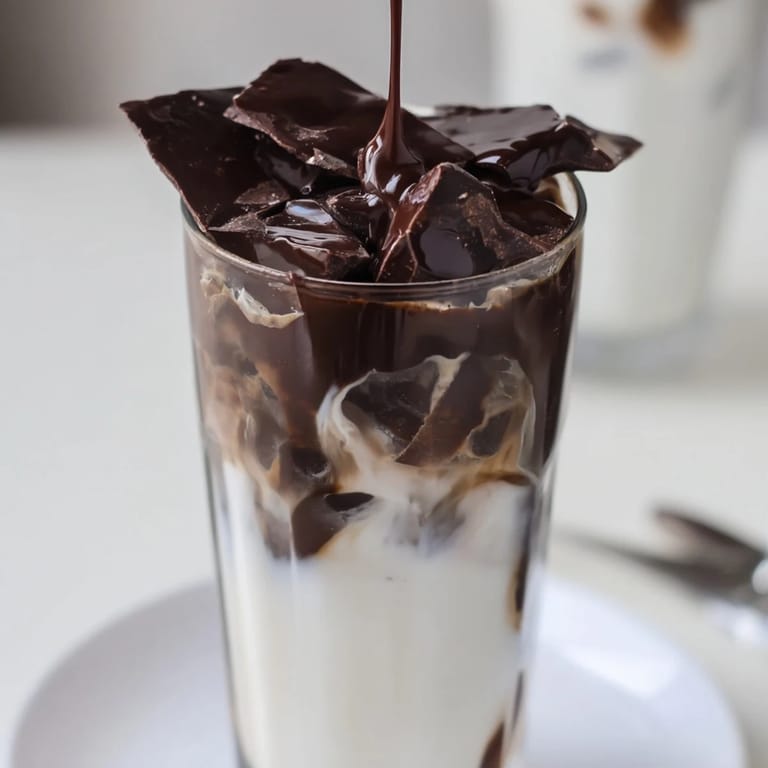
- Spoon or gently drizzle the warm melted chocolate over the top, aiming for a thin, even layer. It will set as it cools, and that's when the magic happens—listen for the little sizzle as it makes contact with the cold drink.
- Serve and crack:
- Bring it to someone immediately, hand them a spoon, and watch their face when they break through that chocolate shell.
 Pin it
 There's something about handing someone a drink with an intact chocolate top that makes them pause and smile before they've even tasted it. It transforms a beverage into an experience, which sounds small but feels important when you're in the middle of an ordinary day.
Chocolate Choices and How They Change Everything
Dark chocolate gives you sophistication and a slight bitter edge that balances the sweetness beautifully. Milk chocolate is friendlier and sweeter, better for people who want the chocolate to be the star. I've even experimented with 70% cacao when I was feeling confident, and it creates this almost-sophisticated moment until you remember you're drinking coffee for pleasure, not penance.
Making It Yours
For a vegan version, swap the milk for oat or almond and use dairy-free chocolate—it works just as well and sometimes even better because plant-based chocolate can set slightly crisper. White chocolate is interesting if you're in a sweeter mood, and I've noticed it cracks differently, more delicately. Some people even try a drizzle of salted caramel mixed with the chocolate, which is excessive and absolutely worth trying once.
Timing and Temperature Matter
The window between 'perfect set' and 'chocolate has completely melted into the drink' is shorter than you'd think, usually about a minute. I learned this by waiting too long to serve a batch and ending up with chocolate-flavored iced coffee instead of the intended experience. The best timing is fresh espresso into cold milk into still-warm chocolate, then straight to someone's hands.
- Make this drink right before you plan to drink it—don't let it sit waiting for you.
- If you're making two, have both glasses prepped with ice and milk before you start the chocolate, so the chocolate is still warm when it goes on top.
- On very hot days, chill your glasses in the freezer for five minutes first so the chocolate sets faster.
 Pin it
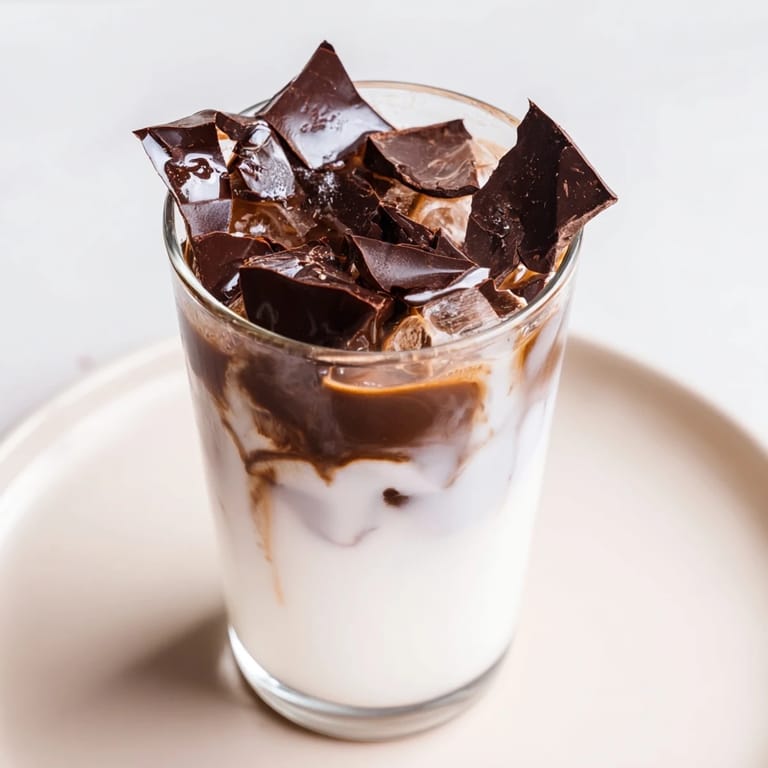
 This drink is proof that sometimes the simplest pleasures come from one small unexpected detail. Make it when you want to feel just a little bit special without much effort.
Frequently Asked Questions
- → How do I achieve the cracking chocolate layer?
Melt dark or milk chocolate with a small amount of coconut oil to create a glossy smooth mixture. Pour it gently over the chilled latte so it solidifies into a thin, crisp layer that cracks when stirred.
- → Can I use non-dairy milk alternatives?
Yes, oat or almond milk work well to keep the drink creamy while accommodating vegan or lactose-free preferences.
- → How to sweeten the latte if desired?
Add 1–2 teaspoons of simple syrup or sugar to the milk before combining with espresso and ice to tailor the sweetness level.
- → What’s the best way to prepare the espresso?
Use two shots of freshly brewed espresso with a strong coffee maker or espresso machine for rich, robust flavor.
- → Are there alternative chocolates to use for the topping?
Dark or milk chocolate works well, and white chocolate can be used for a sweeter twist. Make sure it melts smoothly.