 Save
Save The first time I made Tom Kha Gai soup, my kitchen filled with the intoxicating scent of lemongrass and lime leaves that transported me straight to Thailand. I'd tasted this coconut soup at a tiny restaurant tucked away in Bangkok's bustling streets during a backpacking trip years ago. Standing over my steaming pot, crushing fragrant herbs between my fingers, I closed my eyes and suddenly I was back there, the humid air and vibrant flavors coming alive in my suburban kitchen.
Last winter, when my sister was recovering from a nasty cold, I brought her a container of this soup, still warm from the stove. Her face lit up with the first spoonful, steam rising between us as she sipped. The healing properties of those aromatic herbs and chilies seemed to work their magic instantly, and by the time we reached the bottom of our bowls, her voice was stronger and her spirits lifted. Now it's our unofficial remedy for everything from breakups to bad days.
Ingredients
- Lemongrass: The woody heart of this recipe that infuses the broth with citrusy notes without acidity, so be sure to bruise it well with the back of your knife to release its essential oils.
- Galangal: Though it looks like ginger, its flavor is distinctly piney and sharp, and after trying both, I promise the authentic flavor is worth tracking down at Asian markets.
- Coconut Milk: Full-fat is non-negotiable here, creating that silky mouthfeel that makes this soup so comforting and luxurious.
- Fish Sauce: The funky umami backbone that might smell strong on its own but transforms mysteriously when cooked, bringing depth that salt alone could never achieve.
- Thai Chilies: These tiny peppers pack serious heat, and I learned to leave them whole rather than chopping them so diners can push them aside if desired.
Tired of Takeout? 🥡
Get 10 meals you can make faster than delivery arrives. Seriously.
One email. No spam. Unsubscribe anytime.
Instructions
- Infuse the broth:
- Start by bringing your chicken stock to a gentle simmer, not a rolling boil, then add all those gorgeous aromatics. You should hear a quiet hiss as the lemongrass and lime leaves release their essential oils into the liquid.
- Cook the chicken gently:
- Slice your chicken as thinly as possible against the grain so it cooks quickly and remains tender. Watch carefully for that moment when it just turns opaque, signaling perfect doneness.
- Add the creaminess:
- When you pour in the coconut milk, do it slowly while stirring, creating beautiful swirls of white that gradually blend into the broth. This prevents any separation that might happen with sudden temperature changes.
- Balance the flavors:
- The dance of fish sauce, lime juice, and palm sugar is where your personal touch comes in. Start with the measurements given, then taste and adjust until you find that perfect balance of salty, sour, and sweet that makes you close your eyes with pleasure.
- Garnish with abandon:
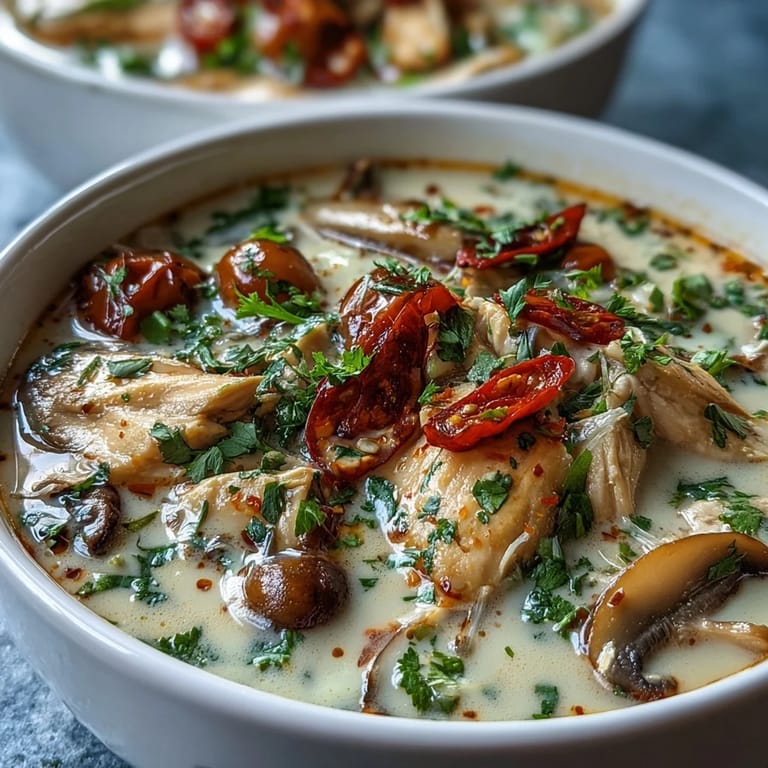
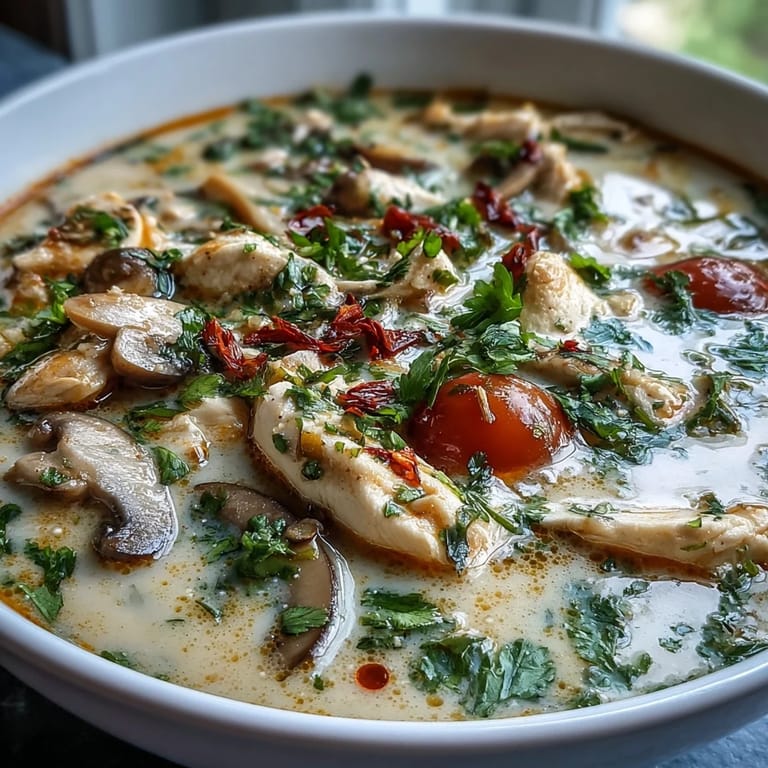
- Fresh herbs aren't just decoration but a critical final layer of flavor. Tear the cilantro rather than chopping it to preserve its aromatic oils, and squeeze that lime wedge over the soup just before your first spoonful.
 Pin it
 During a dinner party last summer, I served this soup as a starter, not expecting it to steal the show. As conversation around the table momentarily halted, replaced by appreciative murmurs and the gentle clink of spoons against bowls, I realized food has this magical ability to create shared experiences. One friend, typically adventurous with spice, reached for water after a particularly hot bite, laughing as tears formed in the corners of his eyes, yet he immediately went back for more, declaring it was worth the pain.
The Secret to Authentic Flavor
After making this soup dozens of times, I've discovered that patience is the unwritten ingredient. Allowing those aromatics to slowly release their essence into the broth for at least five full minutes before adding anything else makes all the difference. Once, in a hurry, I rushed this step and the resulting soup lacked that depth I'd come to expect, teaching me that good things truly can't be rushed. Those extra minutes of infusion translate to layers of flavor that simply can't be achieved through shortcuts.
Adaptation and Substitutions
While traveling through northern Thailand, I noticed regional variations of Tom Kha that inspired my own experiments back home. In Chiang Mai, I tasted a version with local mushrooms foraged from nearby mountains that had an earthier profile than what I was used to. This inspired me to try different mushroom varieties in my own kitchen, from delicate enoki to meaty king oysters, each bringing something unique to the final dish. The recipe proved wonderfully adaptable, evolving with my pantry and the seasons without losing its soulful essence.
Serving Suggestions
The ritual of serving this soup has become almost as important as the recipe itself in my home. I love bringing the entire pot to the table, letting that aromatic steam billow upward as I ladle it into warmed bowls, creating a moment of anticipation that enhances the first taste. Sometimes the simplest presentations have the most impact, especially when the flavors are this vibrant.
- Serve alongside a small bowl of steamed jasmine rice for a complete meal, allowing diners to add spoonfuls to their soup as desired, absorbing that fragrant broth.
- Keep extra lime wedges, sliced chilies, and fresh herbs on the table so everyone can customize their bowl to their preference.
- For a truly Thai experience, offer coconut water as a refreshing beverage alongside to complement the flavors rather than competing with them.
 Pin it
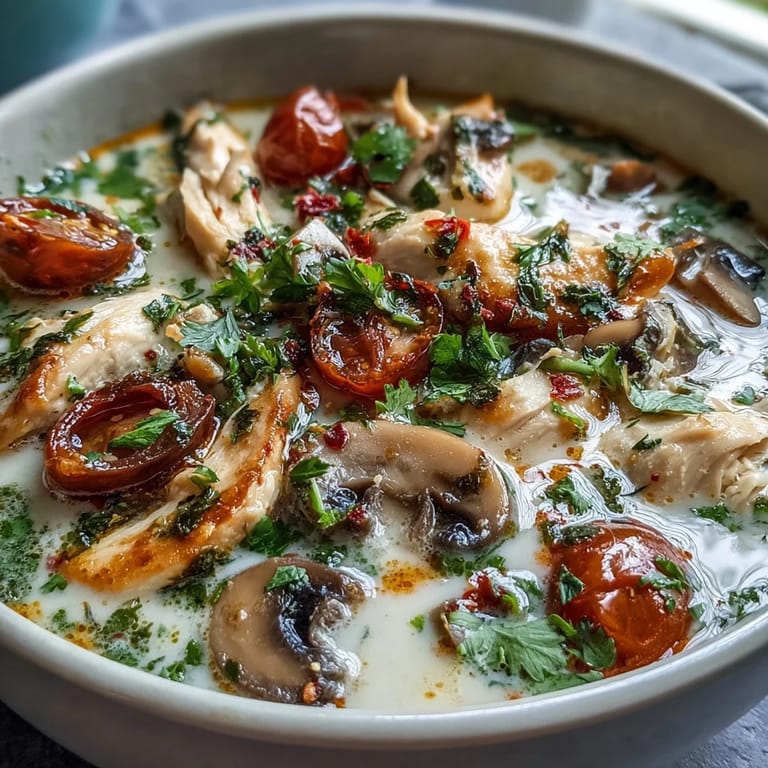
 Every time I make this Tom Kha Gai, I'm reminded that some recipes become more than food, they become touchstones in our lives. This soup has warmed me through winters, comforted me through hardships, and connected me to faraway places and people around my own table.
Frequently Asked Questions
- → What makes Tom Kha Gai different from other Thai soups?
Tom Kha Gai features coconut milk as its base, creating a rich and creamy texture that distinguishes it from clear broth soups like Tom Yum. The aromatic blend of lemongrass, galangal, and kaffir lime leaves provides signature Thai fragrance while the coconut milk balances tangy lime and savory fish sauce flavors.
- → Can I substitute galangal and kaffir lime leaves?
Fresh ginger can replace galangal, though the flavor profile will be slightly different. Lime zest makes an acceptable substitute for kaffir lime leaves, adding bright citrus notes. These traditional aromatics are worth seeking out at Asian markets for authentic flavor, but the soup remains delicious with readily available alternatives.
- → How do I prevent the coconut milk from separating?
Keep the soup at a gentle simmer rather than a rolling boil after adding coconut milk. Stir gently and avoid high heat to maintain the creamy, emulsified texture. If separation occurs, the soup still tastes wonderful though the appearance may be slightly less smooth.
- → What protein alternatives work in this soup?
Firm tofu works beautifully for a vegetarian option when paired with vegetable broth and soy sauce replacing fish sauce. Shrimp or pork slices also complement the coconut broth well. Adjust cooking times accordingly—shrimp needs only 2-3 minutes while pork may require slightly longer than chicken.
- → How spicy should this soup be?
Traditional Tom Kha Gai offers moderate heat from Thai bird's eye chilies. Start with one crushed chili and taste the finished soup before adding more. The heat should enhance rather than overwhelm the delicate balance of coconut, lime, and aromatic flavors. Remove seeds for milder warmth or keep them intact for intense spice.
- → Can this soup be made ahead and frozen?
The soup keeps well refrigerated for 3-4 days, though the coconut milk may separate slightly—simmer gently to recombine. Freezing is possible but can affect the creamy texture slightly. For best results, prepare through step 3, cool completely, and freeze. Add fresh garnishes when reheating for serving.